Agent frameworks#MCP#RAG#Social media automation
AstrBot: one open-source panel for AI bots across QQ, WeChat Work, Feishu, DingTalk and Telegram
AGPL-3.0 chatbot framework: QQ, WeChat Work, Feishu, DingTalk and Telegram in one WebUI, with LLM chat, MCP, RAG and a 1,000+ plugin market.
Project facts
GitHub Ecosystem- License
- AGPL-3.0
- Language
- Python
- Stars
- 44,571
- Data checked
- 2026-10-29
Snapshot figures reflect the check date and may change over time.
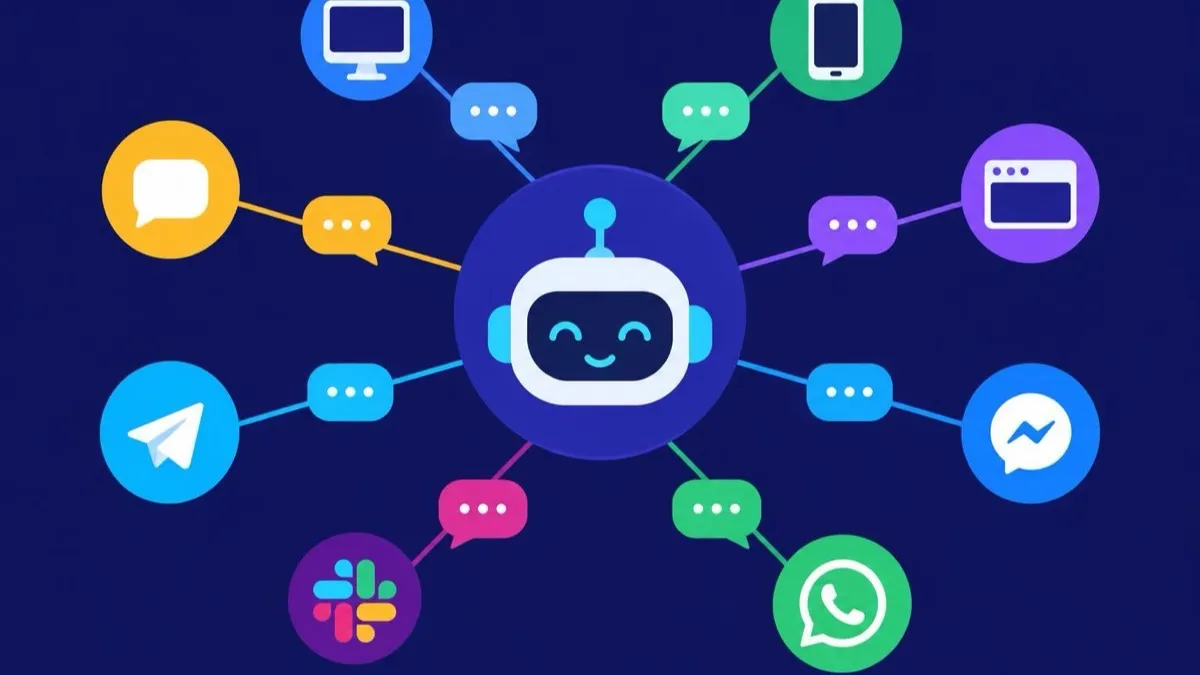
Mention a bot in a group chat and it answers with AI, queries a knowledge base, or runs a plugin — simple to want, hard to build, because a dozen messaging platforms each come with their own protocol, auth and rate-limiting quirks. AstrBot is an AGPL-3.0 open-source multi-platform AI chatbot framework that brings QQ, WeChat Work, Feishu, DingTalk, WeChat Official Accounts, Telegram, Slack and more under one WebUI panel: conversations run on the LLM of your choice with multimodal input, agents, MCP tools, knowledge bases, personas and automatic context compression, and it can also mount apps orchestrated on Dify, Alibaba Cloud Bailian or Coze. The plugin market carries 1,000+ one-click installs, and an Agent sandbox provides isolated code execution. Created December 2022 and iterated continuously since, the latest release is v4.29.3 (October 24, 2026), with 44,571 stars and docs at astrbot.app.
Core features
- One panel, many platforms: a single bot instance mounts several IM platforms at once; configuration, personas and plugins are shared across all of them, and the WebUI manages sessions and stats.
- The full LLM feature set: multimodal chat, function calling, MCP tools, RAG knowledge bases, personas and automatic context compression — plus direct mounting of Dify/Bailian/Coze apps into chat.
- Agent sandbox (technical preview): code execution and shell calls run isolated with session-level resource reuse — the README labels this a technical preview.
- 1,000+ plugin market: check-ins, music search, image generation, page summarization and more install in one click; Python 3.12+, one-command Docker deployment.
Typical use cases
- Group-chat AI assistant: the most common setup — a Q&A bot with a knowledge base living in a QQ or Telegram group.
- Smart customer service inside enterprise IM: wire WeChat Work, Feishu or DingTalk and turn internal docs into a RAG answering bot.
- Personal AI companion: personas plus long-term memory plus multimodal — one of the README’s stated positions, with a large Chinese-community library of persona templates and plugin combos around it.
Quick start
docker run -d -p 6185:6185 --name astrbot soulter/astrbot:latest
# Open http://localhost:6185 and configure your LLM and platforms in the WebUI
One-click cloud deployment and source runs are also supported, and a plugin-Development-Kit doc walks through writing your own extension. Personal WeChat access relies on unofficial protocols with ban risk (flagged in the README and docs) — prefer WeChat Work or Official Accounts channels for anything production.
Summary
AstrBot fits individual developers and teams that want one panel for AI bots across many IM platforms: broad platform coverage, a thick plugin ecosystem, and four and a half years of continuous iteration. For anyone studying multi-platform bot architecture, its event dispatch and adapter layering are cleanly separated, and the DeepWiki mirror makes the codebase navigable. Three honest caveats: AGPL-3.0 requires open-sourcing your modified source if you offer it as a service; plugin quality varies, so check maintenance status before installing — dependency conflicts are the most common community complaint; and personal WeChat and QQ protocol endpoints all face platform risk control, so official bot interfaces are the stable choice. Comparable chatbot orchestration projects cover pieces of this, but among open-source projects that do all three — IM adapters, LLM orchestration and plugin ecosystem — AstrBot is the largest in the Chinese-language community. For agent routing on the model side, see our coverage of laya, a decision engine that sits one layer below chat frameworks.