South Korea's education minister quits over the AI exam crackdown
South Korea's education minister quit on November 22 after last-minute AI anti-cheating rules disrupted the CSAT; 8,400 extra inspectors logged 111 violations.
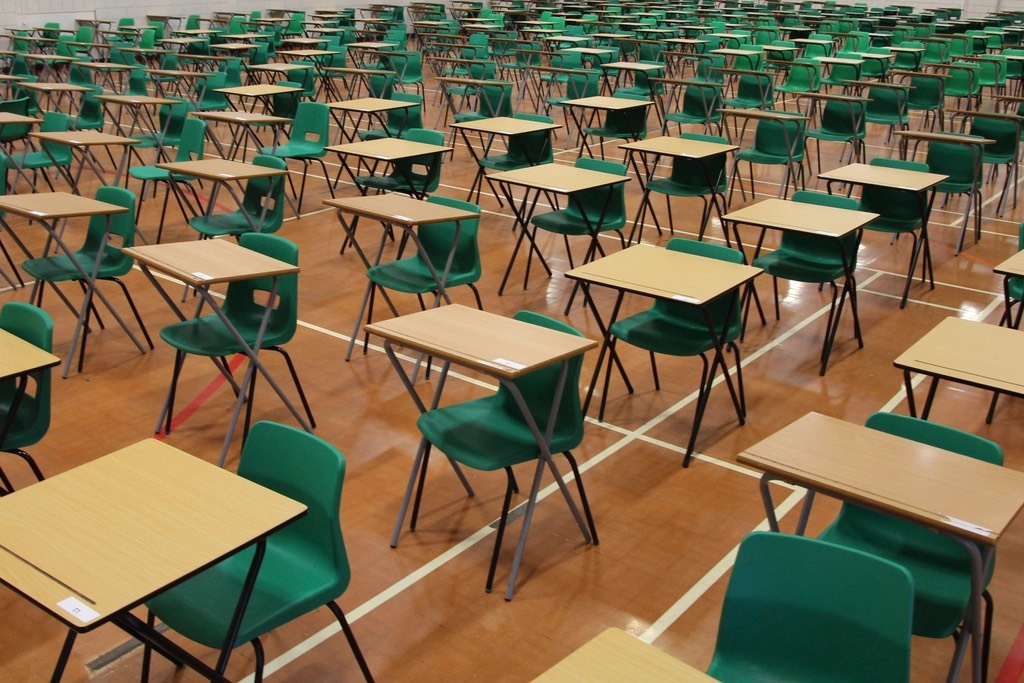
South Korea’s 2027 College Scholastic Ability Test (CSAT), the nine-hour university entrance exam known locally as Suneung, ended on November 19. Three days later the education minister resigned, after the exam was run under emergency anti-cheating rules written in the week before it. The trigger was a confession: the top scorer in this year’s certified tax accountant exam admitted using a miniature camera, a phone and generative AI. About 8,400 extra inspectors were deployed for the CSAT, and 111 device violations were recorded, five of them involving devices actually used during the test.
Key points
- The 397.5 is one round, not a total. In April’s first round he missed one of 160 questions for 397.5 out of 400; in July’s second round he scored 192, 190, 114 and 167, or 663 across four papers. First place overall came from the two rounds combined.
- The resignation letter blames the rules, not the cheating. The minister wrote that last-minute changes inconvenienced test takers and that “as the minister in charge, I cannot escape criticism that we failed to prepare in advance.” The AI case is the backdrop; it is not the reason he gave.
- None of the 111 cases was confirmed as AI answering. The education ministry’s final tally on November 20 was 111 electronic-device violations: 54 surfaced by three nationwide emergency alerts, five caught using a device. Whether anyone had AI write CSAT answers is still unconfirmed.
Background
The case at the centre of it is a 400-point professional licensing exam. The 63rd certified tax accountant test is run by HRD Korea, which published the pass list on October 28. A 34-year-old candidate scored 397.5 in the first round, missing one question in public finance and taking full marks in the other three subjects. The Hankook Ilbo noted he scored perfectly in introduction to tax law, a paper where the average was in the 30s; ifanr puts that average at 30.18 across 16,856 candidates.
Suspicion started online, focused on AI smart glasses. He denied it at first, saying he had used elimination on unfamiliar questions. On November 15 he changed his story on a lawyer’s YouTube channel, admitting he used the same method in both rounds and in an earlier first-round CPA exam: photograph the question with a miniature camera, send it to an AI, read the answer on a phone. He filed a voluntary surrender statement with the Seoul Metropolitan Police Agency that day, and the case went to its metropolitan investigation unit.
He is not the first. On October 3 a candidate wearing smart glasses was caught in an essay exam at the University of Seoul and barred from that university’s admissions for three years; on October 10 a student at Yonsei University swapped glasses after the pre-exam check and was still caught. The ministry counted at least four AI-glasses cases in middle and high school exams this year. The pre-CSAT defence, in other words, had been built around one form factor: glasses.
Our own digest covered the November 15 confession as a single item. This entry is about what followed it: the resignation, the exam-day deployment, the violation count and the rule changes.
The facts
The government announced the package at a briefing on November 17 and executed it on November 19. Every figure below comes from a ministry announcement or that day’s government briefing.
| Item | Detail |
|---|---|
| Exam date | November 19, 2026 (Thursday), 2027 academic year |
| Registered / sat | 551,864 registered, 497,526 sat, 9.85% absent |
| Sites and staff | 1,312 test sites, about 75,000 existing invigilators |
| Extra staff | About 8,400: roughly 1,800 for smart-device checks, 6,600 hallway proctors |
| Room rules | Phones, smart glasses, watches, rings, miniature cameras and wireless earbuds banned; glasses checked every session; stickers over clothing buttons; sleeves rolled up; bags kept in hallways; metal detectors only on suspicion |
| Violations | 98 preliminary on November 19, revised to 111 on November 20: 54 from three alerts (31, 11, 12), 52 by other means such as Wi-Fi detection, five caught using a device |
| Penalties | Possession counts as cheating and voids the result; the current one-year ban is being pushed to 10 years; criminal complaints against five people on November 23 |
| Rewards | 100 million won per reported case, capped at 500 million, open until January 19, 2027 |
| Results | December 11, 2026 |
| Tax accountant case | The finance ministry is moving to suspend his certificate; the law allows invalidation and a five-year ban, plus possible criminal charges |
The three emergency alerts are the most contested measure. They borrow the disaster-warning system to ring every phone in the country at once, exposing handsets that should have been handed in; 54 of the 111 cases were found that way. Many of those were people who forgot to surrender a phone, not people answering questions.
Why the minister resigned
Equating the resignation with the cheating case is the headline version. Yonhap’s headline says he resigned “over college exam chaos,” and the body is more specific: the ministry kept rewriting the rules in the days before the test, changed the stationery list again on November 18 so that erasers and correction tape had to stay outside, and trained some invigilators a day before the exam. In his statement the minister said the exam had concluded “without major incidents” but that he could not escape criticism for failing to prepare, and offered to step down. The president accepted within about an hour and told the prime minister to handle the follow-up.
A second and separate line of pressure ran through a parliamentary hearing on November 16. Asked whether he was fully confident AI-assisted cheating could be detected, the 72-year-old minister said: “I don’t think I could, because of my age.” The remark landed three days before the exam, and opposition parties and parent groups demanded a delay or accountability. He did not appear at the pre-exam briefings; the vice minister presented the measures, as AFP reported in dispatches carried by the Jakarta Post.
The accurate framing is that the AI case created the crisis and the improvised, repeatedly revised rules created the reason to resign. They are not the same thing. ifanr dates the resignation to November 24 and cites the Financial Times; Yonhap, AFP and Time all record November 22, a Sunday, with the resignation accepted the same day. We go with November 22.
What others say
Teachers’ groups point at where the risk was pushed. The Korean Federation of Teachers’ Associations asked in a statement: “Will hurriedly selecting supervisors today, training them tomorrow, and deploying them the day after tomorrow really create the expertise to identify sophisticated AI cheating?” The National Union of Secondary Teachers petitioned for more inspection staff, clearer dispute procedures and better conditions for proctors. The complaint was a month old: in an October 16 Korea Times report, teachers were already worried that visual glasses checks dumped the risk on individuals.
Test takers are unhappy too. According to Time, Test-Takers’ Solidarity, a group of high school seniors and other candidates, said in a November 21 statement that schools applied the rules unevenly and called the last-minute changes a “dereliction of duty”; it plans a December rally. The leader of the main opposition People Power Party posted that an exam “must not be forced ahead when its fairness is not guaranteed.”
The technical reading is colder. An analysis by BigGo notes the government rejected a postponement and ruled out jamming signals in test rooms; its cooperation with global AI companies covers reviewing usage records after the exam, not blocking answers during it. The deputy prime minister for science and ICT said the companies had agreed to help check AI use and related records. The tutor known as “Study God” argued in a November 16 video that checking glasses was not enough and that AI services should refuse exam questions during test hours; the government has not adopted that.
There is a counter-view inside the government’s own reasoning. The ministry has said radio-frequency detectors produce too many errors across different test environments, which is why none were deployed this year. Detection still rests on invigilators’ eyes and judgment.
Our take
What actually changed is where responsibility sits. The old assumption was that a device had to be in use to be a problem; the new rule is that possession voids the result, the ban moves from one year toward ten, and a report is worth 100 million won. For anyone building assessment, proctoring or identity-verification products, that is a concrete requirements list: device screening, signal detection, anomaly flags, and after-the-fact reconciliation with AI providers.
Treating the 111 cases as evidence that AI cheating was contained would be wrong. They count electronic-device violations, five involved actual use, and none was confirmed as AI-written. Most of what the alerts caught were phones that were never handed in, which measures compliance, not capability. Whether 8,400 extra people for one day was worth that number is a question the ministry has not answered.
The deeper problem is item design. Questions built on recall and standard solution paths are exactly what generative models are good at; keeping AI outside the room concedes that what the exam measures and what the job requires have diverged. We have written before about cognitive surrender, the way reliable AI makes it easy to hand over thinking entirely (related). Adding checks at the door without changing what is asked just pushes the pressure back onto invigilators, round after round. School-level rules are tightening in the same direction: Google will no longer let schools switch off AI Overviews in search on their own (related) — control the tool first, argue about evaluation later.
Two practical readings. Anyone selling assessment tooling will see both government and school procurement widen over the next year in Korea. And for hiring managers, watch the discount: when a licensing exam’s credibility is shaken by one case, employers start pricing the certificate down before the rules are fixed.
What to watch
The calendar is already set. CSAT results are due on December 11, and the ministry says violations and appeals will be settled before then. On November 24 the ministry set up a six-person CSAT cheating task force under a government-wide group led by the Office for Government Policy Coordination; it will investigate reports, handle complaints, protect invigilators and feed fixes into the 2028 exam plan. The same day it published new rules for smart-device cheating in middle and high school assessment.
Three things remain open: the 10-year ban needs legislation; the tax accountant’s certificate and any criminal charge depend on the police and prosecutors; and the fine print of the AI-company cooperation has not been published. The police investigation into the top scorer continues, and his CPA result is under review as well.