KAN first author founds MetaCircle, raising hundreds of millions of RMB to make AI design models
MetaCircle, KAN first author Ziming Liu's startup, raised hundreds of millions of RMB in two rounds on October 15 for a model that predicts training outcomes.
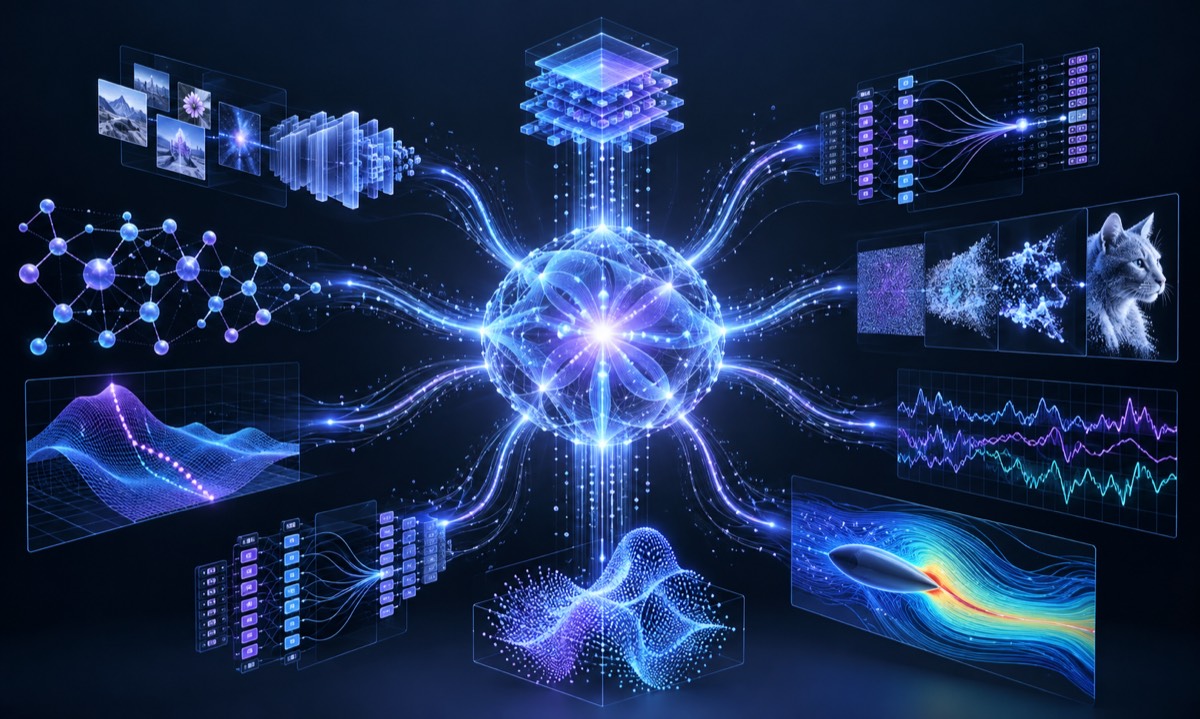
MetaCircle, a four-month-old startup founded in May 2026, announced on October 15 that it has closed a seed round and a seed-plus round back to back, together totaling what the company will only call “several hundred million RMB”. The seed round was led by Shunwei Capital. The founder, Ziming Liu, is the first author of the KAN paper (arXiv:2404.19756) and an assistant professor at Tsinghua’s Institute for AI. What the company is building is a “meta model”: one that predicts how a training run will end before the run finishes, and designs model architectures on its own.
Key points
- The funding is the company’s own account: seed led by Shunwei Capital with Shanghai Future Industry Fund, Xinglian Capital and Junli Capital following; seed-plus added a Shanghai semiconductor industry investor, 360’s strategic arm, Shoucheng Capital, Shanghai AI industry funds, plus BV Baidu Ventures, Shanxing Capital and Yunshi Capital. The precise amount is undisclosed; Qiguan Capital acted as financial advisor.
- The meta model learns how architecture and training configuration map to experimental results: it predicts final loss and performance metrics before training completes, then filters or generates architectures. Time-series forecasting comes first; a general Meta Model 1.0 is promised next year.
- The only public validation so far is the company blog’s August 28 prediction of Marin’s Hero Run: a final loss of 2.034 against 2.039 from Marin’s own Scaling Ladder — a prediction measured against another prediction, with no measured comparison published as of October 15.
Background
Liu’s route into startups runs through academia: physics at Peking University, a physics PhD at MIT, then a Stanford postdoc on neuroscience and AI. On April 30, 2024 he submitted KAN: Kolmogorov-Arnold Networks as first author, with Max Tegmark among the co-authors; the paper was later accepted to ICLR 2025. KAN replaces fixed activation functions with learnable splines placed on network edges, betting on smaller models and better interpretability. The official pykan repository held 16,332 stars when checked via the GitHub API on October 15, 2026; the “5,700+ citations” figure is company-provided and not independently verified.
Large rounds have stopped being news in Chinese AI — DeepSeek was reported to have raised $12 billion — but a research company founded in May 2026 with no public product, closing two rounds against a direction that may take years to validate, stands out even in this year’s funding cycle.
The facts
The funding details come from the company announcement (full text carried by Sina Finance) and InfoQ’s report, and the two accounts match:
| Round | Investors |
|---|---|
| Seed | Led by Shunwei Capital; Shanghai Future Industry Fund, Xinglian Capital, Junli Capital and others |
| Seed-plus | Shanghai semiconductor industry investment, 360 strategic investment, Shoucheng Capital, Shanghai AI industry funds, plus BV Baidu Ventures, Shanxing Capital, Yunshi Capital |
| Combined | “Several hundred million RMB”, precise figure undisclosed; Qiguan Capital is the long-term financial advisor |
Use of funds, again per the company: iterating the meta model’s core algorithms, phased product exploration, hiring, and shipping in-house benchmarks.
On the technical side, InfoQ describes the meta model as learning the relationship between a model’s architecture, its training configuration, and how experiments turn out — moving trial and error from “run it and see” to “estimate before you run”. Three research components are already public: OPHIS, an automated research loop that has reported interventions improving training on Grokking and nanoGPT tasks (transferability unverified); ComfyResearch, a graph-based tool for organizing research workflows; and a nanoGPT Observable Library for watching internal signals such as weights, gradients and activations. The product plan starts with time-series forecasting for industrial monitoring, weather, power and finance — the company says internal experiments found architectures beating LSTM baselines, without publishing evaluation conditions — followed by a general Meta Model 1.0 next year and an in-house benchmark called Architecture IQ.
The Marin case deserves the detail, because it is the only public external test. Marin is an open-source LLM training project that livestreams its runs. MetaCircle published its prediction while the Hero Run had just begun: a final loss of 2.034, against 2.039 from Marin’s own Scaling Ladder. “The training is livestreamed,” the post notes, “so other than waiting for training to finish, there is no way for us to cheat.” That establishes the prediction was public before the run ended; whether 2.034 lands near the measured result, neither side has said.
What others say
InfoQ’s caveats are the sharpest published pushback: two predictions agreeing does not make either one accurate, and OPHIS’s interventions have yet to prove they transfer across tasks.
There is also a discrepancy in how the amount was reported: Sci-Tech Daily and Securities Star headlines put “several hundred million RMB” on the seed-plus round alone, while InfoQ, Sina, Tencent News’s Ruicaijing and a NetEase story carried by China.com all describe it as the two rounds combined. This entry uses the combined reading, which matches the investor lists and use-of-funds details across those reports.
The company’s own framing deserves quoting as framing: per the announcement, Liu argues LLMs cover only about 30% of the world’s “well-articulated” problems — text, math, code — and the meta model targets the other 70%, the uncompressed numerical world. The NetEase story stresses that this route is “fundamentally different from the popular recursive self-improvement approach”. Shunwei called Liu “a representative of Gen-Z young scientists”. The 30/70 split comes with no methodology; read it as a manifesto. Betting on what comes after LLMs has another prominent backer in Yann LeCun, whose world-model bet we covered earlier this week (H-JEPA).
Our take
For anyone who budgets training runs, the pitch, if it holds, changes the cost structure of trial and error: killing doomed architectures before the first GPU-hour is real money. Calling “predicting training outcomes” a validated capability today would be premature. The only public case is a prediction versus a prediction; method details and evaluation conditions are mostly unpublished; the amount exists only as a vague “several hundred million”; the citation count is unaudited. Between one KAN paper and an “intuition machine” lies a large body of engineering evidence nobody has shown yet.
Three things will settle whether MetaCircle deserves the money: whether the time-series product ships with reproducible public evaluations; whether Architecture IQ arrives on schedule with transparent rules; and what evidence of prediction accuracy — as opposed to agreement between two forecasts — Meta Model 1.0 carries when it lands next year.
What to watch
- Within 2026: the first phase of the time-series product for industrial monitoring, weather, power and finance (company schedule).
- The Architecture IQ benchmark; its transparency is the first thing to check.
- 2027: the general Meta Model 1.0, as promised on October 15.