Alpöge and Buckmaster claim a Navier–Stokes blow-up, with the certificate withheld
Alpöge and Buckmaster claim a finite-time blow-up for the unforced 3D Navier–Stokes equations: a 79-page paper and Lean code, but the certificate is missing.
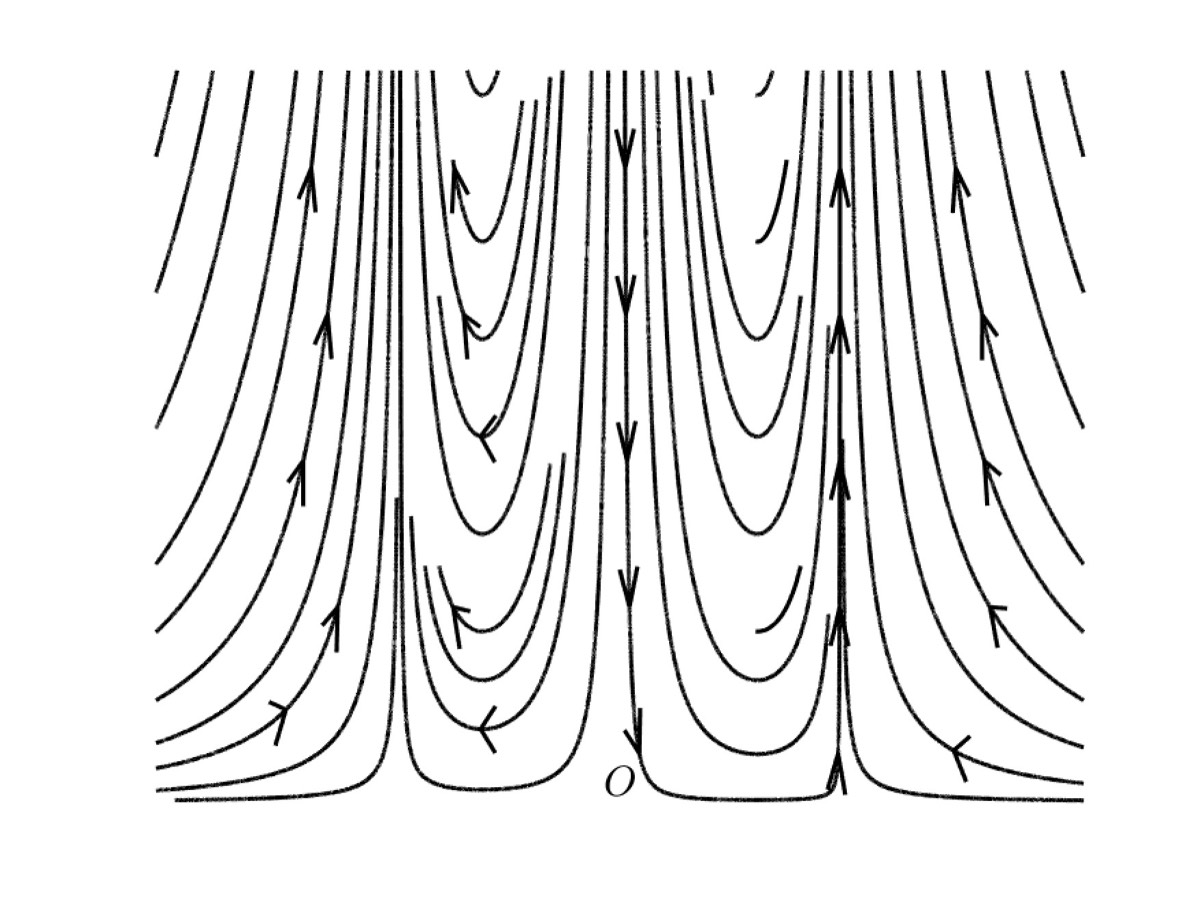
On November 20, Levent Alpöge of Anthropic and Tristan Buckmaster of NYU posted a 79-page paper, Finite-time blow-up for the Navier–Stokes equations, and a Lean 4 formalization to the repository tristanbuckmaster/navier-stokes, claiming smooth initial data for the three-dimensional, unforced, incompressible Navier–Stokes equations whose solution blows up in finite time. The abstract says the construction disproves statements (A) and (B) of Fefferman’s formulation of the Millennium Prize problem and therefore proves (C) and (D). The repository’s README has a section headed “What is and is not here”: the formalization contains no data, and the certificate whose hash the paper gives is not in the repository.
Key points
- The claim is the unforced case. The equation is ∂ₜu + (u·∇)u = Δu − ∇p with div u = 0, no forcing term. OpenAI’s October Navier–Stokes result used a carefully designed external force, which makes it a different statement.
- Three deliverables, two of them public. The paper and 2,271
.leanfiles are in the repository. The numerical certificate that the construction rests on exists only as a SHA-256 hash,3f7a335b84b6c7631742cacc5343dfcd11cf72f5221ff79b2b9268790b4b22c5, and the paper says it will be released. - A formalization passing is not the argument holding. What Lean formalizes is an earlier version of the paper: Theorem 1.1 has no blow-up rate and Theorem 7.1 stops at a weak solution. Whether the certificate satisfies the conditions of Appendix B is checked by 128-bit interval arithmetic outside Lean, and neither the computation nor its data is in the repository.
Background
The Navier–Stokes regularity problem asks whether smooth solutions of the three-dimensional incompressible equations can lose smoothness in finite time. The Clay Mathematics Institute listed it among its seven Millennium Prize problems in 2000, and Fefferman’s official description splits the answer in four: (A) and (B) say smooth solutions exist forever on ℝ³ and on the torus 𝕋³, (C) and (D) say there is data that blows up. Proving either pair settles the problem.
Leray proposed in 1934 to look for singularities among backward self-similar solutions, u(t,x) = (T−t)^{−1/2}U(x/√(T−t)). Nečas, Růžička, Šverák and Tsai later showed that under natural integrability conditions the only such solution is zero. The next candidate is a discretely self-similar solution, one that returns to itself after scaling by a single factor, possibly up to a rotation. This paper takes that route.
The same authors got a forced version first. In September they proved finite-time blow-up with a smooth forcing term for the incompressible Euler, Boussinesq and porous-medium equations; Terence Tao’s September 7 post recorded it and noted that the forcing-free case was still out of reach. In October, OpenAI published 722 math manuscripts with a forced Navier–Stokes blow-up among the headline results, which we covered at the time. On November 20 the Lean proof of the Riemann hypothesis and this paper landed on the same day, and the Lean community certified the first one the day after.
What the claim is
The main result is Theorem 1.1. Its hypothesis is the existence of a profile: smooth functions (W, q), not identically zero, solving the self-similar form of the equations, with 1/(1+|y|) decay, periodic in self-similar time up to a linear isometry. The conclusion is smooth, compactly supported, divergence-free data whose solution is smooth and of bounded energy on [0,1) and satisfies c(1−t)^{−1/4} ≤ ‖∇u(t)‖ ≤ C(1−t)^{−1/4} as t→1, with a matching statement on the torus at some blow-up time T ≤ 1.
The relation to the Millennium Prize needs stating precisely. One counterexample is enough to refute “all smooth solutions last forever”, so the paper’s claim is that it proves (C) and (D). Clay’s rules have not moved: the $1 million needs publication in a qualifying outlet, two years of waiting, and general acceptance by the mathematical community. The authors write “we prove” and say nothing about the prize.
One reason to take the claim seriously is stability. The paper shows the blow-up is stable in finite codimension: there are ε₀ > 0 and a finite-dimensional space E such that any divergence-free initial field close enough to the profile in Ḣ¹, plus one element of E, produces a solution that blows up the same way. That is stronger than a single engineered example, and it is what Tao means when he says the strategy is clear.
The facts
The paper is 79 pages, dated November 20, 2026, and sits in paper/. It has no arXiv listing; I searched arXiv by author and by title on November 22 and found neither, and it has not been peer reviewed. The README says the certificate will be released and gives its hash.
| Item | Number | Basis |
|---|---|---|
| Paper | 79 pages | paper/, version of 2026-11-20 |
| Certificate | SHA-256 3f7a335b…b22c5 | not released; hash given twice in the paper |
| Lean files | 2,271 .lean files | GitHub API, counted 2026-11-22 |
| Code size | ~2,270 files, 600,000 lines | README’s own figure; I did not count lines |
| Repository | 339 stars, 25 forks, 5 issues | 2026-11-22, no LICENSE |
| Commits | 2, last push 11-20 13:33 UTC | nothing pushed since |
| Computed profile | κ=19, period ≈0.36, ‖∇W̄‖~10⁴ | Appendix C, floating-point Newton plus continuation |
| Certificate check | 128-bit interval arithmetic, Arb/FLINT | outside the formalization and the repository |
The Lean package separates statements from proofs. Challenge.lean and CellLayerChallenge.lean state the theorems with sorry in place of proofs, Solution.lean proves them from the library in Breakdown/, and the comparator*.json files name the theorems whose statements must agree while allowing only the axioms propext, Quot.sound and Classical.choice. Building takes lake exe cache get and then lake build.
The README also records a state worth quoting. A patch applied on release day changed the cell-layer statements and the library proofs that depend on them (a weight of (|m|+1/2)² replacing m²+1/4, one cell constant allowed to be zero, the harmonic set of a cell restricted), and “the patched package was not rebuilt when this repository was assembled”. As of November 22, nobody has published a full build of the code that is actually in the repository.
The AI disclosure is in Section 1.6: “We used Anthropic models (Claude) throughout this work, and no others.” The order of work was Lean first. A draft of the paper was generated from the formal proof with S. Armstrong’s enslopification tooling, then rewritten with Claude under the authors’ direction, replacing long proofs with cited standard results. The published proof therefore does not follow the Lean proof; what the two share is their statements.
Where the formalization stops
The first gap is in the strength of the conclusions. The formal Theorem 1.1 carries no rate: for every positive viscosity it gives data from which no smooth solution of bounded energy exists for all time. The formal Theorem 7.1 gets only a weak solution out of a certificate. The paper’s step from a weak solution to a smooth profile, and the bound on how close that profile is to the approximate one, is not part of any statement file.
The second gap is Appendix B. Proposition B.14 there turns certificate data into the hypotheses of Theorem 7.1, but two of the propositions it relies on, B.1 (the multiplier inequality) and B.4 (the inequalities for one cell), are proved only in the formalization. The paper does not prove them.
The third gap is the step nobody has checked: that the certificate data satisfy the conditions of Appendix B is established by a rigorous computation in interval arithmetic, 128 bits of precision, using Arb through FLINT. The formalization contains no data, and that computation is not part of the formalization either. The seam between the two falls exactly where human attention is scarcest.
The direction of the translation matters. An October paper by Bastounis, Circelli and Hansen argued that translating natural language into Lean cannot guarantee semantic fidelity, that the ambiguity-resolution problem sits at the top of the Solvability Complexity Index, and gave examples of mismatches in AI formalizations, including OpenAI’s announced Navier–Stokes proof. Here the order is reversed: the Lean came first and the paper was derived from it. So the risk moves. It is not that a formalization quietly weakened the paper; it is that the rate, the smoothness, and the certificate were never in the formalization to begin with.
What others say
Tao’s November 20 post makes three judgments: the paper is “technically human-readable and the general strategy of proof is broadly clear”; “more work needs to be done to create a proper, professionally written proof”; and of the day’s three announcements, the unforced Euler result is the most digested, this one second, the generalized Riemann hypothesis last.
The Hacker News thread reached 319 points and 108 comments. One commenter pasted the README’s “the formalization contains no data” paragraph as an answer to the headline. Others stressed that this is the unforced case, closer to the original problem than October’s forced result. The longest argument was not about mathematics but about credit: the models did most of the work, and who signs.
The five open issues carry more information, and none has a maintainer reply. Issue #2, from manvirjaswal, says Proposition B.1 on page 55 omits the condition joining the weights across the plane y₃ = 0, and supplies a concrete counterexample with interval-arithmetic numbers: the left side of (B.20) is about 656,520.716 and the right minus the left is 674.176·c > 0. The Lean statement does carry the condition (plane_joins), so, the issue says, the conclusion of Theorem 1.1 is unaffected. Issue #3 runs a similar test on an axisymmetric mode and asks, in passing, when the certificate will be released. Issue #1 asks that every lemma in the paper be linked to its formal counterpart. Issues #4 and #5 ask for build instructions for the axiom check and for a LICENSE.
Chinese coverage pairs the paper with something else from the same day: a 940-page generalized Riemann hypothesis draft by Masullo in Rome, written over nearly 12 years without AI. The QbitAI piece on November 22 also gives Alpöge’s record (Harvard undergraduate, Princeton PhD in 2020 under Bhargava, the 2015 Morgan Prize) and Buckmaster’s 2019 Clay Research Award, and quotes Tao on the strategy being clear but the write-up unfinished.
Our take
For anyone following AI for mathematics, the interesting part is not the verdict but the shape of the deliverable: not a paper with appendices, but a paper, machine-checkable code, and a dataset identified by hash and not yet published. Hash-first release is ordinary engineering practice and new in mathematics, and it has one real benefit — it makes “what is missing” a precise question rather than a suspicion.
The honest problems are three. The missing certificate is the hard one: without it, Theorem 7.1 has an empty hypothesis, and what remains is a conditional statement that a profile satisfying certain inequalities would give blow-up. The interval-arithmetic step has no independent check, and its reliability depends on an implementation and an input that are not public. And Appendix B has visible seams: two issues produce concrete numerical counterexamples to statements as written, and while both conclude that a sentence would repair them, two such seams in a 79-page appendix says the proofreading is not finished.
For people who write code, the order for judging a claim has not changed: look at what shipped, then at who is checking it, then at whether the checkers wrote down their boundaries. This time the boundaries are unusually explicit, in a README section that lists the three missing pieces one by one. That habit is worth copying even if the theorem turns out to need repair.
What to watch
Four things. When the certificate appears, and whether anyone reruns the interval arithmetic independently. Whether a full build log for the Lean package shows up, since the un-rebuilt patch is the cheapest gap to close. Whether the two Appendix B issues get an answer. And whether the paper reaches arXiv or a journal: Clay’s route is still publication, two years, general acceptance, and neither a repository nor a hash is part of it.