S&P puts Nvidia's AA rating under review over governance and key-man risk
S&P is reviewing Nvidia's AA rating for a possible cut to AA- within 90 days, citing weak executive oversight, no succession plan and key-man risk.
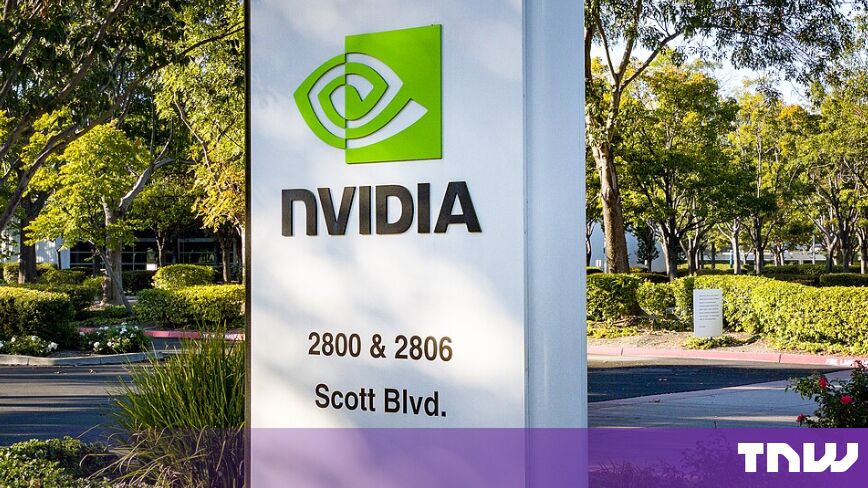
S&P Global Ratings is reviewing a possible downgrade of Nvidia, TechCrunch reported on November 25. The rating stands at AA and could fall to AA-, still the fourth-highest investment-grade notch, with the review due to finish within 90 days. The trigger is not the balance sheet. It is governance: the chief executive was removed by the board and then reinstated, and S&P cites “weak executive oversight and lack of succession planning” plus “key man risk” attached to one person.
Key points
- The move is one notch, from AA to AA-, but the review window is only 90 days and the stated cause is governance rather than financial. Rating agencies usually fold governance concerns into an outlook; opening a downgrade review on them is unusual for a company this size.
- Nvidia announced a $500 billion AI infrastructure financing package in August with six financial institutions, and originally guaranteed 25 percent of the loans. Lenders were already asking for more before the CEO’s exit.
- Nvidia backstops neoclouds and other infrastructure companies with weak standalone credit. A lower rating makes their debt more expensive or forces more collateral, which is how a governance story reaches companies with no governance problem of their own.
Background
The starting point is a personnel shock in mid-November. According to Bloomberg reporting on November 12, Nvidia’s board removed Jensen Huang as chief executive and installed CFO Colette Kress in the role. The company had no board chair and had only just designated one. The same reporting says Colette Kress had questioned Nvidia’s financing guarantees and cut the guarantee on an OpenAI data center in Ohio from $250 billion to $105 billion. TechCrunch’s account is that the CEO was ousted and then reinstated; by the time S&P opened its review, he was back in the job.
Read together, the review is the sum of two things. One is governance: a company valued in the trillions had no chair, no public succession plan and an operation that runs through one person who holds under 4 percent of it. The other is the financing structure: Nvidia does not merely sell chips, it guarantees the loans that let customers buy them. When that arrangement was announced in August, the Bank for International Settlements flagged its resemblance to pre-2008 credit structures, and Nvidia shares fell as much as 3.2 percent that day and were trading at $219.01 in the early afternoon, down 2.2 percent for the day.
This is not the first governance story of the quarter: the board opened an internal investigation in early November into executive conduct and China sales. Agencies typically wait for an investigation to conclude. S&P started its clock before that, which implies it is no longer asking whether risk exists but how large it is.
Nvidia is not the only company using credit as leverage. Meta priced $15 billion of senior notes on November 3 to fund AI capital spending, with its 30-year spread 88 basis points wider than in April. The distinction matters: Meta pays more to borrow, while Nvidia makes borrowing more expensive for everyone who buys from it.
The facts
| Item | Detail | Source |
|---|---|---|
| Current rating | AA | S&P / TechCrunch |
| Possible downgrade to | AA- (fourth-highest investment grade) | S&P / TechCrunch |
| Review window | 90 days | S&P / TechCrunch |
| Stated reasons | Weak executive oversight, no succession plan, key-man risk | S&P / TechCrunch |
| Financing package | $500 billion, announced August 2026 | TNW / FT |
| Partner institutions | Apollo, Blackstone, BlackRock GIP, Brookfield, Goldman Sachs, KKR | TNW / FT |
| Nvidia guarantee | 25 percent of loans originally; lenders sought more | TechCrunch |
| Deployed so far | Zero, as of November 19 | WSJ |
The bond-market consequence of one notch is modest. AA and AA- both sit high in investment grade, and few funds have mandates that force selling on that move. The real effects run on two side channels.
The first is guarantees. Nvidia has spent the year turning itself into a credit intermediary for AI infrastructure: it guarantees the customer, the customer buys the chips, the chips collateralize the borrowing, and the money returns as Nvidia revenue. That structure is unusually sensitive to a rating, because a downgrade raises the cost of standing behind someone and pushes counterparties to demand more coverage. TechCrunch’s phrasing is that a cut would likely prompt larger guarantee demands.
The second is the neoclouds. These companies are not strong credits on their own and get cheaper money because Nvidia stands behind them. Their debt is often priced against Nvidia’s rating or conditioned on its guarantee, so a one-notch move at the parent forces a repricing at the subsidiary. That is why a governance headline lands on companies with no governance problem.
One more piece of context belongs next to these: the money has not moved. The Wall Street Journal reported on November 19, under the headline “Wall Street Pledged $500B for Nvidia. Not a Dollar Has Been Deployed,” that none of the package had been drawn. The gap between pledge and deployment is exactly the review window. If the structure is renegotiated within 90 days, S&P will be looking at a different balance sheet.
What others say
S&P’s own language is restrained: two reasons, no named analyst, no threshold. That restraint is itself the signal. Agencies usually give a company room to fix governance, and 90 days is the time to produce a succession plan and a board structure.
Discussion of key-man risk is far more direct. In the commentary collected by Naked Capitalism, one observer describes Nvidia as “almost completely dependent on him,” and another says “no one yet can imagine separating Huang from Nvidia.” A market participant quoted there puts it this way: “As a student of economic history, I don’t know if there’s ever been such a key man holding so much of this industry up.” An investor calls him “irreplaceable” and “unusually hands-on.” None of that is ratings language, but it explains why S&P listed key-man risk as a separate line rather than a footnote.
The skeptical case targets circular financing. TNW’s August report is blunt: “Nobody has yet said what the money buys, or who absorbs the loss if the demand never arrives.” The BIS comparison to pre-2008 structures is arguable, but the mechanism it points at is real — when the supplier is also the customer’s creditor, demand signals are partly self-generated.
The WSJ report drew 3 points and no comments on Hacker News.
Our take
Start with the narrow conclusion. This review barely touches Nvidia’s day-to-day business and matters a great deal to the ring of companies that borrow against its name. A company that hardly issues bonds will not notice one notch in its own funding cost; its guarantee is the precondition for other people’s borrowing, and when that precondition moves, pricing across the chain has to be recalculated.
What is actually new is that governance has become the main line of Nvidia’s credit story. For two years the market’s valuation assumed demand was certain, supply was controlled and the person in charge was irreplaceable. S&P has inverted the third assumption: irreplaceable is the risk. If the other two agencies follow, the effect will exceed one notch.
For anyone buying or building infrastructure, there is a concrete task: read the ratings triggers in your contracts now. Most such clauses fire below A, so AA- does not trip them. Clauses requiring additional collateral are usually written looser and turn on “reasonable judgment,” which is where the exposure sits.
What to watch
The 90-day window closes around late February 2027. Three signals matter before then: whether the board publishes a succession plan or adds an independent chair, the first actual deployment from the $500 billion package, and whether Moody’s and Fitch move their outlooks. One agency acting alone makes this a governance event; three makes it a credit event. The other indicator is easy to miss and earlier than Nvidia’s own bonds: spreads on neocloud debt, which price this guarantee structure before the parent’s rating does.