Products#Site building#Ecommerce
Shopify debuts Canvas: build your entire store by chatting with Sidekick
Shopify launched Canvas on October 1: merchants chat with Sidekick to build and edit their store while real store code renders live on screen.
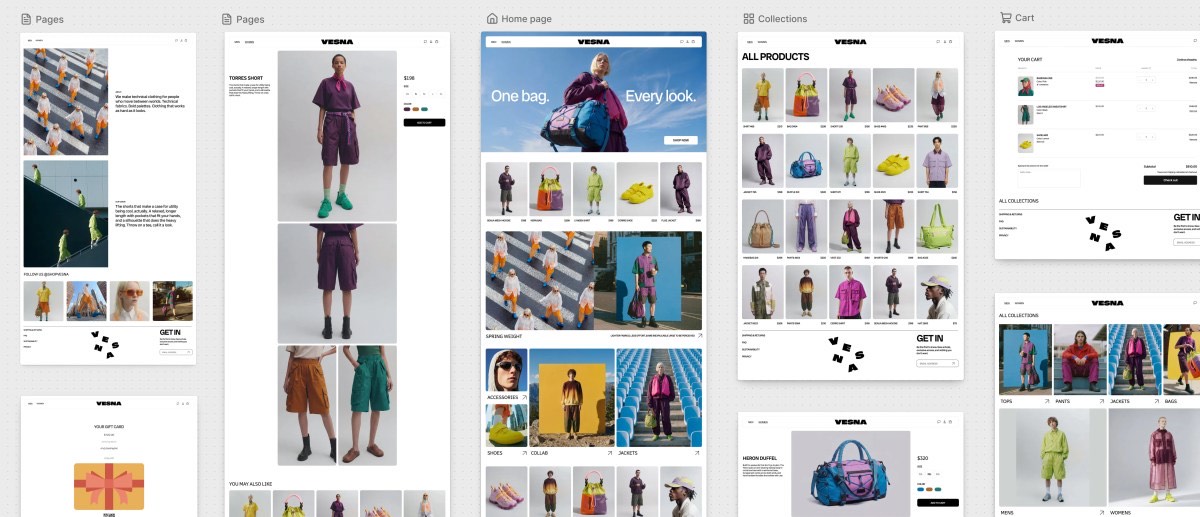
Shopify launched Canvas on October 1: merchants converse with its AI assistant Sidekick to build and modify their entire store while real store code renders live on screen — fully interactive, responsive layouts — or skip the chat and click any element to edit it directly.
The facts
- Interaction model: whole-store view plus chat-based edits plus click-to-edit; TechCrunch notes the difference from earlier “chat gives suggestions” tools — Canvas edits the actual storefront.
- Under the hood: built on an upgraded Sidekick, which can now read and write theme files directly and take screenshots so it “sees what the merchant sees.”
- Availability: launched October 2026, desktop-first, officially “early days.”
- Gaps at launch: no third-party themes, no app blocks or extensions, no markets, translations or theme-update rollouts yet — more planned, per Shopify.
- Competitive position: aimed squarely at Wix, Squarespace, Webflow and Framer, plus conversational builders like Lovable and Replit.
How it fits Shopify’s agent line
Canvas is the second piece of Shopify’s agent strategy: the earlier release opened the transaction side — external AI agents checking out on buyers’ behalf via WebMCP tools — while Canvas attacks the supply side, letting merchants build by conversation. The platform is swapping the interaction layer on both ends at once.
Effect on site builders
Conversational building drops the skill floor for theme edits to zero; the first squeeze lands on template marketplaces and hourly theme-customization work. For developers, theme code becomes a programmable interface for the agent rather than a black box — teams building Shopify themes and apps should design for “the granularity Sidekick can operate on.”
Editorial take
Real code rendering live is the differentiator: most conversational builders hand you a preview, Canvas hands you the storefront itself. The gap list (third-party themes, extensions, markets) says production-ready it is not — a good cold-start tool for new stores, with existing complex shops waiting.
Why real rendering matters technically
Most conversational builders generate a preview layer and reconcile it with a template later; Canvas renders the actual Liquid theme code as the merchant talks. That means what the merchant approves is what ships — no migration step, no “the preview lied” gap. It also means the agent’s edits are versioned theme changes, so merchants can diff and revert like developers do.
The template-economy math
Shopify’s theme market and the agencies around it are a large ecosystem built on hourly customization. Canvas attacks exactly that layer: it cannot yet load third-party themes, but when it can, the base theme plus conversational edits becomes the default path for new stores. Theme authors’ defensible ground shifts to niches conversational editing handles badly — brand systems, accessibility, performance tuning.
The Wix and Squarespace counterposition
Wix and Squarespace have AI builders too, but they sit on closed rendering stacks; Framer and Lovable are code-native but not commerce-native. Canvas is the first commerce-native conversational editor with real code underneath — the combination competitors will need a year to match, and the reason Shopify announced this ahead of its Q4 merchant season.
One limitation to keep in view: Canvas edits themes, not apps. Merchants whose stores run on app-driven functionality — subscriptions, bundling, loyalty — will find the conversational surface covers the look of the store while the app stack still needs conventional administration. The early-days label applies to the ecosystem as much as the tool.
Promising, early, and worth a pilot store.
Sidekick’s screenshot loop is the quiet innovation here — an agent that sees what the merchant sees removes the description gap that made earlier AI builders feel like dictation. Extending that pattern to apps is the release to wait for.
Merchants who wait a quarter lose nothing; merchants who pilot now set the patterns their theme will have to support later.