Tesla will wind down Cybertruck production around mid-2027 to make room for Cybercab
Musk said on Nov 6 that Tesla winds down Cybertruck output around mid-2027 for Cybercab; about 70,000 delivered in three years vs his 250,000-a-year target.
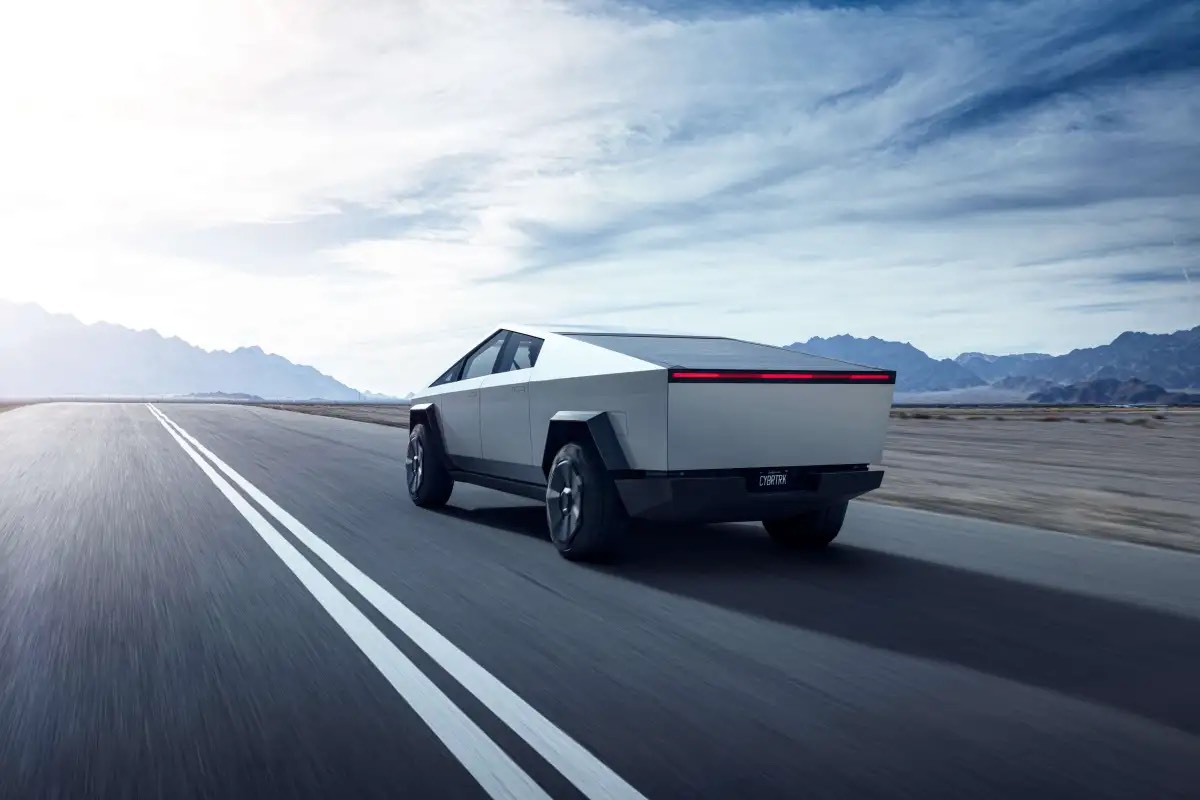
On November 6, 2026, Elon Musk announced on X that Tesla will wind down production of the Cybertruck at Gigafactory Texas “around the middle of next year” — that is, around mid-2027 — to make room for increased Cybercab output. His post, which we checked word for word, reads: “Tesla will be winding down production of the Cybertruck at Gigafactory Texas around the middle of next year to make room for increased Cybercab production.” The stainless-steel pickup began reaching customers in late 2023 with a 250,000-units-a-year sales prediction attached; by the highest analyst estimates cited by The Verge, roughly 70,000 have shipped in three years, and Tesla has never reported Cybertruck-specific sales. Both The Verge and TechCrunch ran the same reading of the move on Friday: the line is being freed for the Cybercab robotaxi.
Key points
- Musk’s November 6 post puts the Cybertruck wind-down at Gigafactory Texas around mid-2027, freeing the only known Cybertruck assembly line for Cybercab production.
- About 70,000 Cybertrucks shipped in three years by the highest analyst estimates (The Verge), against Musk’s 250,000-a-year prediction from the 2023 handover event.
- The Cybercab has run driverless in Austin for about two months and expands to Dallas this month; Model S/X ended production earlier in 2026 so its space could build Optimus robots.
Background
The Cybertruck was late and over budget before it ever shipped. Musk talked up the pickup on a 2019 earnings call, as TechCrunch’s retrospective notes, and deliveries only started in late 2023. The promises on stage were a sub-$40,000 starting price, up to 500 miles of range, and — Musk called it “the finest in apocalyptic equipment” at the handover event — 250,000 sales a year. The tally now: an entry price around $60,000, more than 100 miles cut from the top-range figure, and a sales record that never got near the target.
It also never cracked most export markets. The Verge points out the design isn’t road-legal in many countries, so the truck never left North America in volume. We covered a different European run-in with Tesla’s marketing in Tesla drops FSD branding in Europe; the Cybertruck never even got that far. The ownership record adds up too: roughly ten recalls covering camera faults, loose trim and door handles, a wrongful-death lawsuit over those door handles, the January 2025 explosion outside the Trump hotel in Las Vegas, and the first Cybertruck occupant fatality in August 2024 — all documented in The Verge’s coverage.
The facts
The verifiable details of the Cybertruck wind-down, with sources and dates, come down to this. The location matters as much as the date: per The Verge, Gigafactory Texas is the only known Cybertruck assembly facility, and the tooling for its angular stainless-steel body does not travel, so a wind-down here most likely means the truck never resumes elsewhere. The timing is Musk’s own phrasing — “around the middle of next year”, posted November 6, 2026.
| Item | Original promise | Reality (as of 2026-11-06) |
|---|---|---|
| Annual sales | 250,000 (Musk, 2023 handover event) | ~70,000 cumulative in three years (highest analyst estimates, The Verge) |
| Base price | Under $40,000 (TechCrunch) | Roughly $60,000 (TechCrunch) |
| Top range | 500 miles (TechCrunch) | Cut by more than 100 miles (TechCrunch) |
| Assembly | A dedicated line | Gigafactory Texas, the only known plant (The Verge) |
| Wind-down date | — | Around mid-2027 (Musk’s post) |
The line’s next occupant is the Cybercab, a two-seat driverless robotaxi. Per TechCrunch’s same-day report, it has been operating in Austin without a safety driver for about two months with no major incidents, and it expands to Dallas later this month; Model Y robotaxis already run in Austin, Houston, Dallas and three Florida cities. One step further back: Tesla discontinued the Model S and X earlier in 2026 and redirected that factory space to the Optimus humanoid robot — by TechCrunch’s count, the third product Tesla has cut this year.
What others say
The Verge frames it as a product obituary, listing the recalls, the lawsuit, the Las Vegas explosion and the first fatality before calling the next-generation Roadster the Cybertruck’s “spiritual successor”. TechCrunch keeps its focus on the capacity shift: two months of incident-free Cybercab operation and a driverless Model Y fleet already running in six cities. Reuters put the market verdict in its headline the same morning: the truck “struggles to win appeal”. None of the three outlets disagrees on the substance — the truck underperformed, and the line has better work to do.
The competitive picture sharpens with the robotaxi numbers. In our Waymo picks Toronto as its first Canadian city entry we collected Waymo’s own figures: more than 500,000 paid rides a week across over 15 US cities. Tesla’s Cybercab is two months into driverless service, with Dallas as the next stop. One company is scaling internationally; the other is still proving out its first two markets.
Our take
For anyone who builds products with dedicated hardware, the Cybertruck is a case study in single-purpose lines: build a plant around one exotic body design, and if the product flops, the capacity freezes with it. Tesla’s fix is to hand the line to Cybercab. For people tracking autonomous driving, Tesla’s priorities are now legible — consumer vehicles step aside for a dedicated robotaxi, and after the Dallas expansion there is finally a city-by-city pace to track against Waymo’s numbers.
Three caveats belong in any conclusion here. The 70,000 figure is an analyst estimate, not a Tesla disclosure; “winding down” is not a promise that production ends forever, and Musk left himself that door open; and two months of incident-free robotaxi service is a small sample — it shows operation, not proof of safety. Musk’s post also says nothing about parts and software support for delivered trucks, or about Cybercab volume targets and timelines. The Verge handing the “spiritual successor” label to the Roadster — a car that has slipped for years — is the closest thing to a punchline the story has.