Developer tools#Open-source alternatives
Everything: Puter is rewriting 51 common apps as open source
Everything is the Puter team plan to rewrite commercial software one app at a time: spreadsheets, documents, slides, photo and video studios. 51 apps, MIT.
Project facts
GitHub Ecosystem- License
- MIT
- Language
- JavaScript
- Stars
- 2,437
- Data checked
- 2026-10-20
Snapshot figures reflect the check date and may change over time.
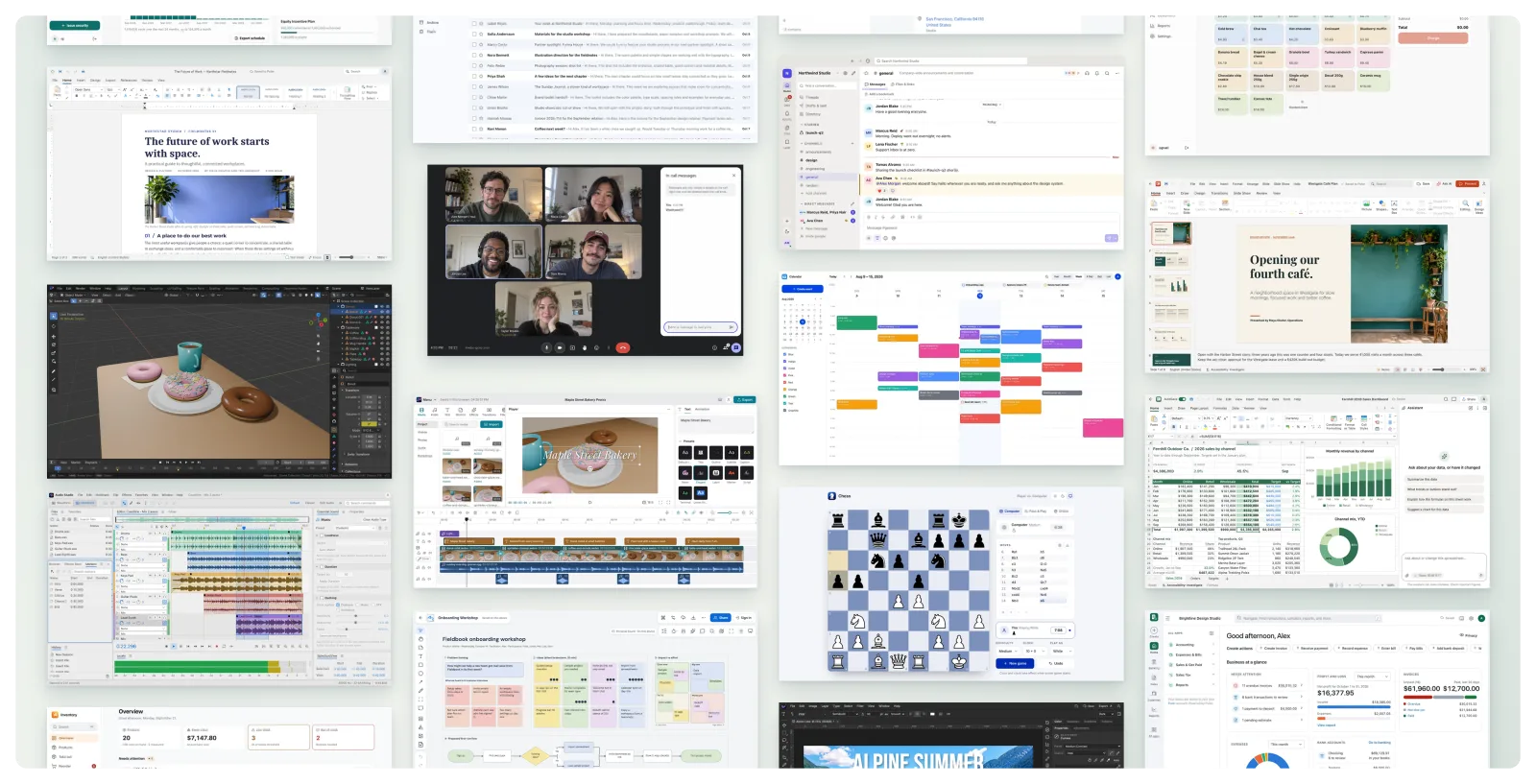
Beyond subscription accounts there is another route: rewrite the software you use every day, one app at a time, and release it all as free open source. Everything is the Puter team’s attempt at exactly that, describing itself as rebuilding and open-sourcing the world’s software from scratch under MIT. The repository is a monorepo holding 51 applications so far: office tools aimed at Excel, Word and PowerPoint; six creative studios for photo, video, vector, audio, music and 3D; engineering tools including CAD and building design; and five small games. Most apps have a live link, so you can open them in a browser and try them. The repository was created on October 13, 2026, had 2,437 stars on October 20, 2026, and its primary language is JavaScript.
Core features
- 51 apps in 9 categories: 7 office apps (spreadsheet, documents, presentation, whiteboard, PDF, notes, records); 6 collaboration apps (meetings, team chat, email, contacts, calendar, signatures); 6 creative apps (photo, video, vector, audio, music and 3D studios); 4 engineering apps (CAD, parametric design, circuits, building design); 5 productivity apps (tasks, projects, wiki, time tracking, surveys); 4 finance apps (accounting, invoicing, expenses, cap table); 13 business apps (CRM, help desk, contracts, point of sale, inventory, assets, hiring, shifts, childcare, field service, legal, fleet, property management); 1 developer tool (API client); and 5 games.
- Every app names what it replaces: The README table states the alternative directly — the spreadsheet row lists Microsoft Excel, Google Sheets and Apple Numbers, and the whiteboard row lists Miro, Microsoft Whiteboard and FigJam.
- Playable in the browser: The spreadsheet, documents, presentation and whiteboard apps are hosted at
<name>.puter.com, and most rows carry a “Try it” link, so you can try them without installing anything. If you do not want to set anything up, start with the spreadsheet and documents. - Run locally, per app: It needs Node.js 22.12 or newer. After cloning,
cdintosrc/<app-name>and install dependencies to start a single app, rather than booting the whole repository. - One repository for all of it: All apps live in a single monorepo, and the README’s Source column links straight to each app’s directory.
Typical use cases
- Individuals and small teams cutting subscription costs: Try the spreadsheet and documents first, see whether they cover daily work, then decide which ones to switch.
- People who need niche industry software: Vertical tools such as point of sale, staff scheduling, childcare management and property management have few commercial choices, and this project builds open-source versions of them.
- Developers who want to read real applications: 51 full-scale apps in one place, spanning office, collaboration, creative and CAD work.
- Anyone who wants to self-host: The code is yours, the apps run on your machines, and your data stays there.
Quick start
Trying online needs no installation: just open the hosted app, such as https://spreadsheet.puter.com/ or https://documents.puter.com. To run one locally:
git clone https://github.com/HeyPuter/everything.git
cd everything/src/<app-name>   # for example src/spreadsheet
npm install
npm run dev
Node.js 22.12 or newer is required. The README table lists each app’s directory name and trial link.
Summary
It suits individuals and small teams who want fewer subscriptions and can accept “good enough, not as polished as the commercial tool”, plus developers who want a batch of real application source to read. It does not suit anyone expecting feature parity: these apps are still being rewritten one at a time, and most do not yet match the full capability of what they replace.
What to know. The project was only created on October 13, 2026, has 2,437 stars, and is very new. The README describes it as “rebuilding and open-sourcing the world’s software from scratch” — an ongoing plan, not a finished suite. Maturity varies per app, and the table does not state how complete any of them are. The coverage is broader than expected (including point of sale, scheduling and childcare management), but breadth is not depth. JavaScript, MIT.
The same team also builds OpenCreator, which uses the Codex CLI as its engine for a creative workspace — a different route from rewriting common software app by app.