Creative#Coding agent#Image generation#Image editing
Wardrobe: turn photos of your clothes into a local digital closet
Wardrobe is an MIT local-first tool: gpt-image extracts garments from photos into clean product shots, with the data kept on your machine.
Project facts
GitHub Ecosystem- License
- MIT
- Language
- JavaScript
- Stars
- 2,242
- Data checked
- 2026-10-19
Snapshot figures reflect the check date and may change over time.
A full closet and nothing to wear usually means you do not know what you own. Wardrobe turns that into a process you can inspect piece by piece: drop in a photo, and it detects the garments, generates clean product shots with an image model, and suggests a name and category. The result is a private gallery grouped into tops, outerwear, bottoms, accessories and shoes. The repository is MIT-licensed and had 2,242 stars as of October 19, 2026.
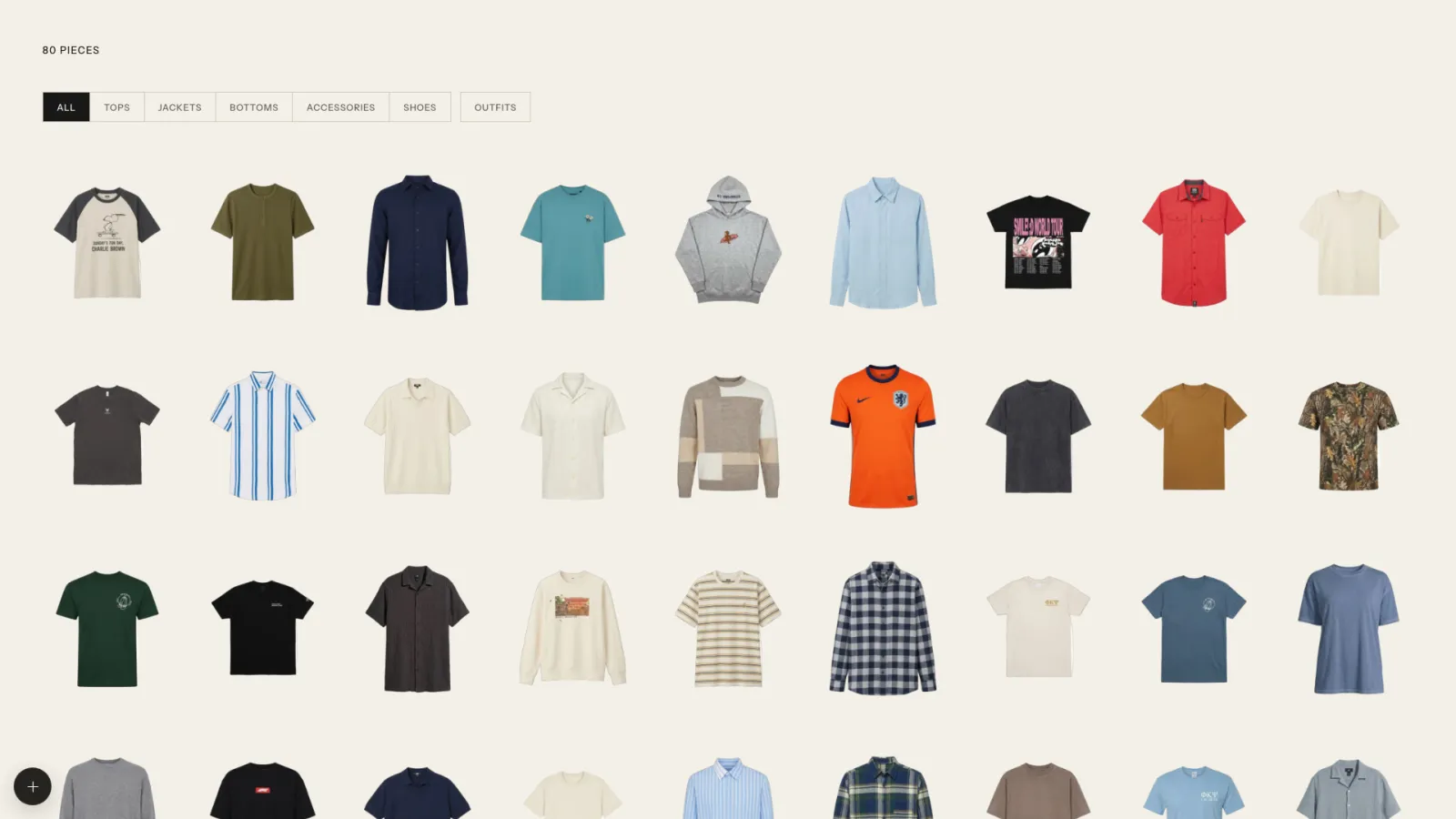
Core features
- Extract garments from a photo: the web importer accepts file selection, drag-and-drop and paste. Garment detection uses the OpenAI Responses API; cutouts and product shots use the Images API. Defaults are
gpt-5.4-minifor vision andgpt-image-2at high quality for images. - Review before it enters the closet: generated results do not go straight into the library. You inspect each product shot, edit the name and category, regenerate when something looks wrong, and only then approve it. That matters because image models get cuffs, patterns and colors wrong.
- Editable item details: the detail view lets you change the name and category, adjust primary and secondary colors, and add style tags; you can also sample a color directly from the garment photo.
- Modeled previews: with a reference photo of a person, Wardrobe can generate a modeled shot of the item. It is an AI visual preview: it does not measure shoulder width, waist or fabric drape, so it cannot tell you whether a size will fit.
- Two Codex skills:
import-clothesextracts and imports garments from a local photo folder, andgenerate-outfitsreads the existing wardrobe, composes outfits by color, layering and occasion, and generates a lookbook.
Typical use cases
- Inventory before buying: enter the clothes you actually wear, see what you have, and decide what is genuinely missing.
- Packing for a trip: specify an occasion and a number of looks, and let
generate-outfitscombine existing pieces into a lookbook you can review. - Keeping consistent records: names, categories, colors and tags are confirmed by you, which beats scrolling through a camera roll to find one jacket.
- Keeping control of the data: originals, job records, generated images and the JSON database all live in the local
data/directory.
The boundaries are just as clear. Detection and generation call cloud AI, so photos are sent to OpenAI; the code is free but model calls may cost money. The web importer stays disabled until you set OPENAI_API_KEY and place a data/model-reference.png portrait. The interface is mostly English. generate-outfits needs a Codex environment with the relevant capabilities — it is not a one-click service built into the web app.
Quick start
git clone https://github.com/tandpfun/wardrobe.git
cd wardrobe
npm install
cp .env.example .env      # add your OPENAI_API_KEY
# put a PNG portrait of yourself at data/model-reference.png
npm run dev               # open http://localhost:5173
Start with one or two clear photos of garments and complete the import flow, checking that the cutouts and details are right before building out the whole wardrobe. The README also includes setup notes for agents, so Codex can walk through the configuration.
Summary
Wardrobe suits people willing to spend a little time organizing their closet and who want the data to stay local. It turns “what do I own” into a browsable, editable, reviewable record, and modeled previews plus outfit lookbooks extend the value of that record. The cost is configuring an API key and reference photo, an English-first interface, and the need to review every generated result. Like DrawAI, which we covered earlier, it turns image-model output into something you can keep editing; Wardrobe’s subject is a personal closet rather than document assets. MIT-licensed, primarily JavaScript, stats checked October 19, 2026.