Anthropic says 950 Claude agents found a CRISPR-like system; researchers want the experiments first
Anthropic says 950 Claude agents found ART, a reverse-transcriptase family resembling CRISPR; Wired notes the function is unconfirmed and unreviewed.
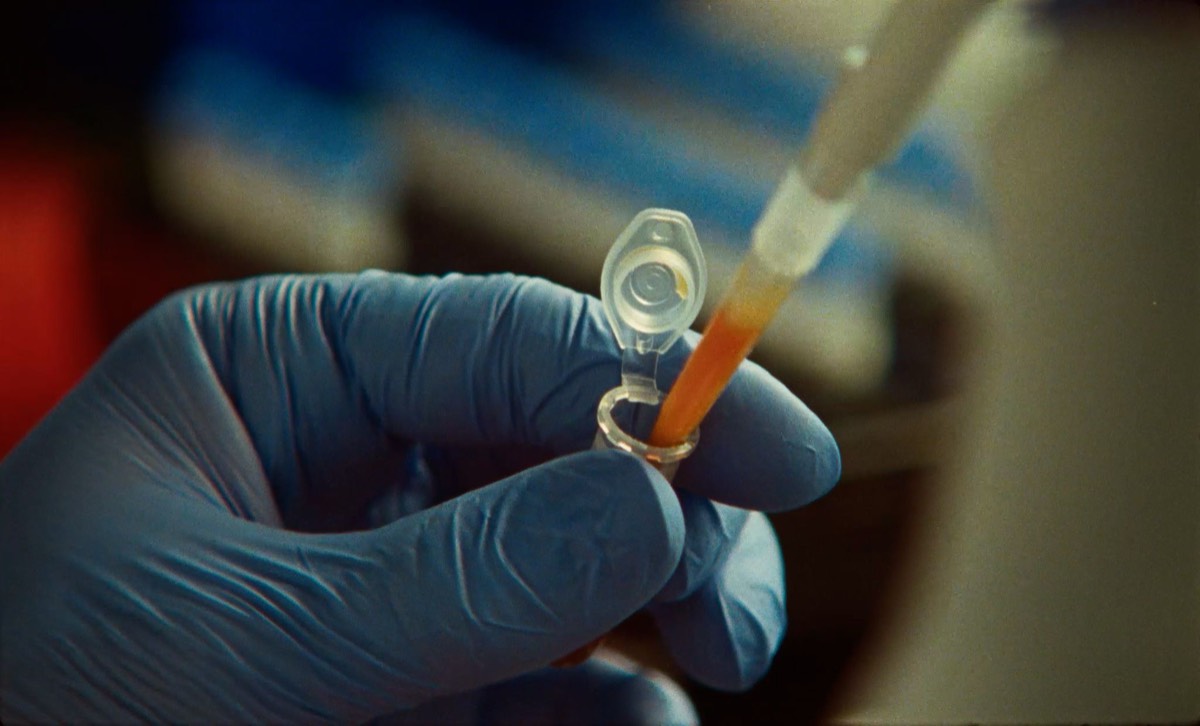
Anthropic announced an agent-driven scientific discovery on September 23: about 950 Claude agents found a new reverse-transcriptase system in jumbo phage genomes, with repeat architecture resembling CRISPR. Wired’s September 29 report asks how much lab work the claim still owes — a rare case of the “agents doing science” narrative meeting early peer scrutiny.
Facts
- The find: about 950 Claude agents identified ART (array-associated reverse transcriptases), a new reverse-transcriptase family with repeat sequences structurally resembling CRISPR, in jumbo phage data.
- Unknowns: Anthropic itself says “we don’t yet understand what this system does,” and it has not been shown to work as a gene-editing tool.
- Verification status: not peer-reviewed, the technical report is unrevised, and exactly one physical experiment exists so far.
- Expert voices: Stanford’s Le Cong: “The experiments are still in the queue. The PR is already live.” Seth Shipman: the novel thing is how they found it, not what it is.
- Prior art: Jason Gill’s 2021 paper at Texas A&M had already identified the same reverse transcriptase in similar elements.
- Sourcing note: the claim comes from Anthropic’s announcement; Wired’s reporting is independent — the two agree on the “what” and part ways on the “so what.”
Editorial take
The agents doing the work come from the Claude model family released last week. The discovery is real — the sequence is genuinely new — but “CRISPR-like” does the function-implying for the reader. Wait for the wet-lab results, and note the 2021 prior art: for retrieval-style discoveries the value sits in the method, less in the finding. For agent-evaluation people, the borrowable part is that Anthropic published the agent count and search pipeline, so outsiders can estimate the effort.