Anthropic details Dynamic Workflows: Claude writes the orchestration program
AI Engineer NYC, October 12: Anthropic detailed Dynamic Workflows — Claude writes the orchestration program; up to 1,000 agents per run, 64 concurrent.
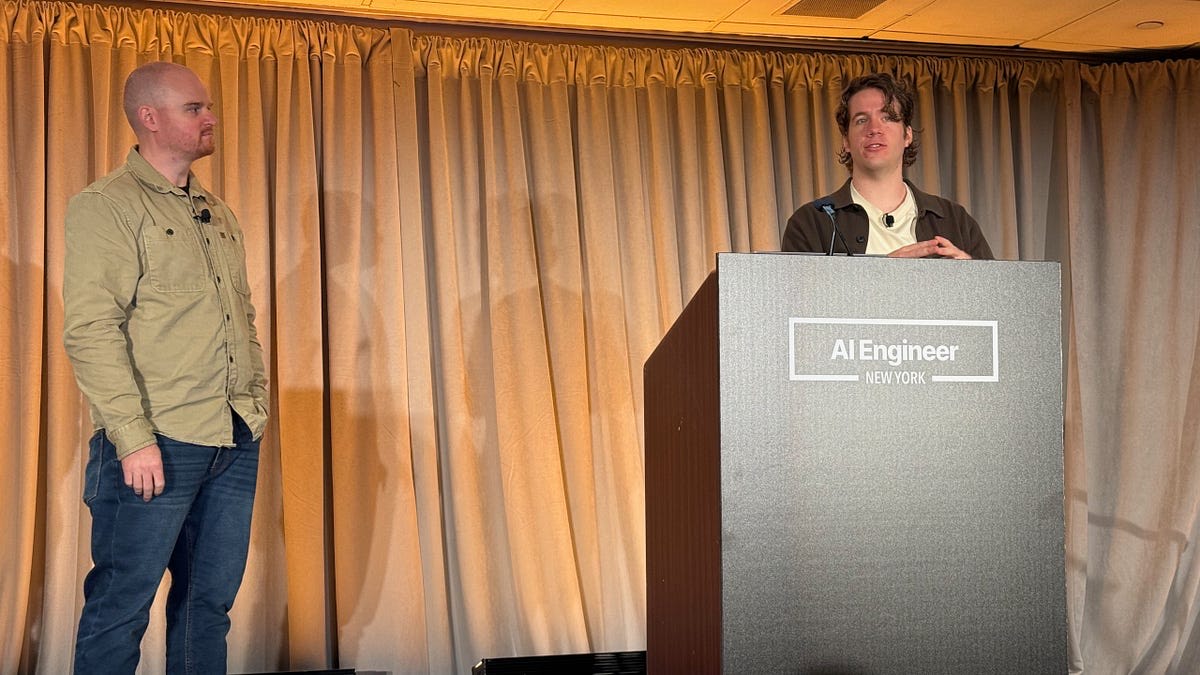
Dynamic Workflows is the multiagent orchestration capability of Anthropic’s Claude Managed Agents platform: instead of a lead agent handing tasks to subagents one step at a time, it writes an orchestration program with real execution logic, and Anthropic’s servers run it in the background. On October 12, Anthropic engineers CJ Avilla and Harrison Stall detailed how the architecture works in an opening-morning workshop at AI Engineer NYC 2026; Latent Space reported the demos and the Q&A the same day. The hard limits, straight from the official docs: up to 1,000 subagents over a run’s lifetime, 64 concurrent threads, and a default run lifetime of 24 hours.
Key points
- The orchestration model changed: the lead agent no longer reasons a step and dispatches a step. Claude writes the program, the server executes it, and the primary thread is freed to talk to the user while watching several runs.
- Official numbers: 1,000 is the cumulative count over a run’s lifetime, not concurrency. Concurrency caps at 64 threads, runs default to a 24-hour lifetime, and a session opens up to 10 runs at once.
- A session budget can only be set at creation and cannot be added later. At the cap, new requests are refused — but each working thread finishes the model request it already started, so actual spend can overshoot by one request per thread.
Background
Dynamic Workflows ships inside Managed Agents, Anthropic’s hosted runtime for agents. It entered public beta on October 9 behind the anthropic-beta: managed-agents-2026-04-01 header — Latent Space noted it was “announced the prior Friday,” and InfoQ’s Chinese edition dates it explicitly. Before that, the platform’s multiagent story was subagents: the lead agent assigns tasks and reads each report back, a session holds at most 25 child threads at a time, and delegation runs one level deep. The lead thread had to ingest every subagent’s intermediate results, and context and latency piled up there. Dynamic workflows replace that handoff — the docs describe context and results being “passed programmatically from one agent to another,” which frees the primary session thread.
The direction has recent precedent we have covered. On capability: Arena’s agent leaderboard put Claude Opus 5.5 Max at the top of its debut on October 12 (our report). On billing: Anthropic added monthly API credits to Max and Team plans on October 7, and Managed Agents is on the covered list (our report).
The facts
The mechanics below come from the two official doc pages, checked October 14:
| Item | Official value | When hit |
|---|---|---|
| Agents per run, lifetime total | 1,000 | thread_limit_error |
| Concurrent threads per run | 64 | New work queues until a thread finishes; the API notes it does not guarantee the number |
| Run lifetime | 24 hours default | timeout_error; pauses do not stop the clock |
| Runs open per session | 10 default | max_workflow_runs_error |
| Child threads per session | 25 max | New threads refused |
The program is generated by the lead agent in conversation — “there’s no additional API call.” The official phrasing for the whole idea: “Claude writes a program to orchestrate agents without Claude’s direct involvement.” Runs advance in phases, each subagent works in its own session thread, and a failed agent can be retried on a new thread, so total threads can exceed 1,000.
Billing runs against the session budget: it covers tokens, web search and similar usage at each model’s list price, and a run has no price of its own. budget_reached is not a hard cut — “each thread finishes the model request it already started,” so a run can pass the budget by one request per working thread. Raising or removing the budget resumes paused runs, though for models without a list price only removing it does. And a completed status means the program finished running: “The result doesn’t say whether the work passed.” Acceptance checking is on you, thread by thread.
One framing discrepancy worth flagging: some Chinese headlines rendered the 1,000 as simultaneous agents. The docs say lifetime cumulative.
What others say
Latent Space’s report (Richard MacManus, October 12) captured the demo: a stock watchlist scanner — a scan phase distributing tickers to subagents with isolated contexts, then a review phase combining their output into a report. Asked about cost, Avilla admitted dynamic workflows cost “much more” than a single agent, while being “much more effective at finding all of the details.” MacManus’s own observation was sharper: the demo felt “far removed from the big, ambitious projects Anthropic is encouraging.”
Two more moments from the Q&A. Asked how to handle hundreds of subagents, the answer was evals and more conservative defaults. Asked whether a flow could improve its own runs over time, Stall said “this wasn’t built in” and pointed builders toward hill-climbing and the research-preview “dreaming” feature. Subagents share a filesystem but cannot message each other directly through the API.
InfoQ’s Chinese edition (October 13) took the risk-side view: the non-hard cutoff means parallel runs can overshoot; a shared filesystem invites permission and state conflicts; retries can write twice to external systems; and a lead agent “reading fewer intermediate results” does not add up to overall savings.
Our take
For teams already running long jobs on the Agent SDK or Managed Agents, this disclosure puts real scale boundaries on the table. Codebase audits, large migrations, cross-checked research — tasks that decompose cleanly and whose results can merge programmatically — are the sensible candidates. A one-shot chat task does not need this architecture.
The real shift is where responsibility lands. Orchestration moves from “the model decides each step” to “the model writes once, the platform executes.” Predictability and observability improve — every thread emits events you can inspect — but the correctness of loops, retries and result validation moves from the model to the program layer. Whoever writes the prompt now owns the program’s edge cases.
Three honest catches: it costs more, and the engineers said so themselves; completed does not mean success; and the model never knows what it is spending — the budget is the creator’s constraint. Asked whether models should be told their budgets, Stall joked it might make them “a little bit anxious.”
Also undocumented: what language or form the orchestration program takes — the official pages never say. There is no endpoint that lists runs, and run events do not trigger webhooks, so operational state is assemble-it-yourself from the session event stream.
How to try it
The docs live under Managed Agents on platform.claude.com: “Multiagent orchestration” for the mechanics, “Workflow runs” for limits and events. Send the anthropic-beta: managed-agents-2026-04-01 header, put trigger rules in the system prompt or user message (the docs’ flavor: “When you’re asked to review more than a few contracts, start a workflow run”), and set the budget at session creation — you cannot add one later.