Bank of America hired 1,000 contractors to patch Mythos flaws
Bank of America says it added 1,000 contractors in Q2 to patch flaws frontier models like Anthropic Mythos found in its code, costing hundreds of millions.
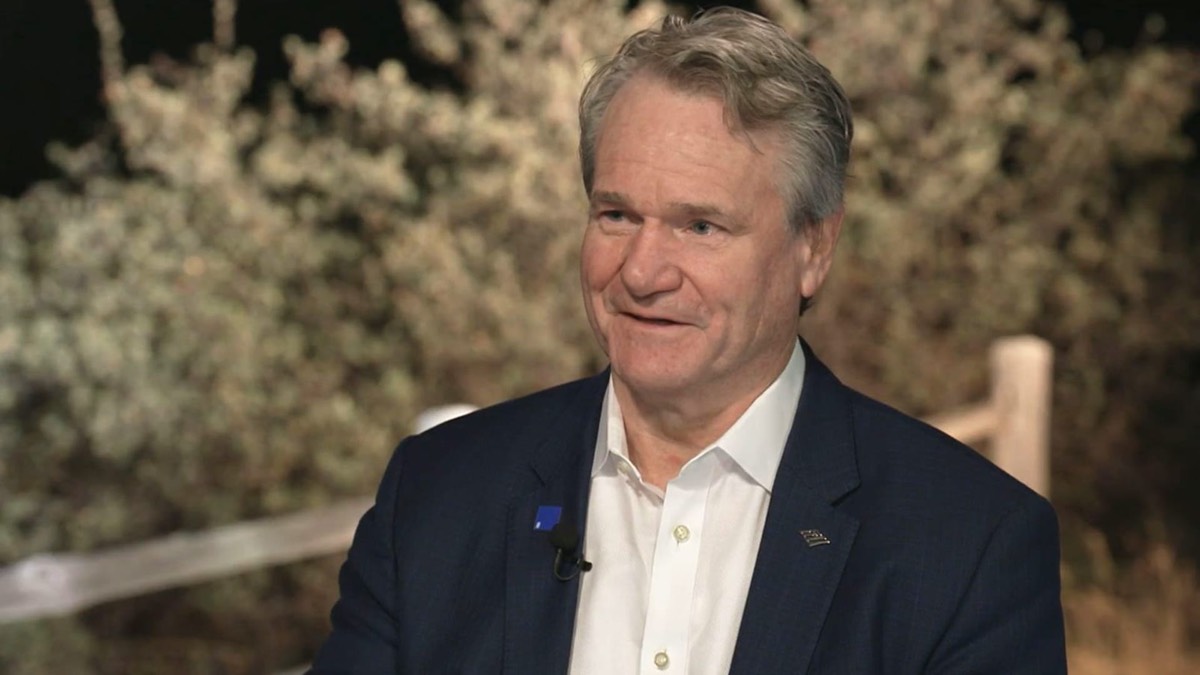
On October 14, Bank of America CEO Brian Moynihan used Q3 earnings day to put a number on something the industry had only described in adjectives: to clear the vulnerabilities that frontier models — Anthropic’s Claude Mythos Preview among them — surfaced in the bank’s own code, the bank added 1,000 third-party contractors in Q2, working alongside roughly 3,000 people already in that function, and spent “a couple hundred million plus” in the quarter on software remediation and anti-money-laundering compliance. It is the first time a major US bank has converted a frontier model’s bug-finding ability into headcount and budget on the record.
Key points
- Moynihan said on October 14 that the bank “put on 1,000 contractors to help us do the patching work in the second quarter, and those people remain here today,” on top of about 3,000 staff already in the area.
- The quarter’s “couple hundred million plus” covers two things at once: Mythos-related remediation and anti-money-laundering (AML) compliance work, which The Register notes Moynihan did not break apart.
- The AML half traces to a $1.21 billion FinCEN penalty announced October 13, plus a $750 million OCC penalty and an $11.6 million OFAC settlement; Moynihan also flagged the vendor conflict: “the people doing the software development are the people trying to sell us the services.”
What the numbers actually say
Moynihan made the remarks on Q3 earnings day, in a CNBC interview and in remarks to analysts that morning. Four outlets — CNBC, Business Insider, The Register and Slashdot — carry the same core figures.
| Item | Figure | Source and scope |
|---|---|---|
| New contractors | 1,000, hired in Q2, still on | Consistent across CNBC, Business Insider, The Register |
| Existing staff in the area | About 3,000 | Same |
| Quarterly spend | “A couple hundred million plus” | Remediation + AML combined, not split |
| FinCEN penalty | $1.21 billion | Announced October 13; over $5 billion in suspicious activity unreported |
| OCC penalty | $750 million | Bank Secrecy Act / AML deficiencies |
| OFAC settlement | $11.6 million | Iran, Russia, narcotics and terrorism-related sanctions |
| AI projects running | About 130 | The Register, from earnings-day remarks |
| Projected AI benefits | $250–300 million in 2026, $700 million by end-2027 | The Register; methodology not detailed |
| Tech engineering efficiency | Up about 10% | Moynihan’s own claim |
Two caveats belong with the table. First, the 1,000 contractors and the quarterly figure exist only as Moynihan’s spoken remarks: the bank’s 8-K Exhibit 99.1 from October 14 mentions “200,000+ teammates using AI tools and 300-plus approved use cases” and total headcount of 209,911, but contains no mention of contractors, Mythos or remediation. Second, TechRadar wrote the quarterly spend as “more than $100 million” while CNBC, Business Insider, The Register and Slashdot all have “a couple hundred million plus”; four against one, and against the quoted wording, this entry uses the latter — always with the AML inclusion attached.
Why now
Anthropic published Mythos Preview on April 7, describing a model it says was “not explicitly trained” for cyber work, whose attack skills “emerged” from broader gains in code, reasoning and autonomy. Anthropic does not plan to make it generally available, releasing it only to a limited set of critical industry partners and open-source developers under Project Glasswing; Bank of America, JPMorgan Chase, Citigroup, Morgan Stanley and Goldman Sachs all have access.
The capability floor is in the same research post: on Firefox 147 JavaScript-engine bugs, Opus 4.6 produced shell exploits twice out of several hundred attempts, while Mythos Preview produced 181 working exploits plus 29 more with register control; on OSS-Fuzz it produced 595 tier 1–2 crashes and full control-flow hijack on 10 patched targets; from 100 candidate CVEs it picked 40 and succeeded on more than half. API cost per finding runs from under $1,000 for an ipset root exploit to about $20,000 for an OpenBSD bug across roughly 1,000 runs.
The May precedent matters. Per Reuters (via Quartz), Treasury Secretary Scott Bessent and Fed Chair Jerome Powell convened bank CEOs over Mythos-driven cyber risk; the model is priced at $25 per million input and $125 per million output tokens, roughly five times Opus 4.7, and Anthropic committed $100 million in usage credits to Glasswing partners. Banks with access passed findings to community and regional banks without it, and remediation timelines compressed from weeks to days.
What others say
Moynihan framed the cost as temporary: “Once you patch, you don’t have to patch as much. … The pipeline moves through.” He gave no Mythos-specific remediation budget.
The pushback sits mostly in a 13-comment Hacker News thread, and it is bleak. url00 asked why contractors are needed at all “if the AI is so good. Isn’t the point to be buying tokens?”; 80fj0348i, citing the Knight Capital collapse, guessed banks would trust agents to read their code but not write it; mrieck sketched the loop as a joke — “And then Mythos found bugs in those patches, so another 1000 contractors were hired”; tonyedgecombe recalled an IBM finding that you get a new bug for every two you fix; anorphirith called it “a perfect recipe for spaghetti code.” Kim_Bruning’s read is Jevons: fixing flaws an AI found is itself new work, so adoption expands the workload rather than shrinking it. Early adopters, meanwhile, reportedly found Mythos “no smarter than elite researchers,” which sits awkwardly next to JPMorgan’s Jamie Dimon telling Bloomberg that cyber risk “went up 10-fold” after its release.
The sharpest comment is not about technology at all. k310 redirected the thread to the $1.2 billion money-laundering penalty: what good is clean code used for criminal purposes? That is the externality worth keeping — the governance bill and the compliance bill arrived in the same sentence.
For the other end of the same capability, this site covered Google freezing its open-source bounty program on October 4: maintainers drowning in invalid AI-generated reports on one side, a bank paying to clear real bugs on the other. Moynihan’s conflict-of-interest line also connects to the agent incident analysis from October 15 — the labs selling the discovery tool and the remediation service are the same labs.
Our take
What is new here is not that AI finds a lot of bugs. It is that someone has priced the consequence in auditable terms: 1,000 contractors, roughly 3,000 existing staff, hundreds of millions of dollars a quarter, said out loud by the CEO of one of the largest US banks. Anyone running legacy systems now has three fields to fill in: volume of findings, remediation headcount, quarterly budget.
Three honest reservations. The figure is not split — “a couple hundred million plus” is remediation plus AML, so the Mythos-only share may be far smaller, and treating it as the total “AI security tax” overstates it. It is a spoken disclosure, not a filing, with no detailed breakdown and no full transcript of Moynihan’s remarks to check against. And Dimon’s “10-fold” risk increase and the early adopters’ “no smarter than an elite researcher” are both firsthand claims that point in opposite directions.
One line for procurement teams: when the people writing the models also sell the cleanup, the only real check a buyer holds is having someone competent review the vendor’s conclusions — do not let the same sales material serve as both the medical report and the prescription.