US data centers are building their own gas plants: 100+ announced, 115 GW planned
Developers have announced more than 100 behind-the-meter gas plants at US data centers, over 115 GW planned, per Cleanview; only 4.9 GW is running.
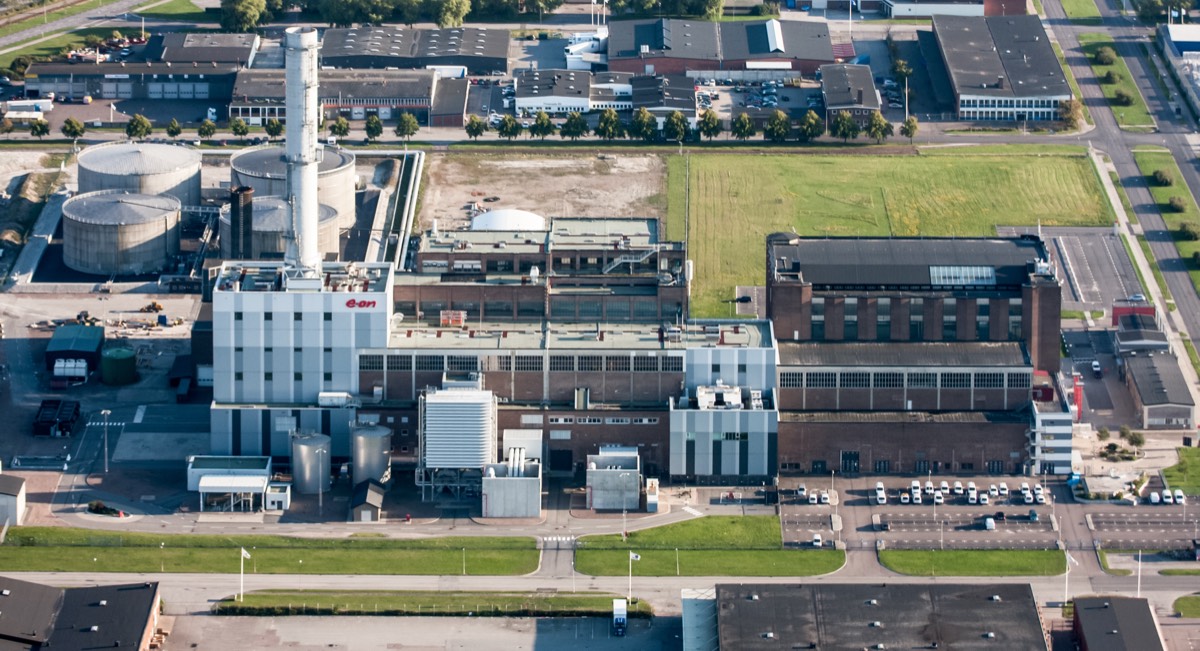
By October 2026, data center developers had announced more than 100 behind-the-meter gas power plants at US sites, with planned capacity totaling over 115 gigawatts. The count comes from Cleanview, a market intelligence firm, and appeared in a MIT Technology Review report on November 24; the same dataset shows just 4.9 GW operating and 15.8 GW under construction. For scale: the California grid peaked at 50.0 GW on September 9, 2026, according to EIA, so the announced fleet is more than double the state’s peak demand.
Key points
- The 100-plus plants and 115 GW are announcements, not steel: most were announced after January 2025, and Cleanview counts 4.9 GW operating and 15.8 GW under construction as of October 2026.
- The California comparison has a hard denominator: CAISO hit 50.0 GW on September 9, 2026 against a record of 51.1 GW set in September 2022; the same summer PJM peaked at 162.6 GW and ERCOT at 91.1 GW, both records.
- BloombergNEF estimates that if all planned US on-site gas plants are built, they would emit 345 million metric tons of CO2 equivalent a year by 2035, 152 million tons more than drawing the same power from the grid.
Background
Data centers used to wait their turn for power. Lawrence Berkeley National Laboratory’s 2026 queue study counts about 8,200 projects seeking grid interconnection at the end of 2025, representing 1,312 GW of generation and 749 GW of storage, more than 2,060 GW in total. For projects that reached commercial operation in 2025, the median wait from request to operation was over five years, with a long tail near a decade; MIT Technology Review puts the worst case at “as long as a decade.”
Demand growth is not in dispute. EIA reported in May that Virginia’s commercial electricity sales rose by nearly 30 million megawatt-hours between 2019 and 2025, mostly because of data centers; PJM’s Dominion zone, which serves the world’s largest concentration of data centers, peaked at 23,905 MW last summer, 23% above 2019, and at 25,413 MW in the 2025-26 winter, 45% above. PJM expects summer peak demand to grow 5.4% a year for the next decade. In its May outlook, EIA put gas burned for power at a record 46.1 billion cubic feet a day in summer 2027, with ERCOT’s gas-fired generation up 22% between summer 2025 and summer 2027.
On that curve, gas is old news; building it yourself is the new part. We have covered Anthropic taking over a 1.7 GW gas turbine order for $3.4 billion (Anthropic takes over a gas turbine order) and Meta putting its 2030 net zero target under review (Meta rethinks its 2030 net zero goal). The first shows equipment being fought over, the second shows the emissions ledger being pushed back. A behind-the-meter plant folds both into one contract.
The facts
“Behind the meter” means the plant sits on the customer’s side of the utility meter and feeds the building directly, without going through the distribution grid. It does not always mean fully off-grid: MIT Technology Review reports that some developers treat the plant as a bridge, running it until a grid connection arrives and then keeping it as backup.
The published totals differ enough that the definition matters more than the headline.
| Source | What it counts | Number | As of |
|---|---|---|---|
| Cleanview | Announced behind-the-meter gas plants at US data centers | 100-plus plants, over 115 GW | Oct 2026 |
| Cleanview | The same set, operating | 4.9 GW | Oct 2026 |
| Cleanview | The same set, under construction | 15.8 GW | Oct 2026 |
| BloombergNEF | Announced on-site gas projects for data centers, globally | 181 GW, 90% in the US | 2026 |
| Global Energy Monitor | US gas capacity developed mainly to serve data centers, announced through construction | 189 GW | Aug 2026 |
| Global Energy Monitor | All US gas capacity in development | 378 GW, up 127 GW in six months | Aug 2026 |
The grid set records of its own over the same summer (EIA, October 15, 2026):
| Grid | 2026 summer peak | Previous record |
|---|---|---|
| PJM | 162.6 GW (July 2) | 160.6 GW (June 23, 2025) |
| ERCOT | 91.1 GW (July 22) | 85.5 GW (August 20, 2024) |
| CAISO | 50.0 GW (September 9) | 51.1 GW (September 6, 2022) |
Building your own plant usually costs more than connecting to the grid. Global Energy Monitor estimates that if all 378 GW of US gas capacity in development gets built, capital spending would exceed $647 billion and the existing US gas fleet would grow by roughly two-thirds; Texas alone has 122 GW in development, about 77 GW of it meant to serve data centers directly. The binding constraint is equipment. The three big turbine makers are quoting multi-year lead times, so developers are switching to reciprocating engines and aeroderivative units, which emit more per megawatt-hour than combined-cycle plants.
The emissions baseline is the grid. Nuclear and renewables supply about 40% of US generation, so a grid connection is generally the lower-carbon option; few of the planned behind-the-meter projects use combined-cycle turbines, which pushes their emissions per unit of power higher still.
What others say
Speed is the motive everyone agrees on. An associate at BloombergNEF told MIT Technology Review that speed is the biggest driver of on-site power right now, and another source described the approach as a very expensive way to bridge a five-to-seven-year gap until a grid connection lands.
The objections split in two. Energy Innovation, an energy think tank, argues that going off-grid does not spare anyone else the bill: more gas demand could lift gas prices, and about 60% of US households heat or cook with gas, so the cost shows up on their bills. Researchers at the same group have also modeled renewables plus storage as a cheaper and reliable way to meet the new load.
The trackers are more cautious than the headlines. Global Energy Monitor wrote in August that it is nearly impossible to tell which proposals are real: more than 45 GW of announced or pre-construction capacity slipped its planned start year in the first half of 2026, and almost a quarter of data-center projects have no start year at all. It counts 52 GW of US gas capacity under construction, 16.9 GW of it for data centers.
Forecasts diverge on how high this goes. SemiAnalysis projects more than 40 GW of behind-the-meter power at US data centers by 2028, mostly gas turbines and engines; a Voltus executive on Latitude Media’s Open Circuit called that timeline unrealistic and argued that batteries and load flexibility carry the next three to five years. Both sides agree on one thing: neither expects all 115 GW to get built.
One number is easy to leave out. A Harvard-led study published in Nature Sustainability, reported by Grist on November 20, catalogued 403 US hyperscale data centers and estimated they use about 82 TWh a year, roughly 2% of US electricity, with about 26 million metric tons of CO2. State shares vary widely: data centers equal 18.6% of Oregon’s retail electricity sales and 15.5% of Virginia’s. Dominion says data centers bought 28% of the power its Virginia subsidiary sold last year.
Permits and rules
Permitting is the weak link in the model. Grist reported on August 28 that EPA guidance issued in July states the Clean Air Act’s Acid Rain Program does not apply to generation “not connected in any way to the larger electricity grid,” which covers islanded plants. The program requires continuous emissions monitoring and reporting, so the guidance removes that obligation and leaves states and local governments to demand disclosure on their own.
States are moving in opposite directions on access. Pennsylvania’s governor paused approvals for AI data centers that do not bring, build and pay for their own power; Texas’s governor blocked new data centers from connecting to the state grid, according to Grist. Both turn self-supply into a condition of entry rather than an environmental requirement. There is no federal registry of behind-the-meter capacity, and utility sales data sorts customers into residential, commercial, industrial and transport buckets, which hides data center load inside “commercial.”
The precedent is xAI’s Memphis campus. MIT Technology Review reports that it has run dozens of gas turbines since 2024, some of them without permits, and remains in litigation. At the time it was an outlier; it now looks like a template.
Our take
Three groups should read this closely. Developers building their own supply need to treat turbine lead time as a critical path item, not a procurement detail. Energy and equipment teams selling into data centers will find their leverage in the next two years comes from delivery speed rather than price. Corporate buyers counting supply-chain emissions should start asking suppliers a plain question: is this power from the grid or from your own plant?
The real change is not that data centers are all building power plants — 4.9 GW operating says otherwise — but that electricity has turned from a utility service into an engineering project the developer has to design, permit and finance. Engineering projects bring their own failure modes: delay, overrun, and vendors who cannot deliver, all of which now sit on the data center delivery risk list.
Three costs deserve naming. First, 115 GW is a paper number: GEM’s tally of delayed and dateless projects is the evidence that much of it will not arrive. Second, cheap is the wrong word: self-supply buys time, and the premium gets repaid through fuel costs over the life of the plant, which looks worse when gas prices rise. Third, emissions lock-in is structural, because the incentive to keep running a paid-for plant is much stronger than the incentive to shut it.
What is unresolved is policy. If EPA keeps islanded plants outside emissions monitoring, the cost advantage of self-supply grows; if states make self-supply a hard condition of entry, it becomes a compliance requirement instead. Either path raises the odds that some of the 115 GW gets built, for opposite reasons.
What to watch
EIA already forecasts a record summer for gas-fired generation in 2027, with ERCOT’s gas output up 22% over two years, and that will be an early test of whether behind-the-meter plants displace grid power or stack on top of it. The other signal is equipment: if turbine lead times keep stretching, a larger share of 2027’s new behind-the-meter capacity will be less efficient engines, and emissions per megawatt-hour will rise with it.