Google will host your personal vibe-coded apps in the Play Store
Starting Oct 13, apps built in Google AI Studio install straight from the Play Store — no developer account, creator-only at first, US and select markets first.
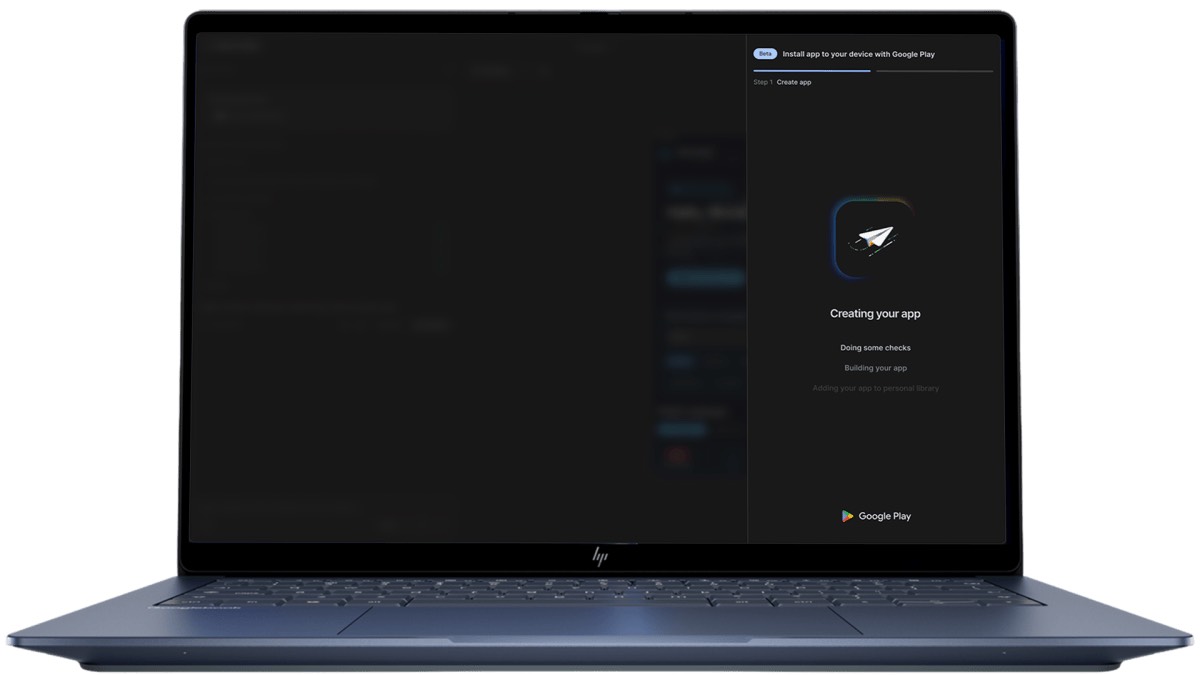
Google opened a new lane for AI-built software on October 13: Android apps vibe-coded in Google AI Studio can now be installed straight from the Play Store, with no developer account and none of the public-release review. The apps land in a private, creator-only area of the store — out of the public catalog and out of Play search — and the rollout covers users 18 and over in the US and select markets, signed in with an ordinary Google account. Sam Bright, Google’s VP and GM for Play and its developer ecosystem, summed up the shift in the company’s blog as moving from “there’s an app for that” to “there’s an app for me.”
Key points
- From October 13, Android apps built in Google AI Studio install directly through the Play Store, starting in the US and select markets for users 18 and over with a standard Google account.
- Private apps stay out of the public catalog and Play search and are visible only to their creator; Ars Technica calls the area the Personal Library — Google’s own blog never names it.
- Sharing with friends and family arrives in the coming months; going public requires upgrading to a professional developer account and passing the same Trust & Safety review professional apps face.
Background
What AI Studio users picked up this week is distribution — the link they were missing. TechCrunch’s Sarah Perez recounts the earlier bind: to run your own app on Android, you either pushed it through public publishing into a store that reaches roughly 3 billion people, or settled for a web app. Google sizes Play far larger than that; its blog puts the store’s gaming community alone at over 2 billion players.
The same announcement refreshed Play’s discovery stack. Ask Play now compares similar apps and spells out the key differences and user sentiment. Game Finder, which Ars Technica and TechCrunch describe as built on data from 1.2 billion Android gamers, starts rolling out in the US today — note that the blog’s community figure of 2 billion-plus is a different number with a different basis. Play’s catalog of apps and games is also heading into Gemini conversations, which Google says will reach all Gemini users soon. AI Studio has kept busy on its own: its built-in image model Nano Banana 2.1 shipped an update just last week, and this week the apps themselves get a way out of the browser.
The facts
The boundaries of the opening, as Google states them:
| Item | Official position |
|---|---|
| Entry point | An AI Studio-built Android app is sent straight to Play |
| Account | A standard Google account; no developer account |
| Visibility | Creator only — not in the public catalog or Play search |
| Markets and age | US and select markets, 18 and over |
| Review of private apps | No public-release review process; Play’s existing policies still apply |
| Friend-and-family sharing | Coming months |
| Going public | Professional developer account plus the same Trust & Safety review professionals face |
“Review” is where the reporting diverges. Ars Technica’s Ryan Whitwam states flatly that “private apps are not reviewed by Google”; TechCrunch stresses the apps must still comply with Play’s existing policies. The two aren’t in conflict. Google’s own wording is that private apps skip the public-release process, not the policy rulebook — nothing about them is exempt from enforcement. Ars adds two details: the flow never touches the developer console or an APK file, and Google hasn’t yet decided how many people will count as a “small group” once sharing arrives.
What others say
TechCrunch reads the update as friction removal: a personal app no longer has to face a public catalog built for 3 billion users. Whitwam’s description is blunter — a “direct pipe into the Play Store” from AI Studio — paired with a reminder that Google’s coding-focused models have progressed slowly of late, which makes this new pathway worth watching rather than taking for granted. Bloomberg ran the story the same day under a wider claim: Google will let anyone publish privately listed vibe-coded apps. Neither Ars nor TechCrunch surfaced developer backlash or security incidents in their coverage — the feature is a day old.
Our take
For anyone who can write a prompt but has no interest in a developer console, this collapses the cost of running your own AI-built app on Android to a single send: no registration, no signing, no packaging. Two catches deserve equal billing. First, a private app passes through no human review — installing one means running unvetted AI-generated code on your own phone, where you are both the author and the tester. Second, the distance between private and public is the same Trust & Safety review professional apps face, and Google hasn’t said how hobbyist work will fare against it, or what happens when AI-built apps hit that review at volume. In the larger picture, app stores are making room for AI-generated content: on Apple’s side, Meta’s assistant Muse topped the US App Store with over 3.4 million downloads in under three weeks; Google chose to rework the store itself. And when building an app costs almost nothing, judgment about what to build carries the value — US data we covered earlier shows software-developer job postings rose about 15% after Claude Code launched, while entry-level developer employment shrank roughly 20%.
What to watch
Per Google’s blog, friend-and-family sharing and the public-release path both open in the coming months, and the rollout remains limited to the US and select markets with no date set for wider availability. Two signals are worth tracking: the first private apps that graduate to a public listing, and what the Trust & Safety review actually does with them.