Pentagon memo bars personnel from betting on military operations with nonpublic information on Polymarket and Kalshi
The Pentagon ordered on Oct 20 that DoD personnel may not bet on military operations with nonpublic information, naming Polymarket and Kalshi.
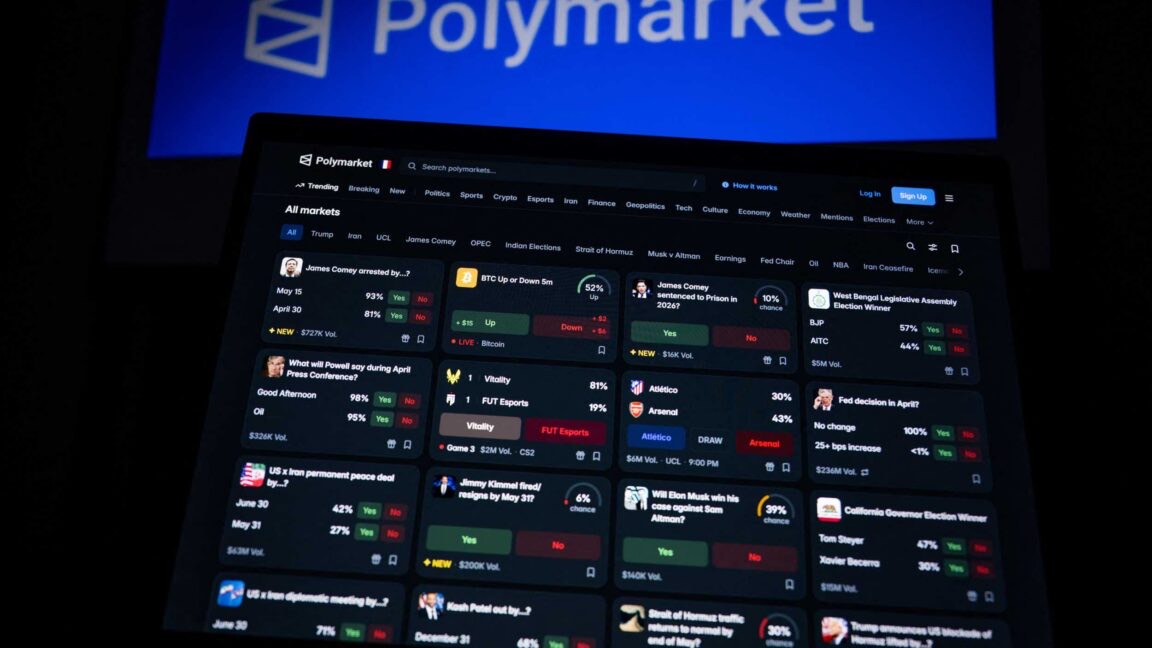
On October 20, US Defense Secretary Pete Hegseth signed a three-paragraph memo that prohibits everyone in the Department of Defense — service members, intelligence professionals and civilians — from trading on the outcomes of military operations using nonpublic information, directly or through a third party. The memo went out on “Secretary of War” letterhead and names two prediction markets in plain text: Polymarket and Kalshi. Violations, it warns, can bring administrative or disciplinary action, and where appropriate, criminal prosecution under the Uniform Code of Military Justice or federal law. The trigger is already in court: an Army Special Forces soldier who took part in the January 3 raid that captured Venezuelan leader Nicolás Maduro is charged with using the operation’s confidential information to bet on Polymarket — 13 wagers worth about $33,000, which prosecutors say profited $409,881. He was arrested in April. CBS News obtained and published the scanned memo on October 22 — the first time the Pentagon has treated insider betting as an operational-security problem for military intelligence, not merely a conduct issue.
Key points
- The memo is dated October 20, 2026, under the subject “Do Not Compromise Military Operations for Personal Financial Gain.” It went to senior Pentagon leadership, combatant command commanders, and defense agency and field activity directors, and covers both classified and unclassified nonpublic information.
- The ban spans “all financial platforms” and explicitly names Polymarket and Kalshi; violators face administrative, disciplinary or criminal action under the UCMJ and/or federal law.
- The case behind it: Master Sgt. Gannon Ken Van Dyke is charged with betting $33,034 across 13 wagers using knowledge of the Maduro capture operation — profits prosecutors put at $409,881. He was arrested in April 2026.
The Van Dyke case
The numbers come from the federal indictment, as reported by UPI. According to prosecutors, the master sergeant was involved in planning and executing the Maduro capture operation from around December 8. In late December he placed 13 bets totaling $33,034 on US military involvement in Venezuela; prosecutors put his total profit at $409,881. The Justice Department charged him in April; he pleaded not guilty in a New York federal court, and the case is still pending.
Polymarket’s response at the time was that the arrest proved “the system works.” The platform’s terms do ban insider trading — but expecting an offshore platform’s account controls to carry the whole enforcement load was always a stretch. By writing criminal liability into its own memo, the Pentagon is effectively conceding what was missing: deterrence with teeth.
What the memo says
The text is short and unusually blunt. “Make no mistake why this matters. Our enemies watch movements in these markets,” Hegseth writes. When a service member, intelligence professional or civilian “engages in a financial transaction on a military outcome, they create a signal” — one that hostile foreign intelligence services can aggregate, correlate and exploit to anticipate US movements, targets and timing. The warning then moves from leaks to judgment: a logistician with money riding on a strike date “has an interest in that date,” and an analyst with a position on an outcome has an interest in that outcome. Hegseth calls that “precisely the kind of dilution of the warrior ethos this Department has strived to eradicate under this administration.”
The “Secretary of War” letterhead and the “Department of War” wording are part of the second Trump administration’s renaming of the Pentagon’s top office, and they read as a deliberate choice: this is a culture decree from the principal, not a routine legal notice.
What others say
CBS’s exclusive was reported by James LaPorta, the network’s national security coordinating producer, who stressed that betting patterns can telegraph operations to adversaries. UPI filled in the indictment’s numbers and timeline. Ars Technica’s Jon Brodkin zooms out to the market around the case: an August report from the Anti-Corruption Data Collective counted 152 suspicious wallets that placed longshot bets on military and defense markets and collectively won about $8 million. Earlier episodes point the same way — the AP reported in April that newly created Polymarket accounts made well-timed bets on a US–Iran ceasefire just before Trump announced it, netting hundreds of thousands of dollars, and the White House warned staff against such trading the same day; a Trump teleprompter aide reportedly made about $100,000 on Kalshi wagering on the content of prepared remarks.
One unresolved tension runs under all of this: prediction markets have flourished under the administration’s light-touch regulatory approach, with the government arguing the CFTC has exclusive jurisdiction that preempts state gambling laws. Several states disagree and are asking the Supreme Court to uphold their right to restrict prediction-market betting. The platforms ban insider trading in their terms, but until Van Dyke there was essentially no criminal enforcement on record.
Our take
For anyone inside the defense ecosystem, the memo draws a bright line: nonpublic information plus a military outcome equals a prohibited trade, on any platform, not just prediction markets. For the prediction-market industry, the structural problem is untouched — as long as a market lets people bet on things they secretly know, its order flow carries intelligence value. When OpenStock folds Polymarket data into its sentiment panels, it treats those prices as an information asset; the Pentagon is now telling its own people they are both holders of that information and generators of that signal.
The memo also has an obvious limit: it governs DoD personnel, not the outsiders placing the bets. The 152 wallets that won $8 million on longshot military markets point to an enforcement vacuum on the platform side, and the CFTC jurisdiction dispute won’t be settled until the Supreme Court takes it up. Until then, prediction markets will keep growing in a gray zone. This Pentagon’s habit is to settle fights with a crisp directive first — as it did in the Anthropic supply-chain ruling and with the Project Meridian future-warfare study — and let the courts add teeth later. This memo follows the same pattern: write the bright line now, wait for the case law to catch up.