Linux 7.4 turns on AMDGPU HDMI 2.1 FRL by default, finally unlocking 4K 120Hz over HDMI
Linux 7.4 turns on HDMI 2.1 FRL by default for AMD Radeon, with FreeSync, VRR and ALLM too. The HDMI Forum saga that kept Radeon off 4K high-refresh HDMI ends.
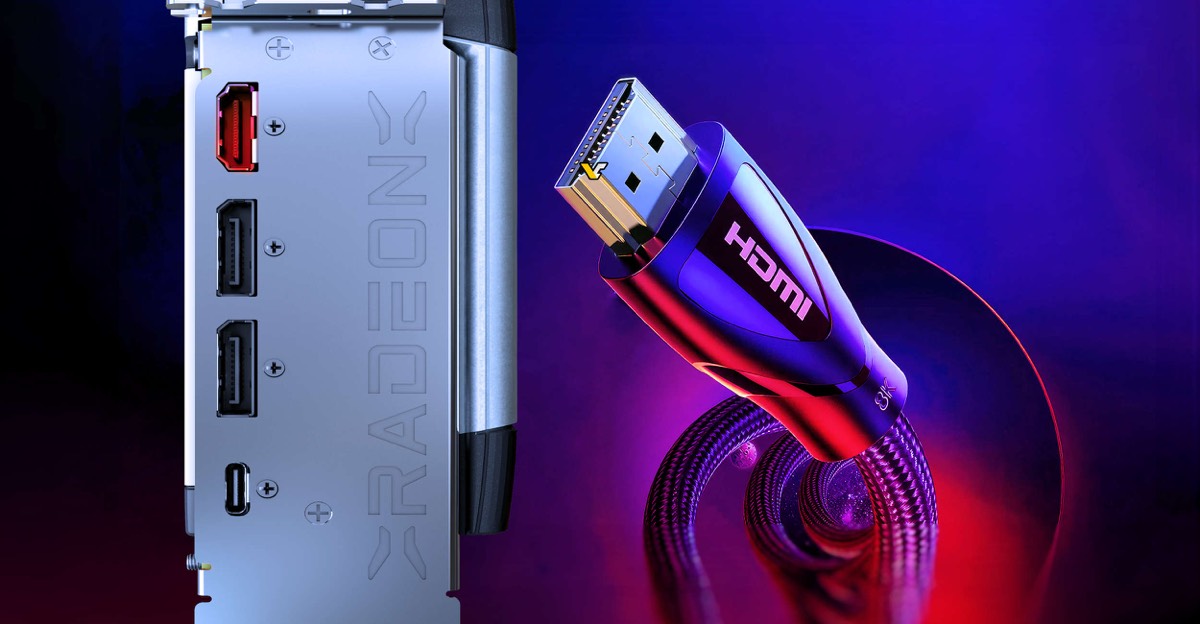
Radeon cards on Linux are about to get their HDMI 2.1 features without anyone flipping a kernel parameter. On September 10, Alex Deucher — the maintainer of AMD’s open-source kernel graphics driver — sent the amdgpu pull request for Linux 7.4 to the dri-devel mailing list, tagged amd-drm-next-7.4-2026-09-10. Its patch list includes “drm/amd/display: Enable HDMI FRL by default”: FRL, or Fixed Rate Link, is the HDMI 2.1 transmission mode that replaces the long-serving TMDS and carries far more bandwidth. HDMI 2.1 FreeSync, VRR and ALLM land alongside it, and Phoronix’s October 18 preview of 7.4 lists “AMDGPU finally enables HDMI 2.1 support by default” among the release’s contents.
Key points
- The September 10 pull request carries four HDMI patches in one go: “Enable HDMI FRL by default”, “Add HDMI 2.1 FreeSync support for AMD VSDB”, “Add HDMI 2.1 VRR support for HF-VSDB” and “Enable HDMI ALLM for Gaming-VRR”. A drm/edid patch on the core side teaches the kernel to read ALLM/VRR gaming capabilities from a display’s HF-VSDB.
- Timeline: the FRL patches surfaced in May, were merged in 7.2 with the default off (the stated reason was letting VRR mature and avoiding regressions), and 7.4 turns them on. The merge window opened October 19; the release is expected around the end of December.
- The “4K 120Hz” figure in circulation comes from MyDrivers’ October 24 headline and from community threads on Reddit and the Arch forums. Neither the pull request nor the English coverage names a specific resolution.
Background
The bottleneck dates to 2024, when the HDMI Forum refused to let AMD upstream its open-source HDMI 2.1 implementation. VideoCardz recalls Deucher explaining at the time that publishing an implementation signed under the HDMI 2.1 Adopter Agreement would conflict with the Forum’s requirements. The practical effect was that the open driver ran HDMI at 2.0’s TMDS rates, so higher resolutions and refresh rates over HDMI meant moving to DisplayPort or settling for compressed chroma formats.
The turn came in 2026. Phoronix reports the Forum’s change of heart is “widely speculated to be with Valve’s involvement” — Valve’s forthcoming Steam Machine living-room box leans on the AMD open-source graphics stack, and missing HDMI 2.1 support was one of its visible gaps. VideoCardz notes that Valve said in June the issue was “fully resolved”, that HDMI 2.1 VRR is supported, and that 4K 240Hz is planned over DSC. AMD posted the FRL patches in May; 7.2 took the code with the default switched off.
The merge window that opened this week is when it settles. Linux 7.3 shipped October 18 (our coverage), the 7.4 window opened the next day, and the same mailing-list week also brought the EDAC orphaning request (our coverage).
The facts
Deucher sent the request at 17:30 EDT on September 10 to dri-devel and amd-gfx. The pull updates 557 files with roughly 116,863 insertions and 9,853 deletions — that is the whole amdgpu update, of which HDMI is one cluster. The HDMI patches we checked:
| Patch | What it does |
|---|---|
| drm/amd/display: Enable HDMI FRL by default | Flips FRL’s default state from off to on |
| drm/amd/display: Add HDMI 2.1 FreeSync support for AMD VSDB | Enables FreeSync via AMD’s vendor data block |
| drm/amd/display: Add HDMI 2.1 VRR support for HF-VSDB | Enables VRR via the HDMI Forum data block |
| drm/amd/display: Enable HDMI ALLM for Gaming-VRR | Turns on ALLM auto low-latency mode |
| drm/edid: parse HDMI 2.1 gaming (ALLM/VRR) capabilities from HF-VSDB | Core-side patch, by Tomasz Pakuła, reads gaming capabilities from the display’s EDID |
VSDB and HF-VSDB are the data blocks a display declares in its EDID: the former is AMD’s own FreeSync extension, the latter the HDMI 2.1 standard location. The kernel parses both before deciding which features to expose for a given display.
The timeline agrees across reports: May, the FRL patches appear; 7.2 merges them with the default off, which Phoronix attributes to letting the VRR work mature and avoiding regressions; the pull request goes out September 10; Phoronix’s October 18 preview confirms the code is lined up for 7.4; the window opens October 19. On the release date, Phoronix says “right around the end of December”; VideoCardz says end of 2026 or early January 2027.
What others say
Michael Larabel at Phoronix calls the arrival of VRR and FreeSync in mainline “wonderful to finally see in place” and expects 7.4 to carry “all or at least a clear majority” of the HDMI 2.1 work.
The Reddit r/Amd thread is mostly about what happens on your own machine. One user says gaming distros such as CachyOS backported the changes long ago, and he has been running VRR over HDMI 2.1 on Linux for about six months, so the default flip changes nothing for him. Another points out that userspace VRR support already exists and FRL needs no special userspace cooperation, while ALLM waits on compositors to set the mode hints. Someone asks the practical question: can it do 4K 120 HDR now.
An October 16 thread on the Arch forums offers the other reference point. Nikolai5 already drives 4K 120Hz to his LG C1 over HDMI and suspects the current mode uses a reduced color format; gabrielsec replies that users already running basic 4K@120 “don’t necessarily notice a difference” — the gain is bandwidth headroom for better signal formats, plus VRR, FreeSync and ALLM, and what he cares about is whether “VRR works properly”.
Chinese coverage caught up on October 24, when MyDrivers’ headline put “4K 120Hz” on it. That figure appears only in that headline and the community threads above: the pull request and the Phoronix and VideoCardz stories promise no specific resolution, and the 4K 240Hz VideoCardz mentions rides the DSC path, a separate mechanism from the FRL default.
Our take
For a fresh install, this is a default flip that matters: put 7.4 on and the modes an HDMI 2.1 display declares should simply appear, no kernel parameter required. For anyone who enabled FRL manually or runs a backported kernel, the community’s verdict is consistent — you will not feel much, because you have been using this code already.
Three caveats. The release lands around the end of December; until then, your options are a 7.4 release candidate or a distro kernel that backported the series. ALLM depends on compositors cooperating; the kernel merge alone does not complete the feature. And “4K 120Hz” is the community’s shorthand and MyDrivers’ headline, not a figure the kernel pull promises — if your display or cable falls short, a default-on FRL will not conjure new modes.
For Steam Machine watchers, this is the kernel side of Valve’s June “fully resolved” line: the console has yet to ship, and the stack underneath it just closed its most visible gap.
What to watch
- Phoronix describes the window as two weeks from October 19, so by that arithmetic 7.4-rc1 should appear in early November.
- The release is expected around the end of December. Plugging in an HDMI 2.1 display and reading the mode list is the most direct check.
- Compositor support for ALLM and how VRR behaves in practice will show up in follow-up testing after the release.