Elektron bans firmware-mod sharing as M-VAVE publishes FM-1 app source
On October 19, 2026, M-VAVE released FM1 Open V14 with GPLv3 app source for its FM-1 synth, while Elektron banned sharing firmware-mod material on its forum.
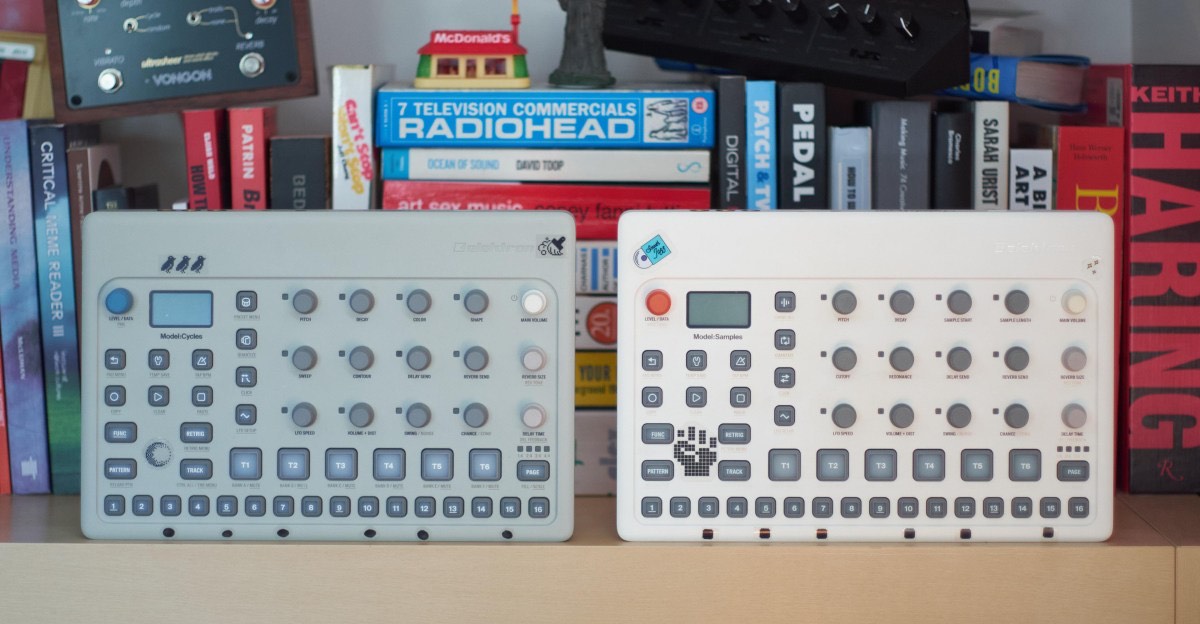
Third-party firmware for synths and pedals is multiplying, and several of the new projects say they used AI coding tools. Take M-VAVE’s FM-1, a compact FM synthesizer with a 128-voice DX7 library, where GitHub already hosts several projects that rewrite its firmware. On October 19, 2026, M-VAVE released FM1 Open V14, with GPLv3 app source and a binary SDK. Elektron, which makes the Model:Cycles, takes the opposite line: its forum has banned sharing firmware-modification material since September 16.
Key points
- Elektron’s forum statement, first posted on September 16, 2026, bans sharing, requesting or pointing people to files, tools, repositories or instructions for modifying firmware. It covers legacy machines and other manufacturers’ gear.
- M-VAVE created its FM1 Open repository on October 13. Version 14 shipped on October 19 with GPLv3 app source. The SDK remains a binary, and its proprietary source is not supplied.
- AI credit varies across FM-1 repositories. x0x’s last 100 commits all carry a Claude co-author trailer. Felucca’s 45 commits carry no such trailer, while its README discloses AI coding-agent use.
Background
Elektron’s position was not sudden. The first post gives its reasons: modifications can brick machines, block later system updates, affect warranty coverage and, in some cases, raise intellectual-property concerns. It also draws a line. General discussion is not the target. What it bans is distributing actionable material, or actively encouraging people to install changes that could damage their machines. The first post was last edited on October 16, and a follow-up dated September 17 says the company has updated its position on unsupported legacy machines.
Some FM-1 community work came even earlier. The oldest FM-1 repository in our check is AL-255/FM-1-RE, created on July 19, which reverse-engineers the FM-1 firmware. Its Hacker News thread went up on October 7 and had 75 points when we checked. ip2k/lunar-modulator, created on September 6, calls itself open firmware for the FM-1, but its repository description says it has not yet run on an FM-1. Felucca was created on October 2 and x0x on October 4. x0x describes itself as a fork of Felucca, but GitHub does not record it as one. pigeon, a sampler firmware based on Felucca, followed on October 11. M-VAVE’s public repository, m-vave/fm1_open, was created only on October 13.
Elektron hardware has been modded too. Modded Cycles, an MIT-licensed project for the Model:Cycles, was created on September 24. The Verge reports that its author, 18nelli, used Claude Code to build the first hack, six-track audio over USB. The README, however, credits scottmetoyer’s ms-multi-output (MIT) as “the original 6-channel USB mod.” The project’s first commit is from the same day. It is a technical note on the multitrack USB mod, and it carries a Claude Opus 4.8 co-author trailer.
Vibe-coded software has made news before. On October 13, Google opened a route for Android apps built in Google AI Studio to install straight from Play, but only into a private, creator-only area of the store, as we reported, and Epic rewrote its game launcher with vibe coding, in a separate story. Firmware is different. It runs on the hardware, so a bad flash can brick the machine.
The facts
The table sets the two vendors side by side, using the key terms from M-VAVE’s README and license.
| Elektron | M-VAVE | |
|---|---|---|
| Public record | Forum statement, first posted September 16, 2026, last edited October 16 | Repository m-vave/fm1_open, created October 13; V12 released October 14, V14 on October 19 |
| Stance on modding | Bans sharing, requesting or pointing to modification material, including legacy machines and other makers’ gear | Ships an SDK and a firmware workbench; the workbench can migrate from compatible third-party firmware |
| License | Not applicable | App source under GPLv3 with an SDK linking exception; the SDK is a binary without published proprietary source |
The README says V14 includes a binary SDK and offers a “Source + SDK” download. It advises backing up projects, voices and samples before an update, and keeping the device powered while writing. It also says compatibility has been checked only with selected firmware versions, and is not guaranteed for every third-party release. THIRD_PARTY.md lists components one by one, among them Open303, DaisySP and stmlib (all MIT), MSFA and Dexed’s msfa code (Apache-2.0), emu2149 (MIT) and the SEA codec (MIT).
The next table covers the repositories we checked, with counts taken around 17:00 UTC on October 19, 2026. “Created” is the GitHub creation date, which is not necessarily when a project started. “Claude mentions” counts commit messages that name Claude, across each repository’s full history.
| Repository | Created | Claude mentions in commits |
|---|---|---|
| aroum/fm1-custom-fw (FM-1 resource hub) | July 25 | 0 of 68 |
| ip2k/lunar-modulator (FM-1 firmware) | September 6 | 791 of 1,547 |
| hugelton/Felucca (FM-1 firmware) | October 2 | 0 of 45; README discloses AI coding-agent use |
| charlesvestal/fm1-x0x (FM-1 firmware) | October 4 | 181 of 197 |
| TheShrimpBlimp/pigeon (FM-1 sampler firmware) | October 11 | 0 of 90 |
| m-vave/fm1_open (official) | October 13 | 0 of 5 |
| themanro/ZoomMultistompZDL (Zoom MS pedals) | June 16 | 146 of 281 |
The Verge says the FM-1 now has “dozens” of custom firmwares. We could not check that number one by one, so the table covers what we could confirm. A missing Claude mention does not mean no AI was used. Felucca is the example.
What others say
The Verge’s October 19 report calls the FM-1 “a tiny $70 Yamaha DX7 clone,” but it cites no source for the price, and we could not verify one, so this piece gives no price. The report also lists new community firmware for Roland’s SP-404 MKII, Ableton’s Push 3 and Move, Akai’s MPC line, Novation’s Circuit, Arturia’s MicroFreak and Zoom’s MultiStomp pedals, all within about a month. That suggests the FM-1 is not the only case.
Two developers are quoted. Roman Rusinov, who posts on Reddit as themanro, made firmware for the Zoom MS-70CDR. He told the Verge: “If you own the hardware, you should be able to do whatever you want with it.” 18nelli, who wrote Modded Cycles, said: “I think not using LLMs would have been counterproductive.”
Synth Anatomy, in an October 17 analysis, wrote: “It seems M-VAVE has borrowed from other firmwares, though they don’t disclose this, which is a pity.” The piece also mentions the Dexed project. THIRD_PARTY.md does list MSFA and Dexed’s msfa code, so the criticism and the repository’s notices do not line up. We cannot tell which code the author had in mind, and we found no further evidence.
On Hacker News, a commenter in the reverse-engineering thread said developers would find this interesting but musicians probably would not. The commenter owns plenty of hardware synths and Eurorack modules and expected the FM-1 to sit idle after a day or two. That is one reader’s view, not a survey.
Our take
The points below are for independent developers who build hardware and embedded firmware. There are three.
First, check which layer is open. M-VAVE publishes the app source under GPLv3, but the engine is a binary SDK with no proprietary source. Anyone who wants to change the behavior should first confirm which layer they can actually edit, or they will overestimate what they can change.
Second, AI credit is inconsistent, so commit messages alone cannot tell you whether a project used AI. x0x’s last 100 commits all carry a Claude trailer. Felucca discloses AI assistance in its README, while the commit messages in pigeon and aroum carry no such mention. Credit is a choice each project makes. It proves neither use nor non-use, and it says nothing about code quality.
Third, both vendors pay a price. Elektron’s ban is meant to protect its machines and its intellectual property, and the forum can no longer host firmware-mod sharing. M-VAVE has put its app source and SDK in the community’s hands, but its own README concedes that compatibility was checked only for selected versions.
Our limits are real. We did not build, flash or run any of these firmwares, and we did not test their stability. This piece checks repositories, licenses, commit records and reporting, not firmware behavior. The lunar-modulator description says it has not yet run on an FM-1, yet more than half of its commits carry a Claude mention; many commits do not mean the code has run on a device. Three questions remain open: how long M-VAVE will keep this up, how Elektron will handle legacy-machine discussion, and whether “dozens” is accurate.
How to try it
The README offers two routes. The first is the official workbench, linked as open.m-vave.com/fm1-workbench, which updates firmware, previews the instrument and manages projects, samples and DX7 voices. Back up projects, voices and samples before updating, and keep the device powered during writes. The second is a local web preview. On Windows, run .\tools\Build-Web.ps1 -LocalPreview from PowerShell; it needs Windows x64 with curl.exe and tar.exe. Building the firmware itself also needs the JieLi PI32v2 clang 4.0.1 compiler. We did not run either route or open the workbench link.