Neuralink shows a trial volunteer playing GTA 6 by brain signal
Neuralink posted a clip on Nov 20 of a trial volunteer steering a GTA 6 speedboat with its N1 implant. Reporters also saw finger taps.
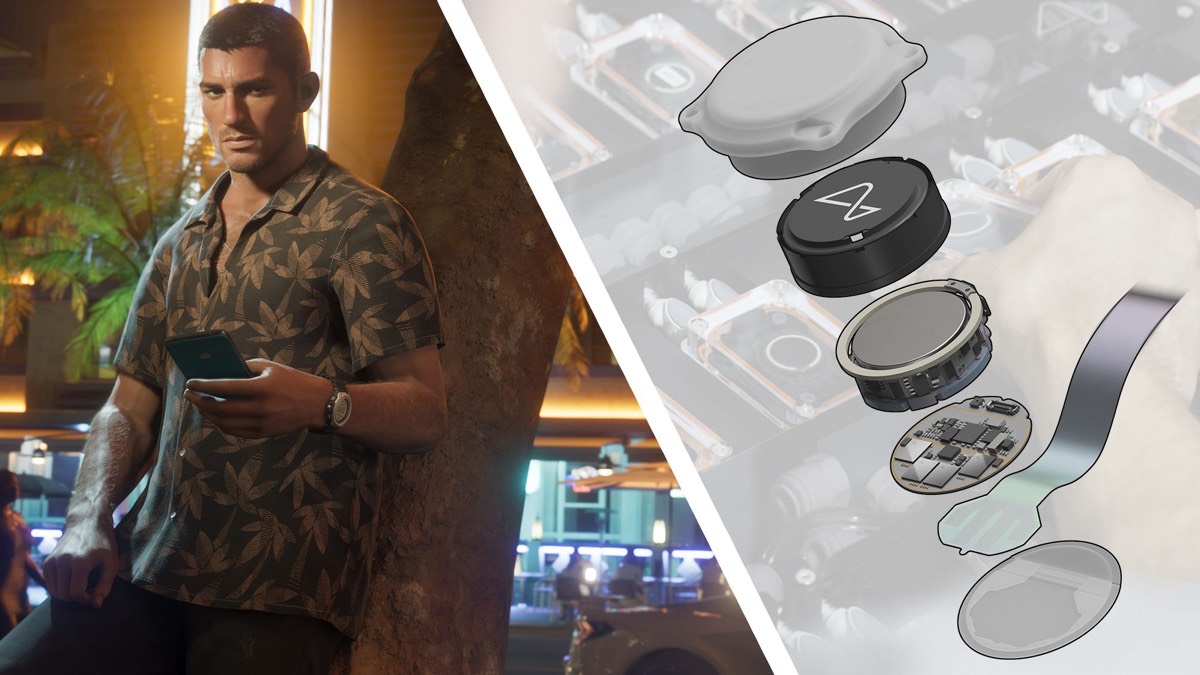
Neuralink is a brain-computer interface company whose N1 implant reads activity from the motor cortex and turns it into cursor moves and clicks; the product is called Telepathy. On November 20, 2026, its official X account posted a clip of roughly two minutes captioned only “Playing GTA VI with a Neuralink”: a clinical trial participant driving a speedboat under a bridge and into a narrow channel to collect a package in GTA 6. The game had launched the day before, on November 19, which makes the timing look like a company demo timed to the release rather than a research result.
Key points
- Neuralink posted the roughly two-minute clip on November 20. TechRadar says the setup “apparently” covers fighting, driving, shooting and flying, not just the boat.
- TechRadar, watching closely, says the player “seems to be using some small physical movements as well as brain activity, including taps with a finger.” Neuralink disclosed no console, latency, success rate or calibration routine.
- As of January 28, 2026, Neuralink said 21 people were enrolled in its trials worldwide. The company repeats that the N1 is investigational and not approved by the FDA.
Background
Neuralink’s public gaming demos go back more than two years, and the through-line has been the cursor. The PRIME study implanted its first human in January 2024; in a progress update early the next year the company said it had three participants, and that the first had used the implant to play chess and Civilization VI on a MacBook and Mario Kart on a Switch — the first time he could play it since his injury. In its two-year update on January 28, 2026, Neuralink called trial participants “Neuralnauts” and put the worldwide total at 21.
What those demos have in common is that the tasks are discrete: pick a square, hit a button, take a turn. Bits per second is the yardstick Neuralink uses to compare this with an able-bodied person: the company says a hand on a mouse manages about 8–10 BPS, and that its first participant started at 4.6 and later reached 8.0. A 3D action game asks for something else. Throttle and heading have to be held at the same time, the camera has to be corrected while the scene moves, and there is no pause between “release” and “click.”
The facts
The verifiable detail in this demo is thin, but each piece traces to a source.
| When | What was shown | How it was controlled | Evidence |
|---|---|---|---|
| 2024 | Chess, Civilization VI | Cursor moves and clicks | Company progress update |
| 2024 | Mario Kart on a Switch | Not specified | Same update |
| 2026-11-20 | GTA 6: speedboat, driving, shooting, flying | Not specified | Company video on X |
Three things sit side by side in the frame: a webcam view of the participant, a live neural-decoding dashboard, and a diagram of a game controller whose inputs light up as commands register. That shows the signal is being mapped onto controller inputs. It does not show how stable the mapping is. Neuralink also did not say which console was used, how long the participant has had the implant, whether he recalibrates before each session, what the latency is, or how often the inputs miss.
A reply in the same thread carries the company’s own disclaimer: the devices are investigational and have not been approved by the FDA or other regulators, and participant experiences are shared voluntarily and may not represent other participants or future outcomes. The participant’s identity is undisclosed too; Neuralink calls him only a clinical trial participant. Names and patient numbers circulating on social media have no company source behind them, so this article does not use them.
What others say
The closest reading came from tech press, not from neuroscience. TechRadar’s November 21 report is careful with its wording: the details are “fairly sparse,” the player “seems to be using some small physical movements as well as brain activity, including taps with a finger,” and yet the setup “apparently” covers fighting, driving, shooting and flying. In the same piece the participant calls the experience “pretty wild” and says the implant gave him a “portal to the world.”
Interesting Engineering, filing on the night of the post, adds the shot-by-shot detail: the boat passes under a bridge and into a narrow, tree-lined channel, following an in-game prompt to collect a package; Neuralink confirmed neither the participant’s identity nor the console. Its verdict is that the clip “does not establish that all participants can independently control commercial gaming systems,” and that experimental console control is open only to some people in its studies.
Skepticism about this class of demo is older than the demo. In February 2024, Futurism reported on interviews in Nature with a Baylor College of Medicine neurosurgeon who specializes in implanted neurotechnology — Neuralink is “only sharing the bits that they want us to know about” — and with a BCI researcher at Case Western Reserve University, who noted that the first person to control a cursor with an implant did so in 2004, and that “a human controlling a cursor is nothing new.” The point still holds in 2026: what changed is the difficulty of the task, not the principle. Neuralink’s own language stays more conservative than the headlines — research is still ongoing.
Our take
For people working on accessibility and assistive tech, the interesting part is not that someone played GTA. It is that control moved from discrete to continuous. A cursor click is a single event, and the system only has to be right at one instant. A 3D game requires holding a direction and a magnitude at the same time and correcting as the scene changes. If that decoding holds up, the payoff is not gaming — it is robotic arms and wheelchairs, which also need sustained input rather than one-off selections.
The honest catch comes in three parts. The sample is one person, in a clip the company chose to publish. There are no quantitative numbers: Neuralink already has the BPS yardstick and did not apply it here. And the footage suggests fingers may still be involved, which leaves outsiders unable to tell how much of the control is neural and how much is manual.
“Restored” is the other word to watch. PRIME’s stated goal is to let people control computers and phones again, not to restore limb movement and certainly not to cure spinal cord injury. Reading a game demo as evidence of recovery is the most common slide in coverage of this company. The same caution applies to any self-published result: when Anthropic announced in September that about 950 Claude agents had found a CRISPR-like system, the academic response was to ask for the experiments first (950 Claude agents find a CRISPR-like system). Brain-computer interfaces raise the bar higher, because the data comes from someone’s brain.
What to watch
Three things are worth tracking. First, whether Neuralink attaches numbers to a task like this one: success rate, latency, how long it runs without recalibration. Any of them would be worth more than a clip. Second, the participant count: the company said 21 in January 2026 and has not updated the figure publicly since, though it now runs a UK trial and has opened a patient registry in Canada, so the real number has probably moved. Third, regulation. Neuralink says its Blindsight vision implant received FDA Breakthrough Device Designation in 2024 and is still waiting on approval; the N1 itself remains an investigational device, a long way from anything a consumer can buy.