Safety#Security scan#Reverse engineering
uBlock Origin's element picker allowed one-click universal XSS, fixed in 1.75.4
uBlock Origin's Firefox MV2 build let a page drive its element picker into adding trusted script filters, enabling universal XSS. Fixed in 1.75.4; no CVE.
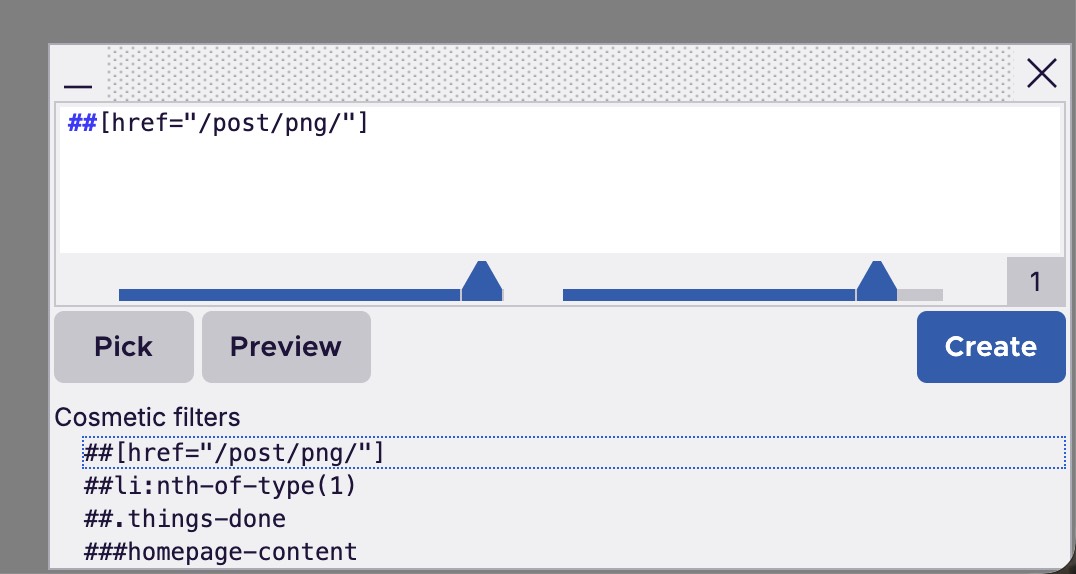
uBlock Origin is an open-source content blocker, and its Firefox build still runs on Manifest V2. On November 15, 2026, researcher Smitty van Bodegom published a universal XSS in it: any website can frame uBO’s element picker and drive it into adding a trusted filtering rule once the visitor clicks, and that rule can inject script that then runs on other sites. GitHub advisory GHSA-cmqw-9r2w-6wv2 rates it High, lists 1.75.2 and lower as affected and 1.75.4 as patched, and assigns no CVE.
Key points
- The exposure has edges: the advisory covers uBlock Origin 1.75.2 and lower, patched in 1.75.4, and concerns the Firefox MV2 build. It is a client-side flaw, not a server incident, and there is no claim that every uBO user was compromised. The stable release reached 1.76.4 on November 15.
- Three design choices had to line up: the picker page sits in
web_accessible_resources, so any site can frame it; the picker acceptspostMessagetraffic without authenticating the sender; and theoptfield is concatenated into a rule without validation. A default uAssetsno-fetch-ifrule also hands the page the per-install extension UUID. - Exploitation needs one click: the author did not build the click-trick part, but notes that a page only has to get the visitor to click anywhere to overlay the picker’s Create button with a transparent frame. Rules created by the picker count as trusted until the next rule recompile.
Background
uBO’s element picker lives in the right-click menu as “Block element”: pick a node, adjust the proposed filters, press Create, and the rule goes into My filters without leaving the page. The UI is not an extension popup. uBO injects an iframe pointing at web_accessible_resources/epicker-ui.html inside its own package, and that page talks to the background script and adds the rule. Because the file is a web-accessible resource, any web page can create its own iframe aimed at the same URL.
The default uAssets list includes a no-fetch-if rule for lootdest.* that swaps an ad script for a local shim: the rule makes the extension issue an XHR against a moz-extension:// resource and returns that response as the fetch body. The XHR is started from page context, so a page that rewrites XMLHttpRequest.prototype.open can read the extension UUID out of the request URL. That UUID is random per installation and survives clearing cookies. The author notes several paths could leak it, not just this rule.
Timeline details come from the advisory’s email thread. The report arrived by email on November 1. The next day’s 1.75.2 replaced the scriptlet XHR method that could be tainted. 1.75.4 on November 3 added a startup token to the picker. 1.76.0 on November 8 added validation before a filter is created. The advisory itself went out on November 15. uBO’s maintainer explained in the thread that he preferred not to publish details until a stable release carried the fix.
How the chain worked
The chain is not a memory bug. It is a trust boundary drawn in the wrong place. The first leg is disclosure: once a page knows the installation UUID, it can build the picker’s full address and frame it. The middle leg is a channel: the picker starts up, waits for a start message, then accepts commands to show the dialog and set a result set, without checking whether the sender is the content script that hosts the real picker or an arbitrary web page. The last leg confuses data with trust: opt is meant to hold a resource type and gets appended to the rule text, so a newline smuggles a second rule behind the one shown to the visitor, and the extension does not inspect that text at creation time.
Converting “trusted” into “executable” is the last step. Filters created by the element picker are treated as trusted, and trusted filters may carry script-injection directives, which is exactly how the picker can block dynamically inserted elements. An attacker writes a script directive aimed at a target site, opens that site, and the script runs in the target’s origin. No extension page visit and no install are required, but a click on the attacker’s page is. The author says he skipped that last step and only described the transparent-iframe overlay.
Fixes and versions
The advisory lists four commits that shipped across three stable releases. 1.75.4 is the patched version it names; 1.76.0 adds validation and a temporary ban on war: rules, which is defense in depth.
| Version | Date | Commit | Effect |
|---|---|---|---|
| 1.75.2 | 2026-11-02 | Avoid tainted XHR methods in scriptlets | Closes the most direct UUID leak |
| 1.75.4 | 2026-11-03 | Element picker launches only with a verified secret token | The version the advisory names as patched |
| 1.76.0 | 2026-11-08 | Validate a filter before creating it; disable war: rules for now | Blocks the newline smuggle and shrinks the rule surface |
| 1.76.4 | 2026-11-15 | Current stable | Contains all of the above |
The author is unusually plain about how the work happened: GPT-5.6 Sol did most of the hard part of finding the bug, he verified it, he wrote every word of the post, and Claude wrote most of the PoC code. His post also says the MV3 build, uBO Lite, had a similar but less serious issue, without details or a version number.
Reaction
The Hacker News thread reached 417 points and 120 comments by November 16, and the argument moved quickly from the bug to the extension permission model. One commenter noted that uBO has to read and modify anything on a page to do its job, which makes any defect easier to exploit. Another called extensions that rewrite page content a powder keg, and said this was the fuse burning. The counter-view came just as fast: one user argued for uninstalling, and others replied that ad slots are packed with scams and malware, so blocking is itself a security measure.
The UUID side effect got its own thread of comments. Because the leak turns a per-install identifier into something any site can read, one commenter called it a tracking identifier that survives cookie clearing, an ironic outcome for a privacy tool. That is a confidentiality problem with the same root cause as the XSS, and the advisory mentions it in a single sentence. As for independent coverage, searches through November 16 turned up the author’s post, the GitHub advisory and the HN thread; no major security outlet had filed a story. We covered a related browser trust failure last month in XBOW’s agent-built Chrome exploit chain, and the lesson repeats: when the boundary is wrong, the blast radius is every site, not one feature.
Our take
This is a client-side vulnerability, not a server breach, and there is no evidence of exploitation in the wild; writing it up as “all uBO users owned” would be wrong. It still deserves a note because each of the three mistakes is ordinary: an internal page left in web_accessible_resources, a postMessage handler that never checks the sender, and a user-controlled string spliced into a rule. Any extension team can find a cousin of this in its own code.
Few readers need to act. Firefox updates extensions automatically, and most people who open about:addons will see 1.76.x. The ones to check are machines with a manually installed old XPI, an enterprise policy pinning a version, or a fork.
Open questions matter too. The advisory carries no CVSS score and no CVE, which complicates asset inventories that key off vulnerability databases. The author suspected a race could bypass the fix when uBO injects the picker into an iframe late, but could not reproduce it consistently, and the advisory does not confirm it. The uBO Lite situation gets one sentence in the author’s post. None of that changes the advice to run 1.76.x, but all of it changes how precisely you can size your own exposure.
One more caveat on self-assessment: the picker path leaned on a default uAssets rule, and that list changes with every filter update, so “I don’t have that rule” is not a safe way to decide you were never reachable. With cases like AdFection turning ad slots into an infection channel in the same news cycle, the trustworthiness of the blocker itself is now part of the threat model.
What to do
Open about:addons and check the uBlock Origin version. 1.75.4 or newer clears the advisory’s bar, and the current stable is 1.76.4. There is no reason to uninstall or reset settings. If compatibility testing or a policy has pinned an older build, schedule the upgrade and only then consider a temporary alternative. uBO Lite users won’t find more detail yet; keeping automatic updates on is the whole remedy.
For extension developers, the three checks generalize: keep state-changing pages out of web_accessible_resources, authenticate cross-origin messages or require a one-time token, and treat every string that arrives from a page as untrusted before it reaches a rule, a query or a template.