AirDrop Comes to Linux: The Last Leg of a Seven-Year Relay
A Linux laptop with MediaTek Wi-Fi can now AirDrop both ways with an iPhone while staying online. Inside the seven-year relay that got it there.
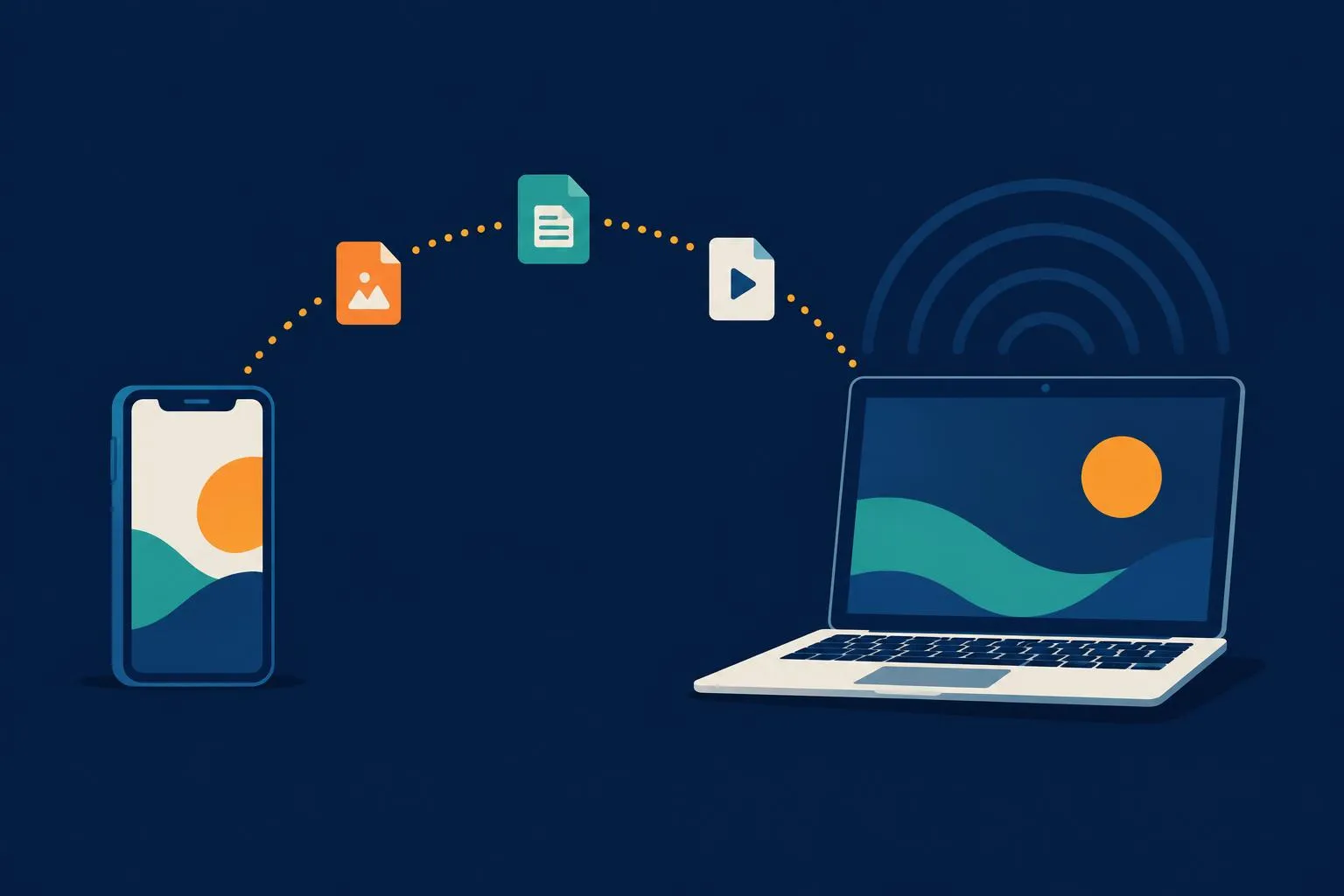
On October 9, 2026, a one-minute video landed in the omdrop-owl repository: an iPhone opens its share sheet, picks a machine named Linux Laptop, and a 34 MB photo crosses the room into ~/Downloads. The laptop runs Omarchy, the accept prompt in its top bar looks exactly like the one on a Mac — and its Wi-Fi never disconnects.
The project was open-sourced on October 8 and collected 954 stars in two days (checked 2026-10-10). The tempting story is a hacker’s weekend miracle. Read the commit history across four repositories and the story starts eight years earlier, with a research paper and three handoffs in between. This piece is about how the last leg was run, who ran the first three, and how much weight the bridge can actually carry.
Key points
- AWDL, the link layer under AirDrop, was reverse-engineered in public by a TU Darmstadt team in a MobiCom 2018 paper; OWL and OpenDrop were open-sourced in May 2019. The original setup required an external Atheros card, and AWDL’s inability to coexist with a normal Wi-Fi connection sat in the upstream OWL README as a known limitation for over six years.
- On July 31, 2026, a developer under the handle jedbillyb got two-way transfers working on a built-in MediaTek MT7921 (40–67 kB/s, Wi-Fi down during transfers). In September, Brent Kearney shipped a firmware-level path for Omarchy on Apple Silicon that merged into Omarchy’s kernel branch. On October 8, Tristan released omdrop-owl: ordinary x86 laptops, both directions, Wi-Fi stays up, about 1.3 MB/s receiving.
- omdrop-owl reached 954 stars in two days (checked 2026-10-10). Intel cards don’t work for firmware reasons, and the router must sit on AWDL channel 6, 44, or 149.
A paper, then silence
AirDrop never touches your router. When an iPhone sends a file to a Mac, it speaks Apple Wireless Direct Link — a proprietary protocol layered on top of standard Wi-Fi, where two devices take turns switching the radio on and off, talking to each other in agreed time slots. In 2018, TU Darmstadt’s Milan Stute and colleagues published “One Billion Apples’ Secret Sauce” at MobiCom, laying out the slot structure, the election process and the synchronization logic in full. A year later the same group demonstrated man-in-the-middle, jamming and tracking attacks against AWDL at USENIX Security. The protocol was public, and so was the implementation: in May 2019 the lab released OWL (in C) and OpenDrop (in Python), which hit the Hacker News front page that August with 813 points and 222 comments.
The 2019 experience was far from pleasant. OWL’s README demanded a card with active monitor mode; community practice converged on an Atheros chip from around 2010, and the path of least resistance was buying a USB dongle. The deeper constraint lived in a section called “Current Limitations”: when OWL started, it took the radio exclusively, and your Wi-Fi had to drop. The fix was written in the same paragraph — create a monitor interface and include the AP’s channel in the AWDL channel sequence. What followed was a long quiet spell. OpenDrop’s last formal release shipped in April 2021. The project’s own website, owlink.org, lapsed so completely that the domain now serves a gambling site; the OpenDrop README carries a disclaimer saying it has nothing to do with owlink.org anymore.
We assumed “Wi-Fi stays connected” was this year’s clever trick. The 2019 README says otherwise: the solution had been written down for seven years. What was missing was never the idea — it was someone with the time to build it.
Three legs in two months
The first leg came from a repository that today has two stars. On July 31, 2026, a developer under the handle jedbillyb published airdrop-mt7921: no Atheros dongle, transfers in both directions with the laptop’s built-in MediaTek MT7921/7922, working against iOS 26. The costs were stated plainly in his status table — 40–67 kB/s, so a photo took a minute or two, and Wi-Fi switched off for the duration of a transfer. His OWL fork documents two mt76 driver traps with a line that anyone who has debugged firmware will feel: “Both cost a day to find; neither reports an error.” He also arranged fifteen patches adapting OpenDrop to iOS 26 — every time Apple shifts the protocol, this line of work has to re-align.
The second leg switched to a fundamentally different route. Brent Kearney, a self-described “software wrangler in the Canadian Rockies”, runs Omarchy on Apple Silicon Macs — DHH’s Arch + Hyprland distribution has a dedicated Mac variant, omarchy-mac (1,924 stars). He leaned on a fact most of the community had overlooked: Apple’s own Broadcom firmware already speaks AWDL, so why re-enact the protocol in software? From September 13 he shipped omdrop-awdl (fourteen brcmfmac patches that expose the firmware’s AWDL as an awdl0 interface) and omdrop-plugin (a bar panel with a radar of nearby peers, notifications, clipboard integration); his kernel PR #24, filed September 25, has already been merged into Omarchy’s linux-aurora branch. The route’s limit mirrors its strength: it works on M1/M2 Broadcom cards only, and ordinary x86 laptops need not apply.
The third leg merged the two routes and returned to that seven-year-old TODO. Tristan (GitHub id t4t5) is not a newcomer — sweetalert, from 2014, still shows 22,251 stars; he later built the Bitcoin explorer Ordiscan; his GitHub bio reads “open sorcerer and plaintext enthusiast”, and his January 2026 blog post describes running DaVinci Resolve and Omarchy on a Framework 13. That machine’s Wi-Fi card is a MediaTek MT7925. On October 8 he brought OWL back to userspace, following jedbillyb’s monitor-interface approach and adding one decisive move of his own: park AWDL on the access point’s own channel (6, 44, or 149). A monitor interface injects frames using the station’s MAC; the station interface answers the phone’s unicast. The radio never leaves the AP, so the Wi-Fi never drops. omdrop’s CLI and panel accepted the new backend unchanged, and Debian/Ubuntu packaging landed within two days. We published a full entry on the project: omdrop-owl: Real AirDrop Between iPhone and Linux.
| Date | Repository | The step that mattered |
|---|---|---|
| 2019-05 | seemoo-lab/owl, opendrop | Protocol open-sourced; Atheros card required; radio used exclusively |
| 2026-07-31 | jedbillyb/airdrop-mt7921 | Built-in MediaTek card, both directions, 40–67 kB/s, Wi-Fi down |
| 2026-09-13/15 | brentkearney/omdrop-awdl, omdrop-plugin | Broadcom firmware path + Omarchy product surface |
| 2026-09-25 | aurora-silicon/linux PR #24 | AWDL patches merged into Omarchy’s kernel branch |
| 2026-10-08 | t4t5/omdrop-owl | Userspace AWDL without leaving the AP; MT7925 at 1.3 MB/s |
Two userspace generations, more than an order of magnitude apart:
| Setup | Measured speed | Wi-Fi during transfer | Source |
|---|---|---|---|
| omdrop-owl (MT7925) | ~1.3 MB/s in, ~490 kB/s out | stays connected | project README, 2026-10-10 |
| airdrop-mt7921 (MT7921/7922) | ~40–67 kB/s | dropped, restored after | that project’s README, 2026-10 |
How much weight the bridge carries
The hard limits first. Intel cards (AX200/AX211) are confirmed out: while connected they drop injected frames, and their firmware won’t ACK in monitor mode — the project’s hardware table marks them with a cross. Nobody failed at engineering here; the whole scheme depends on a card’s incidental ability to inject frames from a monitor interface while staying associated, and MediaTek’s recent generations happen to manage it. The router has to cooperate too: the AP must sit on channel 6, 44, or 149, or omdrop-owl refuses to start. The owl-profiles compatibility table has a handful of lines; the author has packaged the test script and the reporting flow, and every new row makes one more class of machines work.
The protocol itself deserves more caution. AWDL is reverse-engineered and proprietary; Apple owes nobody stability. iOS 26 already invalidated one of jedbillyb’s channel strategies, which he keeps in his docs as a measured negative result. If Apple reshapes the slots or the handshake again, the relay runs another leg. “Contacts Only” remains out of reach: verifying the sender’s identity requires Apple-issued certificates that open-source implementations cannot obtain, so the phone must switch to Everyone — consider what that means in a coffee shop. And the repository has no LICENSE yet; anyone planning to ship it in a distribution should ask first.
Our verdict: treat this as a good bridge, not as infrastructure. If the bridge goes out, the ferries still run — croc and Syncthing work on any hardware with no Apple in sight, at the cost of installing something on both ends. omdrop-owl’s value is precisely that the iPhone side needs nothing at all: it is the share sheet the phone already ships with. And the bridge is being maintained: the omdrop main program released 0.15.0 on October 10, and the 0.14.2 security fix came out of the Omarchy plugin marketplace’s security review — this ecosystem has auditors as well as builders.
What to do now
If your laptop carries a MediaTek MT7921/7922/7925, you can try this today: put the router on channel 6, 44, or 149, install the omdrop main program plus omdrop-owl, flip the panel switch, and your machine appears in the iPhone’s share sheet. The full walkthrough lives in our entry. On any other card, run the project’s test-card.sh and send the report upstream; readers bridging iPhone and Linux by other means can pair it with our piece on building iPhone apps without a Mac, from the same ecosystem the same week.
One signal is worth watching: the number of rows in owl-profiles. Its growth rate is the growth rate of this relay.