Developer tools#MCP#Reverse engineering
REA: reverse engineer anything with your coding agent
REA connects coding agents to Hopper, Ghidra and IDA through one MCP server: reverse engineer apps without source code, evidence attached to every finding.
Project facts
GitHub Ecosystem- License
- MIT
- Language
- TypeScript
- Stars
- 82,583
- Data checked
- 2026-10-11
Snapshot figures reflect the check date and may change over time.
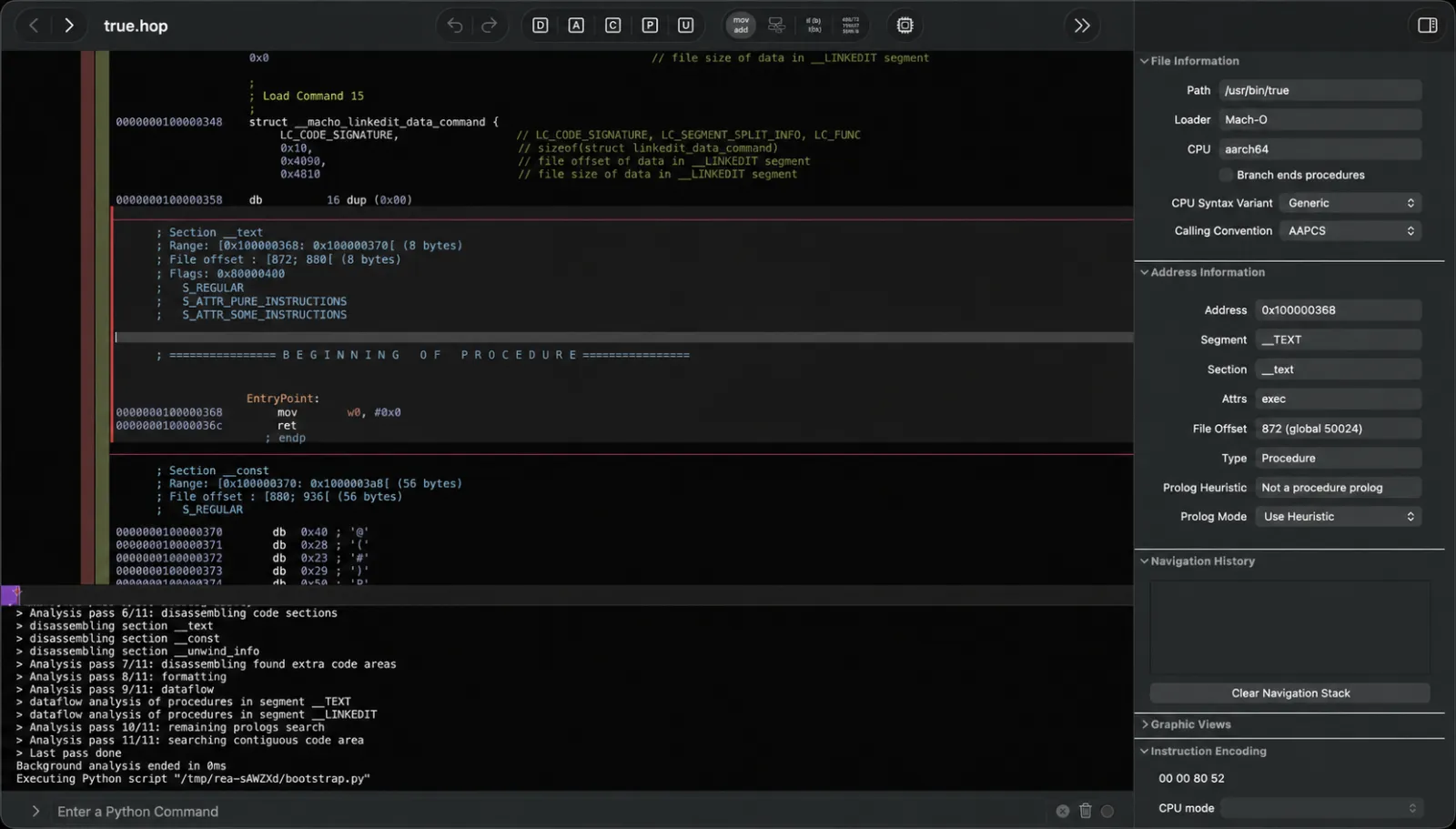
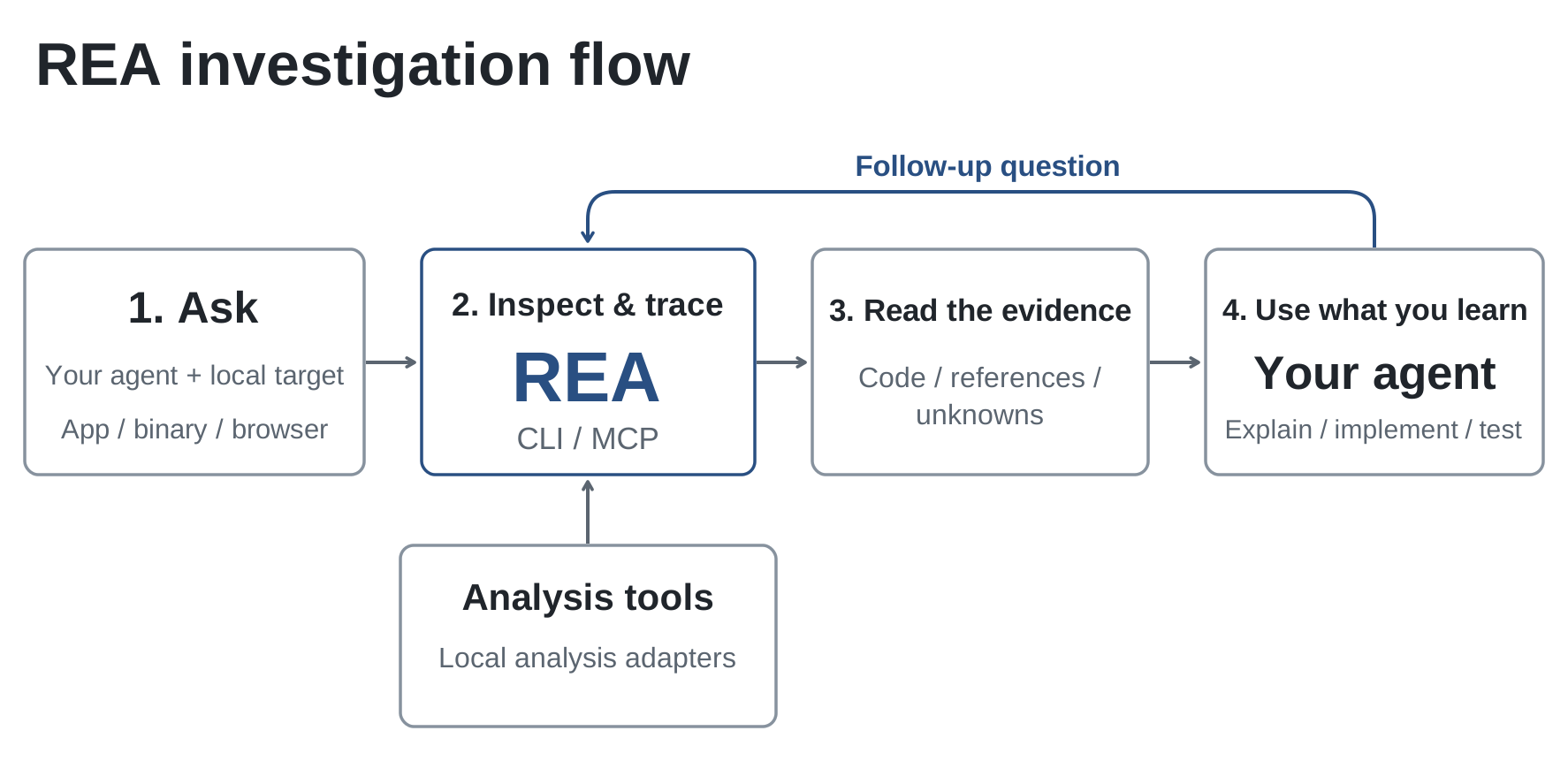
You spot a feature you like in an app and want to know how it actually works — and you don’t have its source. REA (by morluto, MIT-licensed, written in TypeScript, created 2026-04-14, 82,583 stars as of 2026-10-11) connects your coding agent to Hopper, Ghidra and IDA through one MCP server, so Claude Code, Codex or Cursor can investigate an app’s behavior from a web page down to native binaries. It invents no new decompilation; its two real contributions are a unified tool interface agents can actually drive, and findings that ship with their evidence and limitations instead of the model’s guess.
Core features
- One setup for mainstream agents:
npx rea-agents setupregisters the MCP server and installs matching workflow instructions for Claude Code, Codex, Cursor, Gemini CLI and Grok Build, backing up your existing configuration first. Used from a terminal, the same engine is thereaCLI with snapshots, result import/export and--jsonoutput for scripts. - Findings carry their evidence: native analysis returns pseudocode, assembly, symbols and call references, and every conclusion ships with its evidence and limitations. The site’s demo pins the Windows Calculator’s
%behavior to a specific build — on Calculator 11.2508.4.0 x64,%after+takes a percentage of the first number (200 + 10% = 220), while after×it acts as 0.1. - Analysis stays local: targets are inspected on your machine and not uploaded. Your agent receives the tool results, and your model provider has its own data policy — the README’s FAQ says this plainly.
- A wide target list: 15 target types from native binaries to firmware, each with its own engine requirements. The common ones:
| Target | What you get | Needs |
|---|---|---|
| Native binaries | Pseudocode, assembly, symbols, call references | Hopper / Ghidra / IDA |
| JavaScript and Electron apps | Modules, imports, source maps, routes, IPC | Node.js only |
| Websites | Page structure, scripts, network observations, screenshots | A Chrome-family browser |
| .NET assemblies | Metadata, CIL instructions, native dependencies | None (static) |
| Android APKs | Manifest, classes, decompiled methods, references | JADX + JDK |
| Firmware | Regions and extraction results | Binwalk / Unblob |
| Network captures | Requests, responses, exposed payloads, source locations | A HAR file |
| Process behavior | Terminal interaction, exit status, filesystem observations | Linux or macOS |
Adapted from the project README’s target table, checked 2026-10-11.
Typical use cases
- Security research and CTF: Ghidra covers 16-bit DOS programs, and EVM bytecode analysis, ELF layout diagnostics and recorded crash notes round out the usual security-research lanes.
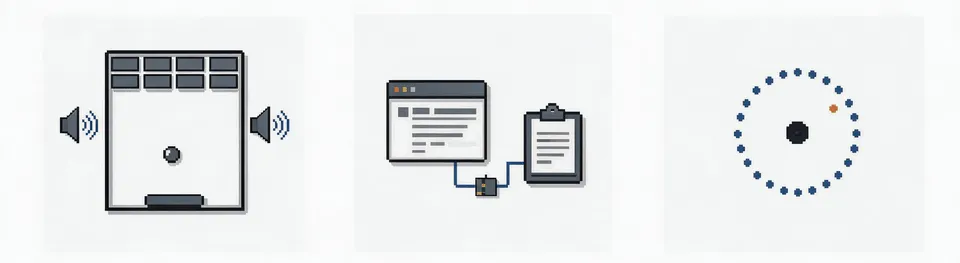
- Borrow a feature for your own project: the site’s first lesson traces how the Notes app exports CSV, then builds one for your project; the Chrome dinosaur game’s speed rule (start at 6, add 0.001 per update, capped at 13) was recovered and verified in a controlled check.
- Game and software preservation: the community used REA to reconstruct DX-Ball’s 1996 sound-pan calculation — the rebuilt C passes 3,205 original-x86 cases and reproduces all 63 compiled function bytes — and recovered the PC-98 game TH04’s bullet-angle math as compilable C++.
- Find out what’s running on your machine: who an Electron app talks to, why a process exits — static ASAR analysis, HAR captures and process observation cross-check each other.
Quick start
You need Node.js 22.x (≥ 22.19), 24.x (≥ 24.11) or 26+, plus npm, then:
npx rea-agents setup
Pick your agents, approve the changes, restart, and ask (the README’s own example):
Understand how search works in the Notes app, show me the evidence, and build a
similar feature for my project.
Deep native analysis needs Hopper (setup can install it with your approval), Ghidra or IDA; JavaScript, Electron and .NET analysis need no engine at all.
Summary
Made for security researchers, reverse-engineering hobbyists, and developers who want to borrow an interaction detail from another product. If the plan is to clone a commercial app and resell it, look elsewhere — that is a legal problem, not a tooling one. MIT license, written in TypeScript. Three things to know:
- The legal line is yours to hold: the README endorses lawful reverse-engineering research only, and software whose license forbids analysis is off-limits; cloning for resale is a different matter entirely. In the 734-point Hacker News thread (opened 2026-10-10), “fully automated luxury plagiarism” critics and game preservationists went at it — the former doubt AI-produced decompilations qualify as transformative fair use, the latter count the old games that are simply no longer sold anywhere.
- The hype has froth in it: a demo tweet on October 4 pulled 314k views, and six days later the repo sat at #1 on GitHub Trending (the author confirmed it on 2026-10-10). Some of those 82k stars are trend tourism — the author’s own post asks “is an open source project good because it has stars, or does it have stars because it is good”. The README also carries a denial: no REA token exists, and coins using the name are scams.
- No algorithmic breakthrough — the interface is the value: REA wraps existing engines behind an agent-usable interface and forces evidence into every result. Hacker News commenters also showed the no-REA route: Claude patching two long-standing bugs in the Windows Remote Desktop binary from symptoms alone, or reverse engineering the Insta360 app to add AMD GPU acceleration. The tool amplifies; it is not the ticket.
Releases move fast — 5.0.0 landed October 7 and 6.4.0 shipped October 11, which the author calls “much, much faster” — so run rea update before you start. In the same spirit, universal-modder turns coding agents into PC-game modders, and LCU splits a closed app’s computer control into MCP tools.