Apple opens Siri AI to all developers
Apple opened Siri AI to all developers on Nov 3: App Intents, multi-step skills and the Spotlight semantic index, with App Store submissions in spring 2027.
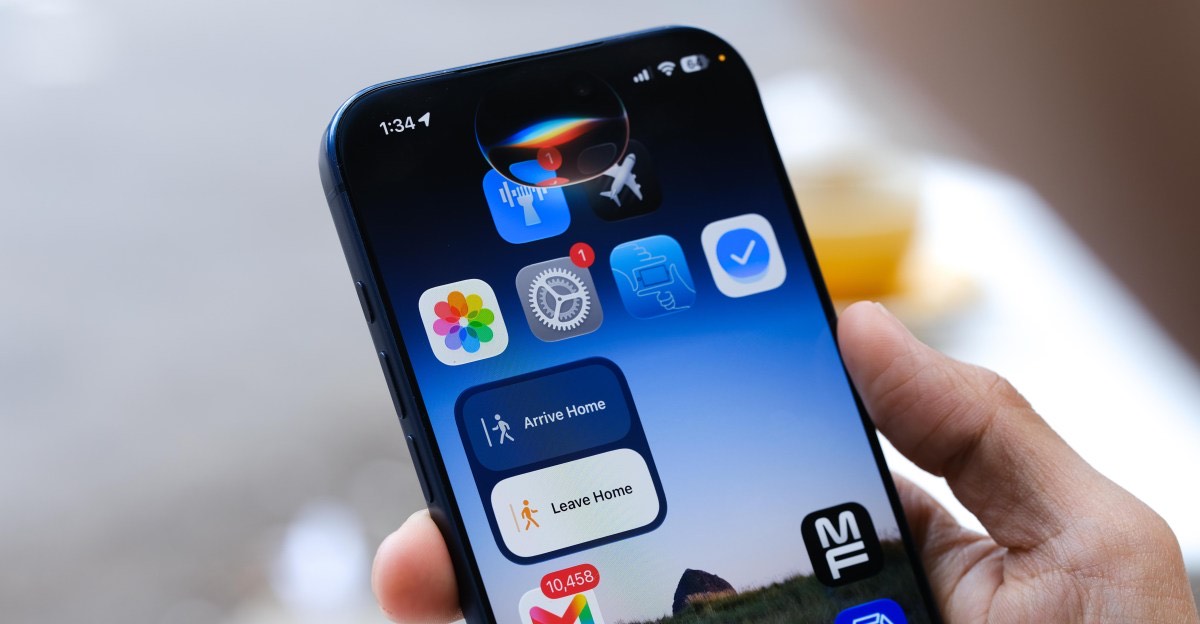
Apple opened Siri AI to every developer on November 3, posting a developer news item titled “Siri AI is now open to all developers.” Any app can now plug its content and actions into Siri AI through App Intents, teach the assistant multi-step “skills” that chain several apps into one request, and surface arbitrary entities through the Spotlight semantic index — no predefined category required. The tooling ships as a developer preview in the iOS, iPadOS, macOS, watchOS and visionOS 27.3 betas; per Apple’s post, the first customer experiences arrive within a few months, and App Store submissions open in spring 2027. “We are shipping a developer preview that dramatically expands the capabilities of all apps to integrate into Siri,” wrote Michael Gorbach on X.
Key points
- Three channels open at once: App Intents (personal context, onscreen awareness, natural language), skills (multi-app action chaining), and the Spotlight semantic index (any entity, not just existing schema categories), per Apple’s developer post.
- The timeline has three steps: developer preview now in the 27.3 betas, first customer features within a few months, App Store submissions in spring 2027.
- The limits are spelled out: no EU availability on iOS, iPadOS and watchOS, no users under 13, daily usage limits on server-side features, and expanded access will cost money in the future.
Background
This is the second door Apple has opened for AI on its platforms, and the first one into the assistant itself. In June 2025 the company shipped the Foundation Models framework, letting apps call the on-device model; per Observer’s timeline, Federighi framed it as opening direct access to the on-device large language model for any app. Siri AI itself reached users in an English beta in September 2026, and October’s iOS/macOS 27.2 update added cross-conversation memory plus a per-app exclusion switch — we covered that release. Third-party access had been the bottleneck: per 9to5Mac, only a small set of predefined schemas was supported, so custom actions like changing a ride’s pickup point or booking a restaurant had no entry point. The competitive backdrop matters too: OpenAI admitted in antitrust filings that ChatGPT’s Siri integration underperformed, after which Apple pivoted to a multiyear Gemini licensing deal with Google — a turn we wrote up when the filings surfaced.
The facts
The preview runs on any Apple Intelligence-capable device set to a supported language. Here is what each channel does, per Apple’s developer post:
| Channel | What it opens | Official example |
|---|---|---|
| App Intents | App content and actions inside Siri AI, using personal context, onscreen info and natural language | “Change my ride pickup to a new address” |
| Skills | Several actions across apps combined into one request | Find a sneaker, identify the recipient, send it in Messages |
| Spotlight semantic index | Any entity can be indexed, beyond existing schema categories | Surface the coffee shop a user visited last week |
Language support covers English, French, Japanese, Korean, Portuguese and Spanish, with Traditional Chinese, Norwegian, Turkish and Vietnamese listed as coming. Fifteen first-party apps are already wired up in the 27.3 betas — Calendar, Files, Finder, Journal, Mail, Maps, Messages, Music, Notes, Photos, Preview, Reminders, Safari, Shortcuts and Weather — with official demos including organizing Safari tabs and archiving files untouched for over a year. Digital Trends flagged the practical change for developers: custom actions outside the predefined categories — restaurant reservations, delivery status checks, placing orders — are finally declarable.
What others say
The Verge’s useful addition: users will not always need to name an app. When an app is in the foreground, showing a Live Activity, or being discussed with Siri, the assistant routes to it automatically — and you can ask Siri what it can do in any given app. 9to5Mac puts skills in the same bucket as what other LLM-driven assistants offer, arguing Apple is closing the assistant-level integration gap. Observer quotes Mark Quinn, head of operations at Pearl AI and an Apple alum: Apple “decided to pivot to their strength,” because rival personal agents lack “a brand of trust and security and privacy.” User distrust has numbers behind it too: Menlo Ventures’ 2026 report found 76% of US adults not using AI cite privacy as the main reason — with the caveat that Menlo is an Anthropic investor. The finances carry their own signal: on the November 2 earnings call, per Observer, Apple said Siri handles more than 2.5 billion requests a day, and Siri AI’s cloud costs are landing in services cost of sales — December-quarter gross margin is guided at 45–46%, down from 47.9% in the September quarter.
Our take
For transactional apps — ride-hailing, delivery, commerce, notes, travel — this is the closest-to-the-user AI opening Apple has made since the on-device model API, and it is worth adapting against the 27.3 betas now; Apple runs two Apple Intelligence Group Labs sessions on November 4 and 5 for exactly this. Price the trade first. No EU availability means European gains wait; daily usage limits plus a promised future fee mean the free window will not last; and Apple has not published the review bar for whether a skill fires correctly. Pushing App Store submissions to spring 2027 buys roughly half a year of adaptation time — a demoable cross-app chain built in that window is worth more than racing to submit on day one.