Products#Runtime#Cloud#Device control
Anthropic launches Claude Duet, a resident agent with its own cloud browser
Claude Duet, previewed Oct 21, runs Opus 5.5 on a cloud VM with 6,000+ connectors; its background checks count against your Claude plan.
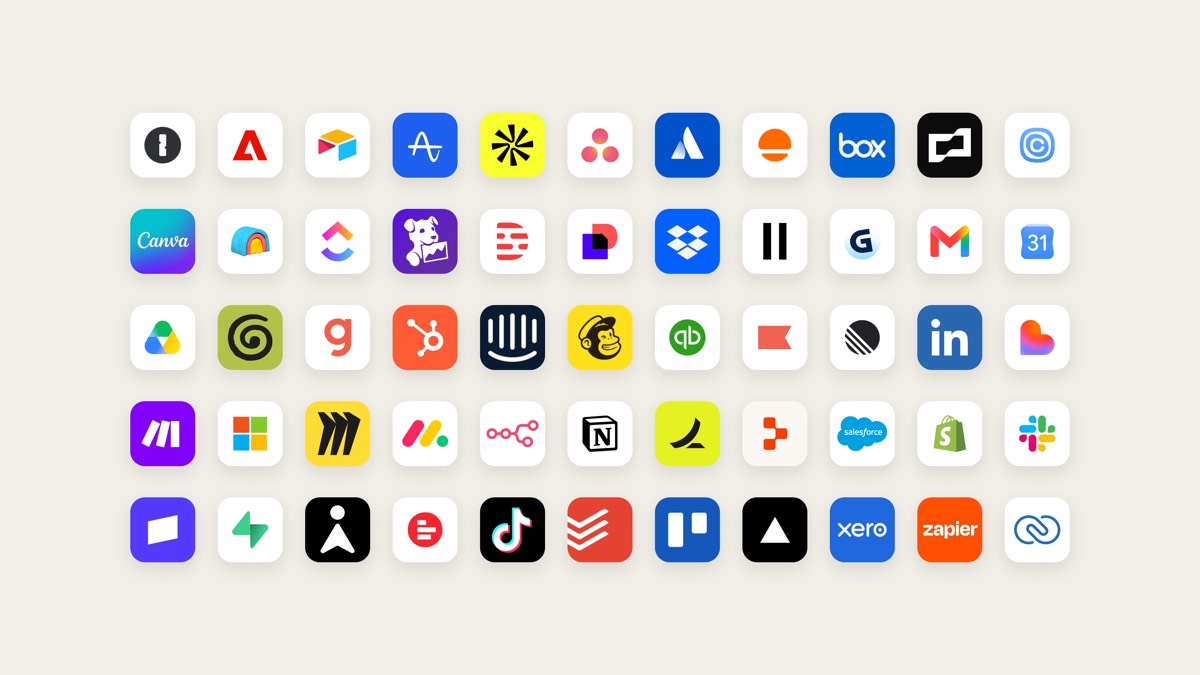
Anthropic opened a research preview of Claude Duet on October 21, 2026. It is a standalone app built around what Anthropic calls a proactive agent: Claude runs on a cloud virtual machine with its own browser, keeps working after your laptop and phone are off, and reaches Gmail, Slack, Stripe, QuickBooks and Shopify through more than 6,000 connectors and plugins in the Claude Marketplace. The waitlist starts with US Pro and Max subscribers; Team and Enterprise plans are excluded for now. It checks connected apps every few hours, and those checks draw on the same usage limits as the rest of Claude.
Key points
- How it runs: Duet is built on Opus 5.5 and gets a cloud VM with its own browser, so it does not need your device to be on. It ships as standalone iOS and Android apps, with desktop access through claude.ai, and stays separate from the main Claude app during the preview.
- Approvals and hard limits: Before sending a message, making a payment, signing a document or deleting anything, it shows the action and waits for your approval. Trading securities and moving money between accounts are off-limits even with approval.
- Billing: Anthropic states that during the preview Duet is included in Pro and Max plans and shares their usage limits, background checks included. Neither official page publishes a separate Duet price.
Background
Engadget frames the launch as Anthropic arriving late. Meta’s Muse shipped September 8, and OpenAI’s Dots arrived at DevDay on September 29; both had already put always-on agents in front of users. We covered the Dots launch, which sold the same shape: its own cloud computer, thousands of app integrations, approval before sensitive actions. Muse took the other route, free plus heavy promotion, and had passed 3.4 million downloads by late September (our report). Duet enters a category with a settled product template, so the differentiation lands on the model and on billing.
Billing has its own history. On October 7, Anthropic added monthly API credits to Max and Team plans, up to $500 (we wrote about it on October 8). Before that, on May 13, it announced it would move Agent SDK automation onto a separate monthly allowance from June 15, then emailed subscribers on the day it was due to say the change was paused. Which allowance pays for automation is a question Anthropic has answered differently several times this year.
The facts
The official resource article (October 21, filed under Announcements, marked as a 5-minute read, no byline) and the product page give this specification.
| Item | Detail |
|---|---|
| Model | Claude Opus 5.5 |
| Runtime | A cloud virtual machine with its own browser; your hardware can stay off |
| Connectors | More than 6,000 connectors and plugins in the Claude Marketplace |
| Platforms | Standalone iOS and Android apps; desktop through claude.ai |
| Eligibility | US Pro and Max subscribers, by waitlist; Team and Enterprise excluded |
| Needs approval | Sending a message, making a payment, signing a document, deleting anything |
| Blocked even with approval | Trading securities, moving money between accounts |
| Payments | Stripe’s Link wallet pays with a virtual card, so the real card number is not shared; Shopify’s Shop Pay also works |
| Credentials | Anthropic says Duet never directly sees your passwords or sign-in tokens; signing in with 1Password logins is “coming soon” |
| Check frequency | Connected apps are checked every few hours, not continuously |
| Billing | Shares the Pro/Max plan usage limits; background checks count toward them |
| Price | Not published |
The permission model is worth reading line by line, because Anthropic spells out every action type. Four of them each require a separate approval: messaging, payments, signatures, deletion. Two more are hard-blocked regardless of what the user says: securities trading and transfers between accounts. Payments run through Stripe’s Link, where Duet confirms the item, Link asks you to approve the amount, and a virtual card settles it without exposing your real number. Shop Pay works at online stores. The 1Password integration is listed as coming soon with no date.
Credential handling follows the Claude Managed Agents design; Anthropic’s own wording is that Duet never directly sees your passwords or sign-in tokens. A new dedicated classifier and safety system prompt review every message against leaks: requests to share credit card numbers or government identification are rejected outright, and health or personal finance details go out only when the user explicitly instructs it. Anthropic says internal red teams and an outside penetration-testing firm both went at the product, and that it falls under the public bug bounty program.
Billing is the part of the launch most likely to be skipped, and the official wording is unusually direct: “During the research preview, Claude Duet shares your plan’s usage limits with the rest of Claude,” and “its background checks count toward those limits.” The product FAQ adds that larger jobs, such as building a financial model or a deck, take more model turns and more background work. The check interval is itself a billing decision. Anthropic’s stated reason for checking every few hours rather than continuously is that “checking nonstop would use up your plan’s limits much faster.”
What others say
Engadget’s Igor Bonifacic, writing at 5:03PM ET on October 21, supplies the counter-view worth building the story around. He calls the shared allowance “a recipe for the new agent to blow through your rate limits,” and notes that Anthropic clearly knows the risk. He also offers two comparison figures: OpenAI’s Dots is currently limited to the Pro tier, which starts at $100 a month, while Duet will come with the $20-a-month Pro plan at general availability.
Those two numbers need separating. The $100 figure for Dots is a press figure only: OpenAI published no price, and our September entry recorded Wired and The Verge disagreeing. The $20 is checkable: reading claude.com/pricing on October 22, Pro lists at $20 monthly, or $17 a month billed annually. So $20 is the price of Pro, not a Duet price Anthropic has announced — neither official page states one anywhere.
The same piece writes the eligibility too broadly. Engadget calls the waitlist open to “Claude subscribers”; the product page FAQ and iClarified both limit it to US Pro and Max and state that Team and Enterprise plans are not included yet, while MacRumors also names only Pro and Max in the United States. The resource article body likewise names only Pro and Max (“included in Pro and Max plans”, “starting today with Pro and Max users in the US”) and never mentions Team or Enterprise; that exclusion appears only in the product FAQ. Everything agrees on Pro and Max, so we follow the official product page.
MacRumors’s Juli Clover, publishing the same day, adds the credential and safety details but otherwise restates the announcement and gives no price. Her piece mentions only the iOS app, omitting Android, which both Anthropic pages list. iClarified’s Shalom Levytam, dated October 22, covers the approval list, the prohibited actions, Link’s virtual card, Shop Pay and 1Password completely — still a restatement, with no independent testing.
The Hacker News submission had reached 327 points and 293 comments by October 22. Three objections are worth separating out. One commenter asks why this capability is not native to Claude instead of a separate app. Another argues that a resident agent is the worst place to lock yourself to one model family. A third compares notes on Dots from actual use: it struggled at anything coding-related but worked well as a tool for watching message channels, surfacing important email that filters had buried. Those are individual impressions, not a review.
Our take
For anyone building agent products, Duet is a permission model you can read as a spec: separate approval per action type, two hard prohibitions, virtual-card payments, a classifier that gates sensitive data by tier, and credentials the agent never holds directly. That combination is considerably more specific than “asks before sensitive actions,” and it will become the baseline for comparing whatever ships next.
What decides whether it survives daily use is the billing model. Putting “background checks count toward your plan’s limits” in print moves the cost of being always-on into the subscription users already pay, and the price is a check interval measured in hours — with Anthropic admitting it can miss something that arrives between check-ins. That leaves users unable to estimate anything for themselves: how many checks an hour, how many apps each check reads, how much of the allowance it burns. Anthropic publishes no numbers for any of the three. The only way to find out whether your plan holds up is to watch usage, not to read the documentation.
One easy point of confusion: the monthly API credits Anthropic added in October do not help here. Those cover the Claude API, Claude Managed Agents, the Agent SDK and the Console, and per the help center they exclude overage usage inside Claude’s own apps. Duet sits on the app side, so it draws on plan limits instead.
There is also a structural tell. Anthropic’s reason for making Duet a separate app is that what it learns from early users “will shape how the two work together” — in plain terms, the product shape is not settled. Anyone joining the preview should expect the interface and the data to move later. Waiting for it to fold back into the main app is a defensible choice.
What to watch
- Pricing and general availability: no date and no Duet price from Anthropic. Whether Engadget’s “comes with the $20 Pro plan” holds at GA needs official confirmation.
- 1Password integration: listed as coming soon, undated. It decides whether Duet can log into older systems that never supported OAuth.
- A visible browser: Anthropic concedes you cannot watch what it does in the browser yet. During a preview, that is the limitation that costs the most trust.
- Team and Enterprise: explicitly excluded, with no timeline. Team purchasing has to wait on this.