Policy#Open-source alternatives
GrapheneOS accuses Google of using GMS licensing to pressure OEMs
GrapheneOS says Google pressures OEMs through GMS licensing and discourages bootloader unlocking, and wants regulators to act. Google has not responded.
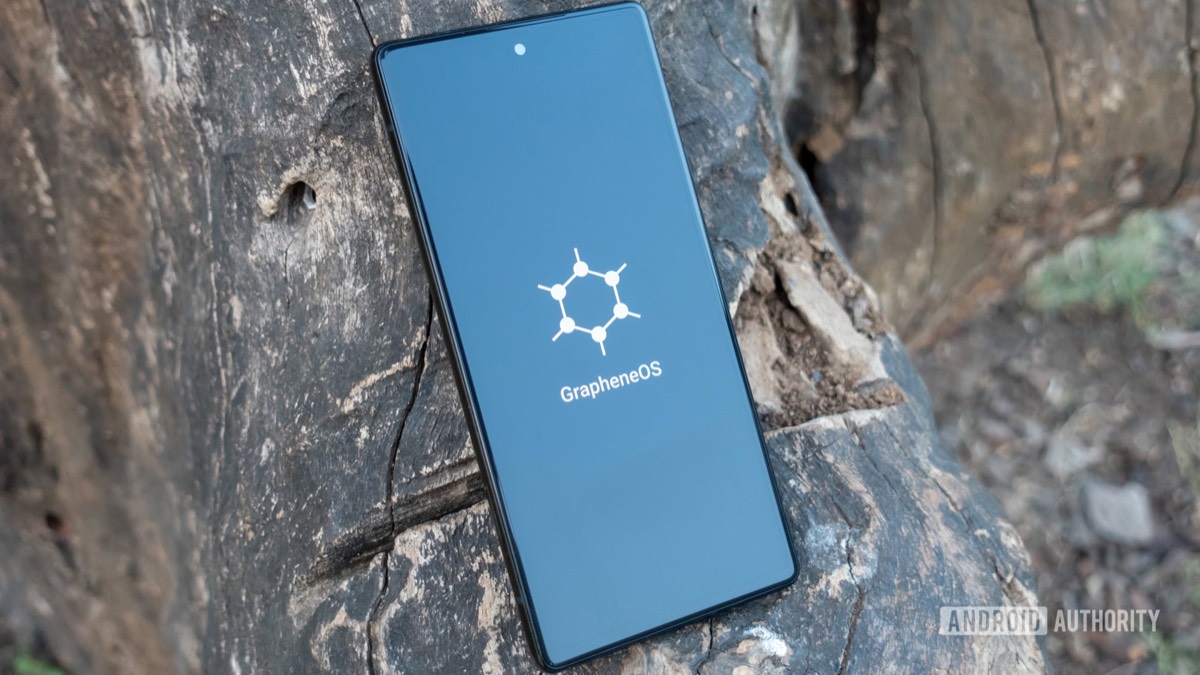
GrapheneOS is an Android-based phone OS built from open-source AOSP code and focused on privacy and security hardening; until recently it officially supported only Google Pixels. On the night of November 19, 2026, its official Mastodon account posted a thread of posts accusing Google’s business side of repeatedly contacting Android device makers (OEMs) to ask whether they were working with GrapheneOS, then pressuring them with GMS licensing terms and pushing them not to support bootloader unlocking. The thread tagged the US Department of Justice and said the project would seek help from EU regulators. As of November 21, neither Google nor any named OEM had responded publicly, and GrapheneOS had published no emails, meeting notes or named manufacturers, so this is an allegation, not an established fact.
Key points
- GrapheneOS says Google “repeatedly” contacted OEMs to ask whether they were working with the project and threatened them with GMS licensing terms; the evidence offered is that “multiple OEMs” told the team directly, with no documents published.
- The technical lever in dispute is Play Integrity: Google’s own documentation says Android 13 and later can only reach device integrity with hardware-backed proof that the bootloader is locked and the OS is a certified manufacturer image.
- The rulings that can be checked are South Korea’s in September 2021 (about $177 million) and the EU’s 2018 Android decision (€4.34 billion); both addressed anti-fragmentation and preinstallation terms, not the legality of GMS licensing as a whole.
What GrapheneOS alleges
The thread makes three distinct claims, aimed at different targets. The first is about OEMs: Google, the team wrote, “has been repeatedly reaching out to OEMs to question whether they’re working with us and threaten them based on GMS licensing terms found to be illegal by multiple courts.” The second is about hardware: the team expects Google to start locking Pixel bootloaders, which would leave custom operating systems without a device to install on. The third is about the ecosystem: Google keeps a growing share of features and system updates exclusive to Pixels, so AOSP forks never receive the same code.
The bootloader claim needs precision. Android has always allowed unlocking, and Pixels ship an official path (enable OEM unlocking in settings, then run fastboot flashing unlock). GrapheneOS is not saying Google banned flashing. It is saying Google is trying to talk OEMs out of offering unlockable hardware, and that Google may tighten unlocking on its own phones. The wording is a prediction — “We expect Google will begin bootloader locking Pixels” — not a report of something that happened.
The ecosystem complaint comes from the project’s own porting work. GrapheneOS says Android 17 QPR1 and QPR3 are no longer pushed to AOSP and belong to the Pixel OS alone, and that QPR2 was delayed, so a finished Pixel 11 port could not ship. In the same thread the team credits Google’s engineers: they have helped directly and added support for GrapheneOS, including Vanadium support for Play services FIDO2 and passkeys. The blame is assigned to the business side, not to the people writing code.
Licensing vs Play Integrity
Two mechanisms are tangled in this story, and separating them is most of the work. GMS is Google’s closed suite of apps and services; an OEM that wants to preinstall it signs a license, passes compatibility testing, and accepts preinstallation and placement terms. AOSP itself is open source and can be used without GMS, at the cost of the Play Store and Google’s apps. Play Integrity is different: an API an app calls to ask Google for a verdict on whether the app, the device and the account look trustworthy, then decides for itself whether to allow, degrade or block.
The verdict tiers are where bootloaders matter. According to Google’s Play Integrity documentation, checked on November 21, 2026:
| Verdict | Requirement in Google’s docs | Result with an unlocked bootloader or a custom OS |
|---|---|---|
MEETS_BASIC_INTEGRITY | Passes basic system integrity; the bootloader may be locked or unlocked | Usually still passes |
MEETS_DEVICE_INTEGRITY | Genuine, certified device; on Android 13+ hardware-backed proof that the bootloader is locked and the OS is a certified manufacturer image | Fails |
MEETS_STRONG_INTEGRITY | Device integrity plus security updates across all partitions within the past year | Fails |
Google’s troubleshooting section is blunter still: to get a test device to pass device integrity, reinstall the factory ROM and lock the bootloader. Unlocking does not brick a phone, but it does shut out apps that require device or strong integrity — banking apps, payment wallets and some DRM-protected streaming services are the usual three. Apps that only check basic integrity keep working.
GrapheneOS goes further than that mechanism. It argues the API’s “primary purpose” is to enforce GMS licensing “by banning any hardware or OS which isn’t licensing it,” and that Play Store app protection can refuse installation outright when device or strong integrity is missing. Google’s documentation describes the API as a signal about app and device integrity and does not present it as a licensing tool. The causal claim is GrapheneOS’s; Google has not answered it.
What courts actually ruled
GrapheneOS says these GMS terms have been “found to be illegal by multiple courts.” Two specific cases can be matched to that sentence. South Korea’s Fair Trade Commission fined Google about $177 million in September 2021 for restricting manufacturers such as Samsung from using modified versions of Android, which is why the project says Samsung enjoys more freedom than other OEMs. The European Commission’s Android decision of July 2018 imposed a €4.34 billion fine over preinstallation bundling and anti-fragmentation terms; according to ITHome’s November 21 report, an EU court upheld a €4.1 billion penalty in July 2026.
The scope of those rulings matters. Both dealt with specific contractual arrangements — anti-fragmentation agreements, preinstallation conditions, bundled licensing. Neither declared GMS licensing illegal as a category, and neither ordered Google to open Play Integrity to third-party systems. GrapheneOS’s summary is broader than the judgments. Android Authority’s phrasing is more careful, noting only that Google “lost court battles over its agreements with OEMs” and that those agreements “included terms restricting manufacturers when it came to shipping devices with Android forks.”
Regulatory intervention has precedent. Australia’s Federal Court ordered Apple to open iOS to third-party stores and external payments in October, which shows courts will rewrite platform rules directly. That case was about app distribution and payments, a different lane from GMS licensing.
What others say
Android Authority covered the thread on November 20 and repeated the three main claims: OEM contacts, threats tied to GMS terms, and the possibility of locked Pixel bootloaders. The article says the outlet contacted Google and Motorola for comment and would update with a response. As of November 21 there was no update, and neither company had said anything publicly.
ITHome’s November 21 report is the main Chinese-language secondary source, and its headline frames the story as Google blocking a Motorola partnership. That framing goes beyond the original thread, which never names an OEM; Motorola is the company that announced a long-term partnership with the GrapheneOS Foundation at MWC in March 2026 and confirmed the Signature 27 as its first officially supported phone. Motorola is background here, not an accused party. GrapheneOS later said in a reply that Motorola is “working with us within the rules set by Google,” and that GMS licensing prevents Motorola from directly selling GrapheneOS devices at large scale.
There is also a small timeline discrepancy: ITHome dates the partnership announcement to MWC in March 2026, while Android Authority writes “last year.” It does not change the allegation, but it shows how loosely second-hand accounts repeat the background.
The community response was mostly requests for evidence. One user asked directly whether Motorola was one of the OEMs Google contacted; GrapheneOS did not answer. Others described being unable to create a Google account or install a particular app on GrapheneOS, tying the experience to Play Integrity. There was support and skepticism in roughly equal measure, and no independent material from either side.
Our take
For ordinary users, the first thing to break will not be flashing a phone. It will be a banking or wallet app deciding the device is not trustworthy. Pixels can still be unlocked through Google’s own path, and GrapheneOS still supports them; the barrier lives at the app layer and arrives one app at a time, not as a single cutoff.
For OEMs and developers, the weight of the story is that Play Integrity has become a de facto admission ticket. If EU member states keep adopting it for public apps and digital identity wallets, the excluded group grows from people who flash ROMs to citizens using a non-certified system. GrapheneOS says it has talked to the European Commission about Play Integrity several times with nothing to show; that, too, is currently only its account.
The doubt to keep is specific. There are no email screenshots, no named OEM, no opened investigation; the claim comes from a project actively courting press and regulators. Its motive is genuine and its evidence is second-hand. On the other side, Google staying silent on a falsifiable question — did your staff contact OEMs about GrapheneOS? — is not a neutral signal either.
One contrast is worth holding onto. In October, Google opened enrollment for “registered app stores”, letting vetted third-party stores get one-tap installs and background updates, a move read as an openness gesture aimed at regulators. The same month, it stands accused of squeezing third-party systems on the OEM side. The two are not contradictory: which layers stay open, and who controls the gate, is the actual argument.
What to watch
Three things are observable from here. The first is when Android 17 QPR2 reaches AOSP, which decides whether GrapheneOS can ship Pixel 11 and Signature 27 support; the project says Motorola devices will be supported from 2027, starting with the Signature 27. The second is whether the DOJ or the European Commission answers the public appeal in any form, even a request for information. The third is whether Google explains the OEM contacts at all. Silence is an answer, but rarely a good one in front of a regulator.