Intel’s Lip-Bu Tan says restructuring is 80% done, Washington’s stake stays passive, and China is “not that far behind”
Intel CEO Lip-Bu Tan, in a Nikkei interview published Oct 17: restructuring about 80% done, the 8.2% US stake does not shape governance, China “not far behind.”
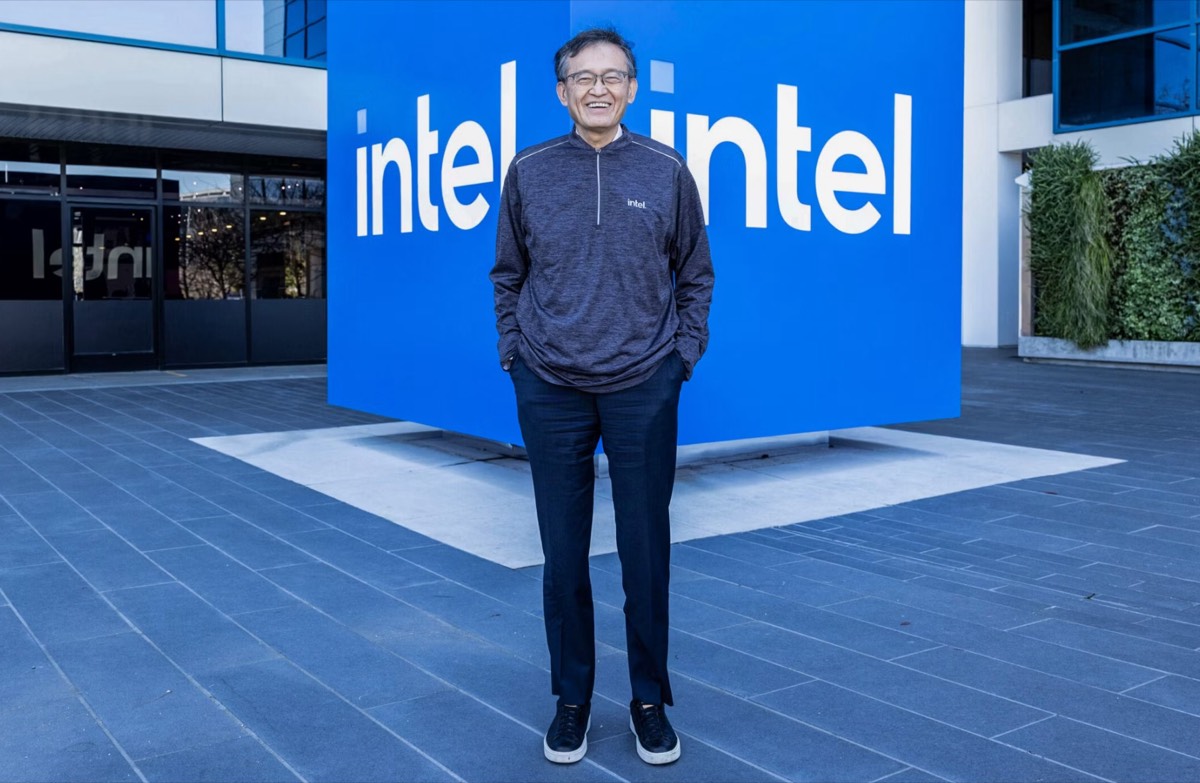
Intel CEO Lip-Bu Tan told Nikkei Asia that the US government’s roughly 8.2% stake has “no influence on the governance of the company,” that Intel’s restructuring is about 80% done, and that China’s chip industry is “not that far behind.” Nikkei published the exclusive interview on October 17, 2026 under the headline “Intel chief says White House will not meddle in its semiconductor business,” with a Tokyo dateline, a Kohei Yamada byline and a timestamp of 08:35 JST. The lavx.hu retelling dates the conversation to Tokyo on October 7; Phoenix Technology’s Chinese version says only that Tan spoke in Tokyo “earlier this month”; Nikkei’s own deck gives no interview date.
Key points
- The equity terms are on the record. Intel’s August 22, 2025 8-K says the government bought 433.3 million primary shares at $20.47, an $8.9 billion investment for a 9.9% stake, described in the filing as “passive ownership, with no Board representation or other governance or information rights.” The same agreement commits the government to vote with Intel’s board on shareholder matters, with limited exceptions.
- 8.2% is the post-dilution figure. Intel sold 210,526,315 shares at $95 on August 12, 2026 for net proceeds of about $19.7 billion, leaving 5,253,490,564 shares outstanding. Divide 433.3 million by that and you get 8.25%, which matches the “about 8.2%” in the retellings.
- The 80% has no public definition. Notebookcheck notes that Tan did not say which measures remain or when the work finishes. The one measurable marker is headcount: 77.6 thousand Intel employees at June 27, 2026 versus 96.4 thousand a year earlier.
What the interview says
Tan’s answer on the government stake comes through in two short sentences in the retellings: “They don’t have any policy. They don’t have any influence on the governance of the company.” Phoenix Technology’s Chinese rendering carries the same meaning. The only phrase Nikkei’s own visible text puts in direct quotes is “any policy,” in the opening paragraph: the administration has no “any policy” to use a minority stake to interfere with Intel’s business strategy.
The China line deserves more care than it got in translation. Nikkei’s deck says Tan “assesses chips from China as not far behind US tech.” Notebookcheck and 3DNews render it as “not that far behind”; lavx.hu quotes him directly: “Today, I think it’s not that far behind.” Several Chinese outlets rendered that as “the gap is not that large,” which is a stronger claim than the one he made.
He made three other points that Intel’s own filings can check. TSMC needed 10 to 20 years to become the world’s leading foundry, so rebuilding Intel’s contract manufacturing will take years of investment. AI-related advanced packaging and ASICs are the growth areas. Government backing helps Intel make long-cycle investments. The second point echoes Intel’s Q2 2026 release, where Tan lists CPUs, ASICs, advanced packaging and the wafer foundry network as the growth engines; the foundry segment posted $5.765 billion of revenue and a $2.089 billion operating loss that quarter.
The stake, in numbers
Lining up the three equity purchases and the follow-on offering makes the price ladder clearer than any adjective.
| Date | Event | Price and size | Stake |
|---|---|---|---|
| 2025-08-18 | SoftBank investment | $2 billion at $23 per share | Share count not disclosed |
| 2025-08-22 | US government investment | $8.9 billion at $20.47 for 433.3 million shares | 9.9% at the time |
| 2025-09-18 | Nvidia investment | $5 billion at $23.28 per share | Share count not disclosed |
| 2026-08-12 | Follow-on offering closes | 210,526,315 shares at $95, about $19.7 billion net | 5,253,490,564 shares outstanding |
The 9.9% was struck against roughly 4.37 billion shares in mid-2025 (433.3 ÷ 4.37 ≈ 9.9%, using the Q2 2025 weighted-average count in Intel’s release). Recomputing it on today’s 5.04 billion share count gives a different number, and the two should not be mixed. The 8.25% above is this article’s arithmetic from the 8-K and the 424B5: 433.3 ÷ (5,043 + 210.5), counting all 433.3 million as delivered.
The escrow arrangement puts a caveat on that numerator. The stock purchase agreement put 158,740,000 of the 433.3 million shares into escrow at closing, released to Commerce at $20 per share as Secure Enclave disbursements arrive; 143 million were still in escrow at June 27, 2026. About 290.3 million shares have been delivered to Commerce so far. Three ratios therefore coexist: 433.3 ÷ 5,253.5 = 8.25% (all shares delivered, float denominator), 433.3 ÷ 5,396.5 = 8.03% (escrowed shares added back to the denominator), and 290.3 ÷ 5,253.5 = 5.5% (released so far). All three come from the same filings, and a citation should say which one it means.
The conditional piece is the warrant. The 8-K describes a five-year warrant at $20 per share for an additional 5% of Intel common stock, exercisable only if Intel ceases to own at least 51% of the foundry business. The stock purchase agreement fixes the warrant at 240,516,150 shares. Exercised in full, it would leave the government with 673.8 million of 5,494.0 million shares, or 12.3% (this article’s arithmetic). At the August offering price of $95, the warrant carries roughly $18 billion of intrinsic value: (95 − 20) × 240.5 million. It works less like a passive stake and more like a lock. If Intel ever lets go of foundry control, the government buys at $20 and the dilution lands immediately.
An error in this arithmetic is easy to make. Put the 433.3 million shares, the 240.5 million warrant shares and the 143 million escrowed shares into the numerator and the warrant plus escrow into the denominator, and the result is 816.8 ÷ 5,637 = 14.5% (this article’s arithmetic). The escrow is the mistake: it sits inside the 433.3 million and gets counted twice. Drop it and the fully diluted figure is 12.3%. Neither number is a current holding.
What the 80% covers
The 80% has no public definition. Notebookcheck’s October 17 report states that Tan did not specify which restructuring measures remain unfinished or when the process will complete, and neither 3DNews nor the Chinese retellings supply a list. Two lines in Intel’s filings give the claim a scale.
Headcount is the first. Intel itself employed 77.6 thousand people at June 27, 2026, 82.3 thousand including Mobileye and other subsidiaries; a year earlier the figures were 96.4 thousand and 101.4 thousand. That is 19.1 thousand fewer on the consolidated basis, of which about 3,000 came from deconsolidating Altera after the sale of 51% of its stock on September 12, 2025. Layoffs and divestitures have to be counted separately, or the 80% reads heavier than it is.
Money is the second. Restructuring and other charges totaled $3.967 billion in the first half of 2026 against $382 million a year earlier; the second quarter alone was $170 million, down from $1.89 billion. That line includes asset impairments, so it is not a severance figure. Goodwill fell from $23.912 billion at December 27, 2025 to $20.465 billion at June 27, 2026, a $3.447 billion reduction.
The foundry still loses money. Intel Foundry reported $5.765 billion of revenue and a $2.089 billion operating loss in Q2 2026, $1.079 billion better than the $3.168 billion loss a year earlier and still above $2 billion a quarter. Company revenue was $16.128 billion, up 25% year over year. The GAAP net loss of $11.033 billion is dominated by a $12.529 billion non-cash mark-to-market charge on the escrowed shares; non-GAAP net income was $2.197 billion.
Zoom out and the distance traveled is visible. Intel lost $16.6 billion on a GAAP basis in Q3 2024, including $15.9 billion of impairment charges and $2.8 billion of restructuring charges. Pat Gelsinger stepped down that December; Tan became CEO on March 18, 2025. Going from a $16.6 billion quarterly loss to $1.796 billion of operating income is the span the 80% describes. The remaining 20% is the foundry economics, and the filings do not yet show an inflection there.
China’s side
Tan’s “not that far behind” is a relative judgment, and two quantified benchmarks are worth setting beside it.
Goldman Sachs published a ten-year model on August 24, 2026 that projects China’s advanced-node supply deficit, 7nm and below, narrowing from 92% of domestic demand in 2025 to 34% by 2035, or about 66% self-sufficiency. The model assumes SMIC lifts advanced-node yields from 23% in 2026 to 75% by 2035 without ever getting EUV tools. By 2035 it sees 410,000 wafers per month of supply against 619,000 of demand, and prices for SMIC’s 5nm and 7nm running 40% to 50% above TSMC’s.
Equipment is the other number. China’s domestic chip-equipment share reached 35% in 2025, up from 25% in 2024 and past the 30% target, according to China Semiconductor Industry Association data cited by TechTimes on August 29. Radio-frequency power supplies, precision vacuum valves and high-purity quartz parts remain 80% to 90% imported.
None of that contradicts Tan. He said the gap is narrowing; Goldman says it narrows until yields and tools stop it at about a third of demand. For buyers and compliance teams, the more useful reading is that China’s capacity build-out in mature and some advanced nodes is already a fact. This site has covered the MIIT asking ByteDance and Alibaba to report their RTX Pro 5500 purchasing plans and DeepSeek porting its V4 operator stack to Huawei’s Ascend. The binding constraints sit in EUV, yields and equipment subcomponents. Tan hedged too: US and Chinese companies each have strengths and weaknesses, what matters is which solutions serve customers, and geopolitical restrictions have to be taken into account.
Our take
The interview is useful to three kinds of readers in three different ways.
For anyone tracking governance, the conclusion is clean. The US government has no board seat and no information rights, and it has promised to vote with Intel’s board. The lever that could change the ownership structure is the warrant tied to foundry control, and it does not touch day-to-day operations. Tan’s “no influence” holds on governance terms. A claim that there is no leverage at all would not: the leverage sits behind the 51% condition.
For anyone watching foundry capacity, the number to watch is the $2.089 billion quarterly operating loss, set against TSMC’s record third quarter on October 15. Intel’s 80% describes the organization. Foundry economics have not entered that 80% yet.
For anyone following China’s chip industry, “not that far behind” and Goldman’s 34% deficit belong side by side until 2027 yield data arrives. One says the gap is closing, the other says it stops at about a third. Which is right depends on whether SMIC can push yields up without EUV.
Evidence strength needs its own paragraph. Nikkei’s body sits behind a paywall; the headline, deck, opening paragraph and the phrase “any policy” are what can be checked word for word. The 80% appears in Notebookcheck, 3DNews, lavx.hu and MyDrivers, which agree on the figure; the 8.2% and the China remark also appear in Phoenix Technology. All of them are secondary. Only lavx.hu carries the October 7 date; Phoenix says “earlier this month in Tokyo,” and Nikkei itself gives no interview date. When it was said and when it was published are two different dates, and the piece should keep them apart.
There is a one-minute check anyone can run: open Intel’s August 22, 2025 8-K exhibit 99.1, search for “433.3,” then divide 433.3 by (5,043 + 210.5). The 8.2% falls out of the company’s own disclosure.