AWS CFO says AI server payback is under three years, on a $496 billion backlog
AWS CFO John Felton said October 16 that AI server investments pay back in under three years, citing a $496 billion backlog amid Gartner impairment warnings.
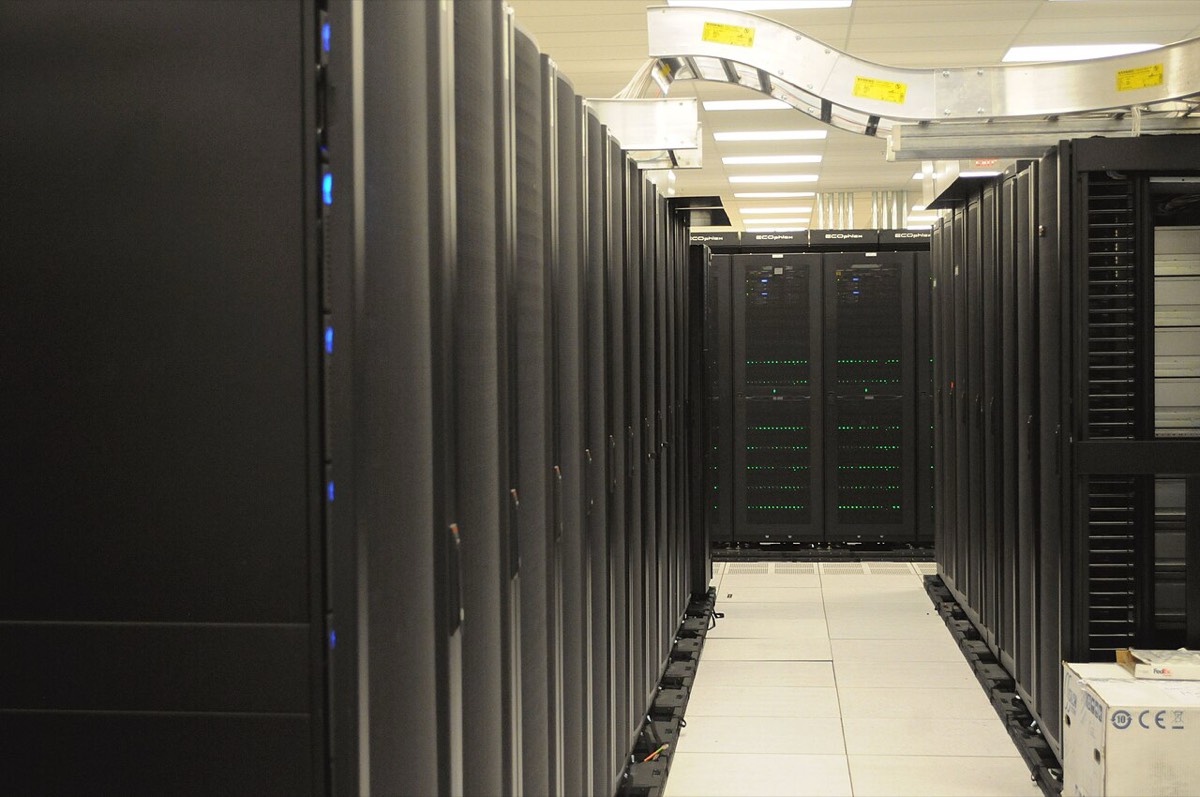
Amazon Web Services (AWS), Amazon’s cloud unit, is recovering the cost of its AI servers in under three years, its chief financial officer John Felton said in an Axios interview published October 16. He based that on a backlog of nearly $500 billion as of the second quarter; Amazon’s 10-Q, filed July 31, puts the company’s unrecognized commitments on contracts longer than a year at approximately $496 billion as of June 30, with a weighted-average remaining contract life of 6.4 years. The interview ran two days after Gartner published a report warning that AI infrastructure spending faces impairment.
Key points
- The $496 billion figure has a filing behind it. Amazon’s Q2 10-Q says “approximately $496 billion as of June 30, 2026”; the Q1 10-Q says “approximately $364 billion as of March 31, 2026.” That is $132 billion added in one quarter, with the weighted-average remaining contract life rising from 5.5 to 6.4 years. Felton and Axios round it to “nearly $500 billion.”
- The payback claim is not new. Amazon CEO Andy Jassy gave the same figure on the July 30 earnings call: “For servers and networking equipment, on average, it takes a little less than three years to break even on that investment.” The scope is servers and networking gear only.
- Gartner’s counter-estimate landed two days earlier. On current spending pace, more than $3.5 trillion of AI infrastructure spending could be exposed to impairment by the end of 2030; AI data centers would need $8.5 trillion in cumulative revenue through 2030 to cover announced capex, financing costs and a 12% ROIC, against no more than $3.6 trillion in attributable revenue.
What “under three years” measures
Felton’s actual wording on payback is one sentence: “We’re seeing paybacks of under three years on those servers.” He did not say whether that is a cash measure, an accounting-profit measure, or a figure computed at current utilization. The fuller version comes from Jassy on the July 30 call: data centers have “30-plus-year useful lives,” the servers “currently have a useful life of at least five to six years,” the same shell can host “at least five to six generations of server economics,” and most AI capacity is “being contracted for at least five-year terms.” Under that arithmetic, servers and networking equipment break even in just under three years, and the remaining years of a five-year contract are return. Each new server generation goes into an existing building, so the shell, power and cooling are not paid for twice.
Two numbers in that quote are easy to mix: “five to six generations” counts how many rounds of servers one building can host, while “at least five to six years” is the useful life of a single batch of servers.
This is a gross payback. It covers servers and networking equipment and excludes data-center construction, power delivery, cooling and financing costs. No third party has audited it, and AWS has not published the method. Treating it as the return on an entire data center overstates it; treating it as the payback period on a server purchase is closer to what was said.
The numbers
Amazon’s 10-Q does not use the word backlog for this disclosure. It describes performance obligations, primarily related to AWS, on customer contracts with original terms exceeding one year that have not yet been recognized as revenue. It is not a formally defined backlog figure of the kind quoted on earnings calls, though the two describe the same pool of contracted work.
| Metric | Figure | Source |
|---|---|---|
| Unrecognized commitments (contracts over one year) | ~$496B as of June 30, 2026 | Amazon Q2 10-Q |
| Same measure, prior quarter | $364B as of March 31, 2026 | Amazon Q1 10-Q |
| Weighted-average remaining contract life | 6.4 years (prior quarter 5.5) | Both 10-Qs |
| AWS net sales | $42.2B, up 37% (Jassy’s quote says 36.7%) | Amazon Q2 release |
| AWS operating income | $16.6B, 39.4% margin | Amazon Q2 release |
| AI business annual run rate | Above $25B, triple-digit growth | Amazon Q2 release |
| Chips business annual run rate | Above $25B, triple-digit growth | Amazon Q2 release |
| Q2 cash capex | $53.1B (vs. $31.4B a year earlier) | Amazon Q2 10-Q |
| Trailing-12-month free cash flow | -$7.6B (vs. +$18.2B a year earlier) | Amazon Q2 10-Q |
The same 10-Q records two large commitments signed during the half. In Q1, AWS and OpenAI expanded an existing $38 billion multi-year arrangement by $100 billion over eight years. In Q2, AWS and Anthropic expanded their multi-year commitment by more than $100 billion over ten years. Both include contractual obligations tied to the performance of AWS chips. The filing does not tie either expansion directly to the $132 billion quarterly increase; the timing and scale line up nonetheless. It also does not disclose customer concentration, so whether the increment sits with a handful of AI labs cannot be checked from the document.
On revenue, the release says AWS net sales rose 37%; Jassy’s quote in the same release says 36.7%. Both are in the same document, so the right move is to keep the attribution rather than pick one. The $25 billion AI run rate and the $25 billion chips run rate are two separate disclosures and should not be added into $50 billion. Amazon raised its 2026 capex plan from $200 billion to $220 billion, which Jassy attributed on the call to inflated memory and data-center component prices, per CRN; trailing-12-month free cash flow has turned negative.
The counter-case
Gartner is answering a different question: whether AI data centers across the industry can earn back capex and financing costs and clear a 12% return on invested capital. Analyst Will Sommer’s path: AI providers spend nearly $1 trillion on infrastructure in 2026 and another $6 trillion between 2027 and 2030; through 2030, AI data center owners would need $8.5 trillion in cumulative revenue to cover announced capex, financing costs and 12% ROIC, while attributable AI revenue reaches no more than $3.6 trillion.
Two figures in the same release are not interchangeable. More than $3.5 trillion of AI infrastructure spending could be exposed to impairment by the end of 2030. If the current investment trajectory continues, more than $4 trillion in asset value could be exposed to write-down risk through 2032. Gartner does not expect the 12% ROIC to be achieved before the end of 2032, and predicts more than 80% of neocloud providers will cease independent operations by 2030. It separates hyperscalers, which have diversified revenue, from neoclouds, which it calls the most exposed.
The funding side fills in the other half. In a separate October 16 piece, Axios reported that CoreWeave’s bond yields pushed above 15% and its stock fell 15.5% before rebounding after Jensen Huang spoke up for the company. Global AI-related debt issuance fell to $23 billion in September from $113 billion in June, per the Financial Times, and Axios links a Goldman Sachs forecast that big tech will fund more than a third of its 2027 AI investment with debt. Axios’s own read in the interview piece: AWS is exposed to the risks Gartner identifies, and is also among the best positioned to withstand them, as a hyperscaler with massive and highly diversified revenue.
What others say
Felton’s answer on community opposition is the most human passage in the interview. “I’ve been surprised with some of the anti-data center movement,” he said, arguing that AWS invests in local communities and creates jobs. “I feel like we’re doing the right thing.” He said the pushback “does confuse me as to where it’s coming from,” and that the industry needs to get better at explaining what it is doing and why. We covered that backlash in Amazon’s $1 billion community fund, so this entry does not restate the fund or the NDA change.
On how hard AWS itself leans on AI, Felton offered an internal observation: he studied the company’s own token usage and found “a very linear line between productivity and token usage.” More usage, more output, and AWS is “planning for more.” He did not publish the sample or the method. Jassy’s July remarks cover the supply side: even after raising 2026 spending, Amazon will “still not have enough capacity to meet all the demand” in 2026, expects the same in 2027, and calls the demand already booked for 2028 “striking.”
Our take
For developers and buyers, AWS’s contract structure is the more useful signal here. $496 billion of unrecognized commitments with a 6.4-year weighted-average remaining life means customers are locking in capacity years ahead, while Jassy says 2026 and 2027 are both capacity-constrained. Put together, pricing and availability over the next year or two stay seller-favorable, and locking in capacity early beats buying at need. The supply chain is moving too: memory prices pushed Amazon’s 2026 capex plan higher (memory shortage through 2028), and TSMC is adding 3nm capacity (TSMC’s record Q3), though neither loosens supply before 2027.
Three caveats are worth keeping. First, “under three years” is a company-defined gross payback with no published method and no data-center or financing costs; it does not contradict Gartner’s $8.5 trillion estimate, because that estimate is about industry-wide revenue against a 12% ROIC, and the two are not subtractable. Second, the 10-Q does not say whether customers can cancel or defer those commitments, and $496 billion is contracted obligation, not recognized revenue. Third, whether the $132 billion quarterly increase can repeat is a question for the next 10-Q; the OpenAI and Anthropic expansions disclosed in the same filing are of comparable size to the quarterly increment, which hints the growth is concentrated among a few AI labs, though the filing gives no concentration figure.
The next 10-Q is the thing to watch: the backlog line and the weighted-average remaining contract life. If both keep rising, AWS’s claim that demand is real has book value behind it. If either turns, the payback story cracks there first.