马斯克 says Tesla may rent Optimus out instead of selling it
马斯克 said Tesla will likely rent Optimus out rather than sell it: about $30,000 per unit initially, a $20,000 target, external deliveries around late 2027.
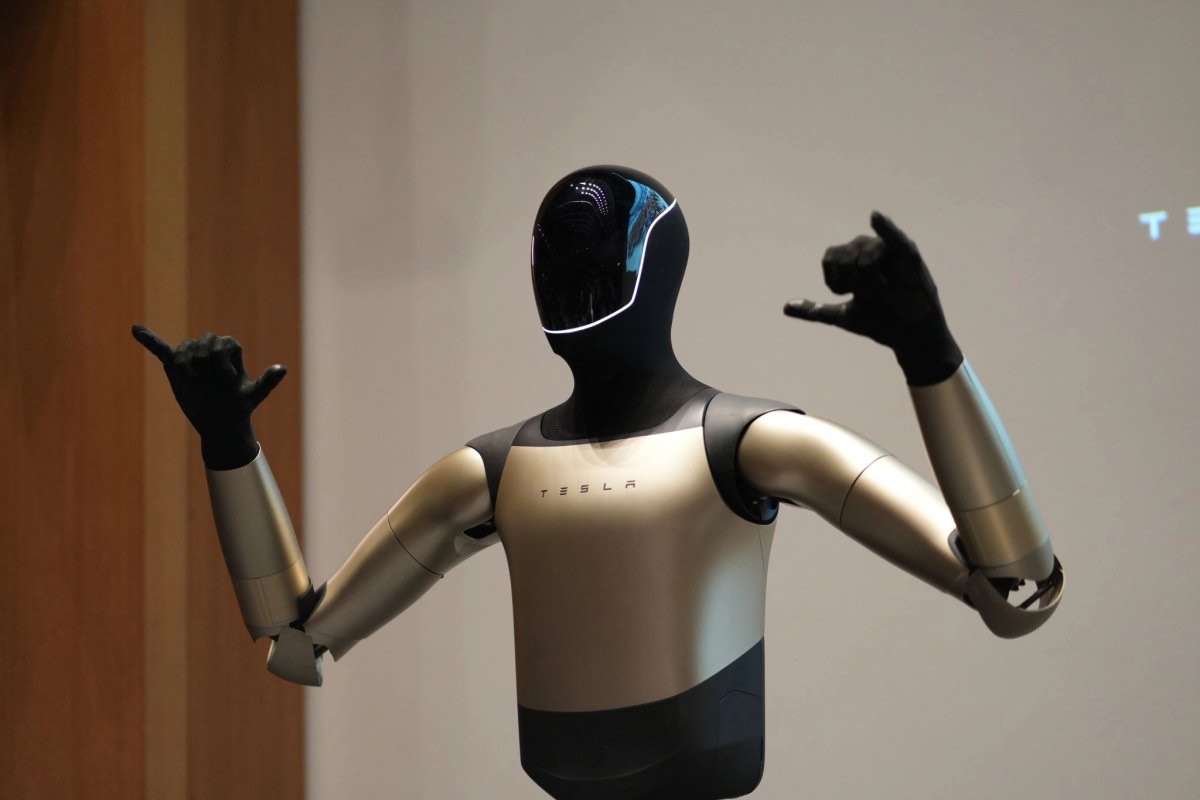
Tesla’s Optimus humanoid robot may never appear on a price list. At the 33rd annual Baron Investment Conference at Lincoln Center in New York on Friday, November 6, 马斯克 said Tesla will most likely rent the robots out instead of selling them — “I think probably rent them,” as Not a Tesla App, an outlet that covers the company, transcribed his answer. He put the initial build cost at roughly $30,000 per unit, falling toward $20,000 over time, and claimed Optimus will be five times as productive as an average person. Baron Capital streamed the fireside chat on X, and the replay is still up, so the remarks can be checked word by word.
Key points
- 马斯克 said at the Baron Investment Conference on November 6 that Tesla will “probably rent” Optimus rather than sell it, per Not a Tesla App’s transcription; the fireside chat replay is on Baron Capital’s X account.
- Unit cost is about $30,000 initially with a $20,000 target over time; the five-times-human-productivity figure is his own claim, with no third-party evidence yet.
- Optimus entered early production at Fremont in October on floor freed by the retired Model S/X lines; the line is planned for 1 million units a year, and first deliveries to outside companies are expected around late 2027 — as rentals.
Background
The business-model remark lands just as production starts. Per TechCrunch on October 21, Tesla began building Optimus at its Fremont factory in space previously used for EV production, and the Q3 shareholder letter called the units “the first production-quality bots that we have manufactured.” 马斯克’s own framing at the time was “early production,” with a warning that the ramp would be slow and “somewhat bumpy because it is such a radically new product.” He has also claimed a target of 20,000 robots per week by the end of 2027 — which works out to roughly a million units a year, matching the planned line capacity. The financial backdrop is strained: TechCrunch counted Tesla’s Q3 net income at $787 million, down 43% year over year, with heavy spending on AI, Optimus and autonomy as the main drag.
The factory floor itself tells the strategy. We covered the Cybertruck wind-down earlier this week — production steps down around mid-2027 to make room for Cybercab, and the Model S/X lines stopped earlier this year, their space handed to Optimus, the third product line Tesla has cut in 2026. The industry, meanwhile, already sells robots as a service: Agility Robotics, which listed on Nasdaq on November 5, deploys its Digit robots on a per-service model, and its filings show how early this market still is.
The facts
The checkable claims from the conference, each with its source and date. The venue was the Baron Investment Conference fireside chat; Not a Tesla App rounded up the remarks on November 6, and Baron Capital’s X broadcast replay is the primary record.
| Item | Claim or figure | Source |
|---|---|---|
| Sales model | “I think probably rent them” (initially) | Baron conference, NTA 2026-11-06 |
| Unit cost | About $30,000 initially; roughly $20,000 over time | Same |
| Productivity | Claimed five times an average human, unverified | Same |
| Early production | Since October 2026, Fremont factory | TechCrunch 2026-10-21 |
| Capacity target | 1 million units a year planned; a year-plus to full speed | NTA 2026-11-06 |
| External delivery | Around late 2027 to outside companies, expected as rentals | NTA 2026-11-06 |
| AI5 version | Expected around April 2027 | NTA 2026-11-06 |
Asked whether an Optimus could cost less than a car, 马斯克 answered, per the transcription: “Yes, initially I’d say about the same, but then over time it would be much less.” The plan is to use the robots inside Tesla’s own factories first, then deliver to external companies. On rent levels, contract terms, damage liability and data ownership, the conference offered nothing.
What others say
Not a Tesla App framed the remarks inside an investor pitch: in the same conversation 马斯克 cited FSD subscription revenue approaching $1 billion in annual recurring revenue and said 75% of new orders in North America now choose FSD. TechCrunch kept its angle on the money: profit down 43% while spending on Optimus and autonomy rises, unsupervised FSD delayed again, with robotaxi-capable customer cars pushed to “somewhere around Q2 next year.” IT Home’s Chinese report on November 7 matches the Not a Tesla App account and carries the car-price comparison into Chinese-language coverage.
The counterweight is that nobody has audited a humanoid-robot business yet. Agility’s first half of 2026 brought $174,000 of revenue against a $362 million loss, with its Digit robots rented out on service contracts — the leasing model 马斯克 described is already the industry norm, and so far nobody has made it profitable. The mood money is in is cautious too: AI-exposed stocks just took a broad selloff after the US midterms, and verbal promises now get reconciled against deliveries faster than they used to.
Our take
For a plant or warehouse operator, rent-first changes the purchase into an operating expense: no $30,000 bet on an unproven machine, with the trial cost sitting in a monthly bill. The trade is that pricing power, maintenance and the data the robot generates all stay with Tesla, and lifetime rent will likely exceed a purchase price. For Tesla’s rivals and investors, the remark reads as an admission that Optimus is not ready to be sold — reliability and unit cost are not there yet, so the robot goes out on Tesla’s own terms first. Agility’s Digit took the same path.
Three caveats belong in any takeaway. The five-times-productivity figure is a verbal claim with no source behind it. Late 2027 is a target, not a commitment, and Tesla’s schedule record here is long — Cybertruck’s 250,000-a-year ambition ended at roughly 70,000 deliveries over three years. And “rent them” is about the initial phase only; Tesla may still sell Optimus later. Rent levels, contract terms and data ownership are all blank for now.
What to watch
- December 3, 2026: Tesla’s annual shareholder meeting; Optimus progress will likely come up.
- Within a month: an Optimus Gen 3 demo video may drop, per the Q3 earnings call as relayed by Not a Tesla App.
- Around April 2027: the AI5-powered Optimus version is expected.
- Around late 2027: first deliveries to external companies, expected as rentals — the rental rate will be the first checkable number.