Musk says SpaceX has closed $40B of GPU debt and predicts 200+ neoclouds will die "guppy-level" deaths
Musk said October 25 that SpaceX closed $40 billion in GPU debt, mostly callable, and predicted 200+ neoclouds face a die-off and consolidation.
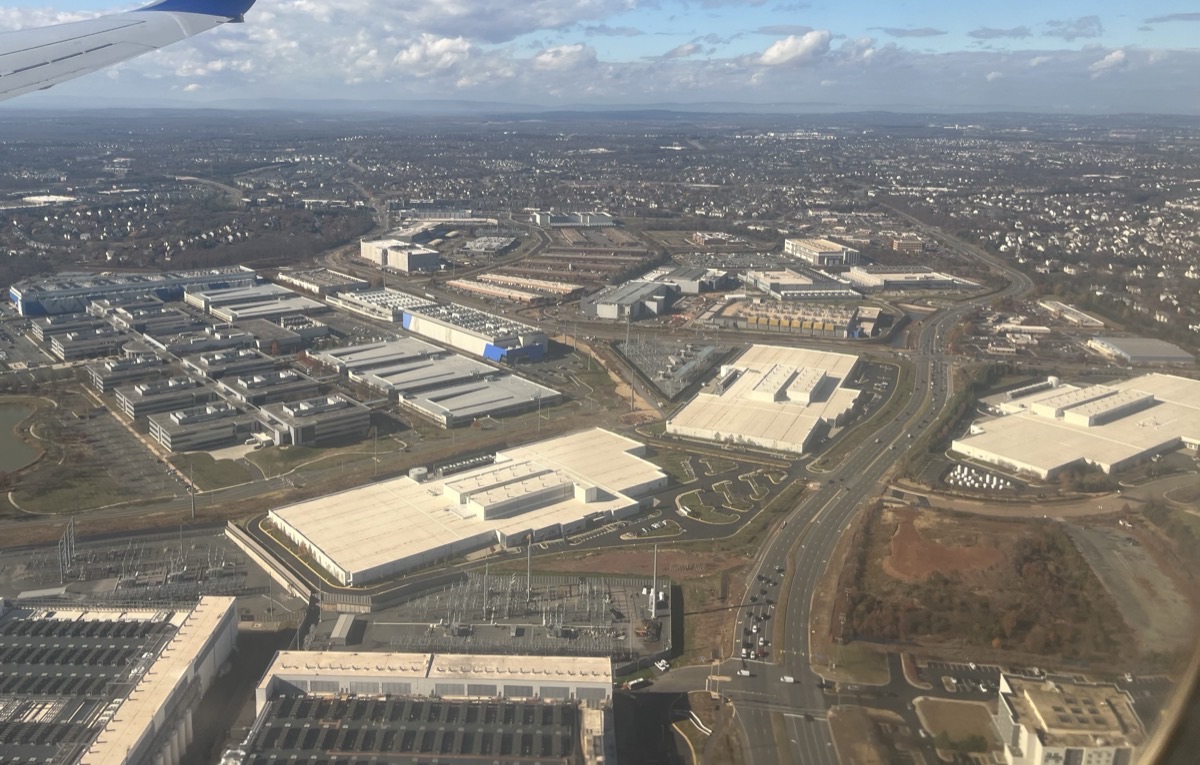
SpaceX, the rocket company that also operates the Starlink satellite network, put a message on X on the night of October 25 that had nothing to do with launches. Elon Musk said the company had closed $40 billion in debt financing to buy GPUs. In the same thread he sentenced the neoclouds — companies whose only business is renting out GPU capacity — to a die-off: debt markets have shut them out, and more than 200 of them will see what he called “guppy-level death and consolidation.” CNBC reports that he cited SpaceX’s investment-grade rating and revenue from Starlink and launches.
Key points
- Two posts, 39 minutes apart. The post timestamped 7:11 p.m. on October 25 carried the “guppy-level death and consolidation” line. A follow-up at 7:50 p.m. said the debt was “primarily callable” for GPUs arriving “in Q1 and Q2,” and was “not a major factor this quarter.” The $40 billion figure is his, relayed by CNBC and Reuters.
- “Closed” has no issuer behind it. Reuters wrote plainly that it was unclear what Musk meant by “closed” and whether investors had agreed to pricing. None of the reporting checked for this piece contains a SpaceX press release, or an announcement from a lender or underwriter.
- He ruled himself out as a buyer the same night. Per Reuters, Musk said SpaceX would not buy any neocloud and called the idea “pointless.” Set next to his consolidation forecast, that leaves an open question about who does the buying.
What the two posts say
Musk’s posts have to be read against their timestamps, because in 39 minutes he separated how the money is borrowed from who dies.
The 7:11 p.m. post reads: “That means the 200+ neoclouds are going to see guppy-level death and consolidation. Some will make it through, but not many.” The load-bearing part is the premise in front of it: his stated mechanism is that debt markets have “almost entirely shut off access to money” for companies without “substantial revenue independent of AI data centers.”
The 7:50 p.m. post is about his own balance sheet: “This is primarily callable debt for GPU purchases that will arrive in Q1 and Q2. Not a major factor this quarter.” The post itself names only Q1 and Q2. The year 2027 comes from CNBC’s reading, and the two layers should be attributed separately.
Callable debt can be repaid early under set conditions. For a borrower with cash on hand that does not want to be locked into a ten-year coupon, that is a favorable term. For the banks and bondholders on the other side, it means the yield may end early, so the pricing has to carry that risk.
Two versions of the structure
The same $40 billion has been described two different ways, and collapsing them into one sentence loses the most important disagreement. The Financial Times reported the talks on October 7 (negotiation stage only; our October 7 digest noted it without publishing an entry) as roughly $10 billion of bank loans plus $30 billion of investment-grade debt, led by Apollo Global Management, with PIMCO also named. Bloomberg’s version, relayed by CNBC, is a special purpose vehicle that holds the debt off SpaceX’s balance sheet to protect its investment-grade rating, with Goldman Sachs leading talks with investors including Apollo. Bloomberg’s account, as CNBC summarizes it, does not mention PIMCO.
| Account | Structure | Lead | Others named |
|---|---|---|---|
| FT, first reported October 7 | About $10B bank loans plus $30B investment-grade debt | Apollo as lead investor | PIMCO |
| Bloomberg, via CNBC | Off-balance-sheet SPV to protect the rating | Goldman Sachs leading talks | Apollo; no PIMCO |
Neither account includes pricing, tenor or coupon. The SPV detail is the one to hold onto: it moves the question of who ultimately eats a default off SpaceX and onto a separate vehicle. The rating agency still sees SpaceX’s investment-grade profile, while the legal borrower is a different entity. That is why “$40 billion financing” and “$40 billion more SpaceX debt” are not the same statement.
What “closed” means
Reuters handles this the way the rest of the coverage should. It prints Musk’s claim, then states immediately that it is unclear what “closed” refers to and that it could not confirm investors had agreed to pricing. The only source for the news is the person who posted it.
The financial figures in the same reporting explain why SpaceX can borrow at all. According to Reuters, CFO Bret Johnsen put fourth-quarter capital spending at $35 billion to $40 billion, with third-quarter revenue of $14.58 billion, up 161% year over year, and AI revenue of $7.56 billion, nearly ten times the prior year. CNBC adds that the unit is called Super Intelligence, or SI, that it is now SpaceX’s largest business, and that it booked $813 million a year earlier. Musk attributes the borrowing capacity to the investment-grade rating and the two cash flows behind it, Starlink and launches. That is precisely what a pure AI data-center company does not have: its revenue comes entirely from racks that are not full yet.
The timeline matters too. The GPUs do not arrive until Q1 and Q2 — the first half of 2027, as CNBC reads it — and Musk himself says the current quarter is unaffected. Between signing and the first rent check sit the whole first half of 2027. As structured, the debt costs interest through the rest of 2026; the revenue side starts in 2027.
The neocloud balance sheet
The neocloud side of the ledger says more than the “200-plus” number does. Per a Crypto Briefing roundup, the five largest publicly traded neoclouds carry $61 billion of combined debt, four times the year-earlier level, plus $18 billion of operating leases as of September 2026. CoreWeave alone is estimated at $35 billion to $52 billion of debt while still posting GAAP losses.
The credit market is more direct. Startup Fortune reported on October 20 that CoreWeave’s five-year credit default swaps widened by as much as 74.5 basis points in a single session on October 15 to a record 1,194.5 basis points, which under standard CDS pricing implies roughly a 63% to 64% cumulative five-year default probability. In early June the spread was 452 basis points. Kingy AI’s tally adds that CoreWeave’s 2032 bonds yielded close to 15% in October 13–14 reporting.
Gartner’s forecast, which we covered on October 18, points the same direction: more than 80% of neocloud providers will not be operating independently by 2030 (see AWS CFO: AI server payback under three years). This piece does not restate that argument.
The counter-view
The strongest pushback comes from Curtis Pyke at Kingy AI, who reframes “everyone dies” as a “selective funding squeeze” and lists the borrowers who got money. Nebius signed a $3.5 billion secured Citi bridge on October 17, announced October 22, due October 16, 2027, initially priced at SOFR plus 2.75 points and stepping up to plus 3.50. Lambda announced a $1.008 billion secured delayed-draw facility on October 1 at a 6.78% fixed rate. Both borrowed. Both paid more, and on tighter terms, than they would have a year ago.
He also names the stressed side: Firmus scrapped a planned roughly $5 billion Australian IPO on October 9. His conclusion is that the evidence supports severe stress for some borrowers, and does not yet support a sector-wide collapse or a burst AI bubble.
Upstream money has not stopped. Per forecasts SiliconANGLE cites, Morgan Stanley expects AWS, Microsoft, Google and Meta to spend $700 billion on capex in 2026 and more than $1 trillion in 2027; Goldman Sachs projects $250 billion of borrowing by large tech companies in 2026 and $400 billion in 2027; global AI-related debt issuance is expected to exceed $570 billion in 2026. Credit is tightening and its direction is shifting. The total is still rising.
One number needs a label: “200-plus” is Musk’s own count, with no independent census behind it. Crypto Briefing adopts his figure, while Gartner’s estimate is “more than 80% will lose independence.” The two cannot be converted into each other.
Our take
For teams renting GPUs or buying inference capacity, the value of this story is that it ties two things with direct cost consequences together: the borrowing power of the buyers upstream, and the pace at which these companies fall. SpaceX borrows at investment-grade prices on the back of Starlink and launch cash flow. Among the pure compute companies named in this piece, the best terms are Lambda’s 6.78% fixed-rate facility; the worst are bond yields near 15%. Same GPUs, more than double the funding cost. That gap shows up in 2027 rental quotes.
The second judgment is about the window. Callable debt plus first-half-2027 delivery means supply lands across Q1 and Q2 of 2027, within one six-month stretch. Operators who cannot refinance will be forced to cut capacity prices or sell. A list is already forming: CoreWeave’s CDS at 1,194 basis points, Nebius on a bridge loan, Lambda locking $1 billion at 6.78%, Firmus pulling its IPO. For anyone buying compute on this chain, the first half of 2027 looks like a buyer’s market. Nscale’s convertible financing is the other reference point: the same kind of company raises money on completely different terms before and after listing.
Three things to keep doubting. First, the $40 billion has no issuer announcement, the structure differs between the two outlets that reported it, and neither pricing nor tenor is public, so how “closed” it really is will be settled by SpaceX or a rating agency, not by a post. Second, Musk said the same night that he would buy no neocloud, so what does consolidation run on? Deals need buyers, and without them the shakeout runs through bankruptcy, which is slower. Third, our October 24 survey coverage found 79% of enterprises reporting GPU utilization at or below half (see the VB Pulse survey). Idle demand facing unsellable supply: which side blinks first is the variable worth watching over the next two quarters.