Products#Starship#Starlink#Satellite internet
Starship Flight 14 reaches orbit on one engine and starts deploying 26 Starlink V3 satellites
Starship launched on September 28 at 12:46 UTC; one vacuum Raptor failed, and the ship reached orbit on a single engine to deploy 26 Starlink V3 satellites.
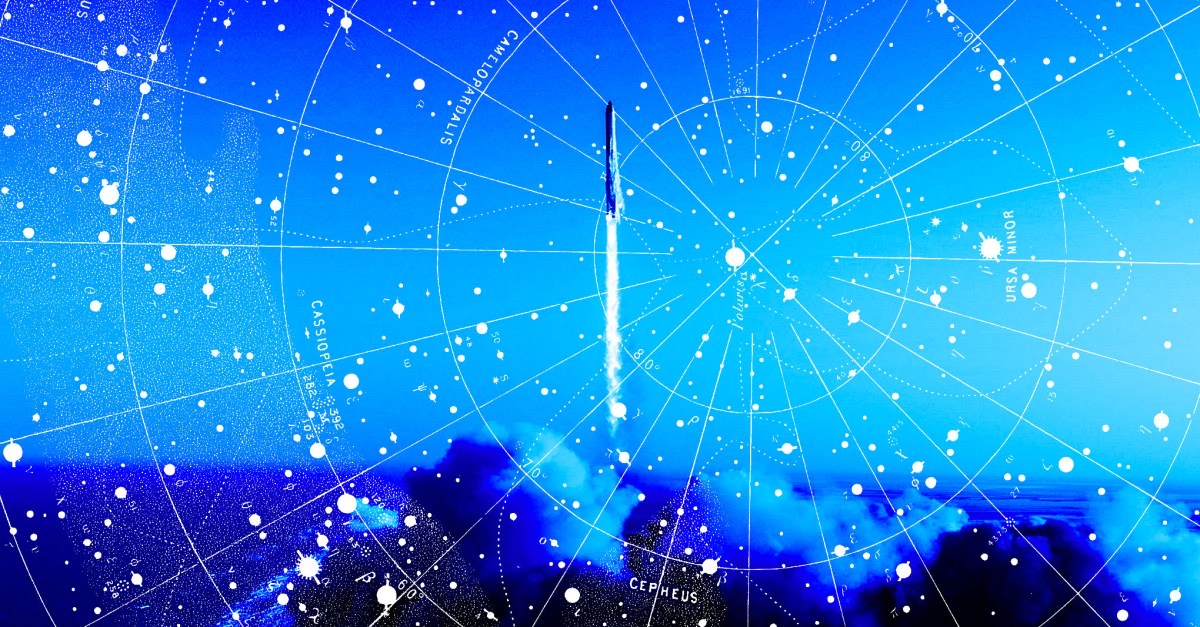
SpaceX’s Starship lifted off from Starbase, Texas, at about 12:46 UTC on September 28 on its 14th test flight — the first attempt to send the upper stage into Earth orbit and the first time it carries a real payload. The Super Heavy booster B21 splashed down on plan about 6 minutes 50 seconds after liftoff, but one vacuum Raptor then failed, and the ship completed its orbital insertion burn on the single remaining engine, reaching a roughly 275 km orbit.
The facts
- Launch and orbit: liftoff at about 12:46 UTC from OLP-2 at Starbase; the orbital insertion burn completed about 25.5 minutes into flight, targeting roughly 275 km at a 32-degree inclination.
- Engine failure: per IT之家 live updates and the Wikipedia mission page, one vacuum Raptor failed at about T+8:11; insertion proceeded on a single engine.
- Payload: 26 Starlink V3 satellites, scheduled to deploy starting about 34 minutes after insertion at roughly one per minute; three carry cameras to inspect heat-shield tiles. The mission plans six orbits over about 10 hours, then a deorbit burn and Pacific splashdown west of Chile. No tower catch was attempted.
- Competitive backdrop: per The Verge, Starlink has over 11,000 satellites in orbit with 552 launched since July 2; Amazon’s Leo (formerly Kuiper) has 396 and has gone 12 weeks without a launch, with ULA’s Vulcan grounded, New Glenn’s pad destroyed in May, and an Ariane 6 component issue scrubbing launches.
- Status: satellite deployment and deorbit were still in progress at press time; the final outcome awaits SpaceX’s updates.
Our take
The real story is Starship finally doing operational work: carrying the next generation of Starlink. V3 satellites have far more capacity per unit than V2 mini, so once Starship’s cadence stabilizes, the constellation grows on a different curve — while Amazon’s Leo watches all three of its launch providers sit grounded. Two things to watch: whether all 26 satellites deploy cleanly, and whether the deorbit and splashdown go to plan.