Starship Flight 15: ship caught by the tower after 22.5 hours in orbit — booster aborts to a Gulf splashdown
SpaceX caught a Starship upper stage with the tower's arms for the first time on Nov 14 after ~22.5 h in orbit; the booster aborted and broke up over the Gulf.
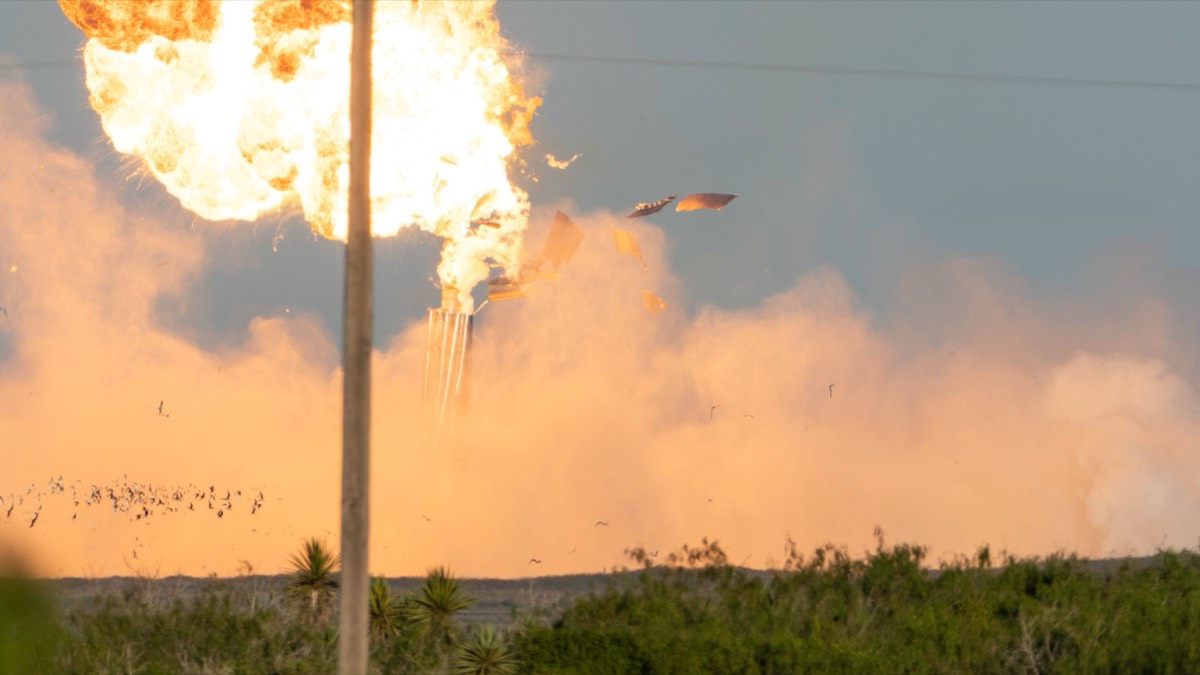
SpaceX did something on November 14 that none of its first fourteen Starship flight tests had done: the upper stage, Ship 42, returned to Starbase, Texas after about 22.5 hours in orbit and was caught in mid-air by the launch tower’s chopstick arms. Per Space.com and Spaceflight Now, this is the first time a Starship ship — as opposed to the Super Heavy boosters caught three times before — has ever been recovered by the tower. But the mission, Flight 15, launched November 13 at 22:47 UTC from Starbase with a bigger goal: a “double catch” that would bring back both the booster and the ship in one flight. The Super Heavy booster, B22, automatically aborted its catch attempt and was diverted to a splashdown in the Gulf of Mexico, where it broke apart. So the mission scored one out of two.
Key points
- First ship catch: at roughly 21:20 UTC (4:20 p.m. ET) on November 14, Ship 42 was caught by the Pad 2 tower arms after ~22.5 hours in orbit and about 14 laps of Earth — the first tower recovery of a Starship upper stage.
- Booster abort: B22’s flight computer aborted the catch on its own (SpaceX says the system detected the booster was not in the correct position and did what it was designed to do); after a 13-engine landing burn began as planned, the flight termination system triggered and the booster broke up over the Gulf of Mexico about 6.5 minutes after liftoff.
- 1-for-2: the stated goal was catching both stages in a single flight — which would have been the first complete recovery of an orbital launch system — but only the ship made it back; all 26 Starlink V3 satellites deployed successfully.
Background
Reuse, until this flight, had been proven for only half of the rocket. Three Super Heavy boosters have been caught by the tower arms and two of those flew again, but every ship until now ended its flight in the ocean or broke up during reentry. Flight 14 on September 28 (see Starship reaches orbit on Flight 14) was the first to reach orbit, yet the ship splashed down under a conservative return plan after barely three hours in orbit. Flight 15 (previewed in our Flight 15 mission preview) stretched the mission to about 22.5 hours: the ship had to stay healthy through roughly 14 orbits — engines, flight control, navigation, attitude control — and clear three gates (reentry, landing burn, tower approach) before SpaceX would let it come back to the pad. No Starship had ever flown a mission this long, let alone finished it at the tower.
The facts
The timeline below cross-checks Space.com (time baseline) against Spaceflight Now’s live coverage:
| Event | Time / outcome | Source |
|---|---|---|
| Launch | Nov 13, 22:47 UTC (4:47 p.m. CST), Starbase | Spaceflight Now |
| Starlink deploy | 26 Starlink V3 | Space.com |
| Booster abort | ~6.5 min after liftoff; diverted to the Gulf, broke up | Spaceflight Now / Space.com |
| Ship catch | Nov 14, ~21:20 UTC (~4:20 p.m. ET) | Space.com / Xinhua |
| Time in orbit | ~22.5 hours, ~14 orbits | Xinhua / Space.com |
The booster’s side of the story is worth unpacking. All 33 Raptor engines lit for ascent; after stage separation, the boostback burn ran on 32 of 33, with one engine dropping out. Per SpaceX’s mission update quoted by Space.com (updated 3:30 p.m. EST November 14), the booster “ended its boostback [burn] early due to a low fuel mass alarm,” with the team still investigating the root cause. Thirteen Raptors then lit for the landing burn as planned, before the flight computer aborted the catch. SpaceX spokesperson Dan Huot first called it “a GNC issue that it detected,” then corrected himself about 16.5 hours into the mission: “It was not a GNC issue that caused us not to come back. GNC triggered that abort; it was doing what it was supposed to do” — the system detected the booster wasn’t in the right position for a catch and steered it offshore, as designed. The booster hovered, its engines cut off, the flight termination system (FTS) triggered, and it exploded a few feet above the Gulf. SpaceX has not published the root cause of the position deviation.
The ship’s side went by the book. Ground tracking and onboard camera data confirmed the heat shield was in good shape after reentry; at the 20-hour mark, SpaceX ran a go/no-go review between a pad landing and an early splashdown off Hawaii (the backup option) and cleared the return. About 22.5 hours after liftoff, Ship 42 deorbited, reentered, flipped vertical, and settled between the two arms — The Verge’s video shows it plunging through the clouds, flipping vertical, and easing between the arms.
What others say
SpaceX’s own framing shifted once, and the correction matters. Dan Huot went from “GNC issue” to “the abort was the system working as intended,” and conceded his first take “did a disservice to our booster GNC guys.” That matches SpaceX’s line after previous flights: automatic aborts are protection, not failure — but the chain between the low-fuel alarm and the position deviation remains unexplained. The Verge quotes Elon Musk on SpaceX’s Q3 2026 earnings call: “success is not guaranteed on these first flights, but I’d say it’s more likely than not that this succeeds next flight,”. On the Chinese side, IT之家 cites 马斯克’s own words on X describing the long-term aim of SpaceX’s orbital network as “a constellation of a million spacecraft forming AI data centers” — that is Musk’s stated vision, not a funded deployment plan; SpaceX’s FCC filing from January 2026 seeks up to 1,000,000 Orbital Data Center satellites, and none have launched. Xinhua called the catch “the first time a Starship spacecraft had been caught by the launch tower’s mechanical arms upon returning to the launch site,” consistent with Space.com’s framing.
Our take
The ship catch matters more than the booster miss. Booster catches are a mature maneuver — three successes, two re-flights — and this abort is an engineering problem a later flight can retry. The upper stage, by contrast, just completed the full chain of long-duration coast, deorbit, reentry, and tower approach for the first time, which is what unlocks the refurbishment loop SpaceX actually wants: a caught booster rolls back to the factory the same night, and a caught ship means the “days, not weeks” inspection-repair-refly cycle finally has a complete sample. Readers tracking orbital data centers should keep the “million spacecraft” quote separate from the FCC filing and from what this flight demonstrated: the catch is a verified fact; the constellation size is a statement. Two questions stay open: the causal chain between the low-fuel alarm and the position deviation, and whether the next flight — expected within weeks — retries the double catch. If it does and succeeds, both stages of the rocket will have been recovered, just on different afternoons.