SpaceX sets Starship Flight 15 for Nov 13 window: first attempt to catch both ship and booster at the tower
Starship Flight 15 targets a Nov 13 window, pending approval: the first attempt to catch both the ship and the booster at the tower, 14 orbits over 22 hours.
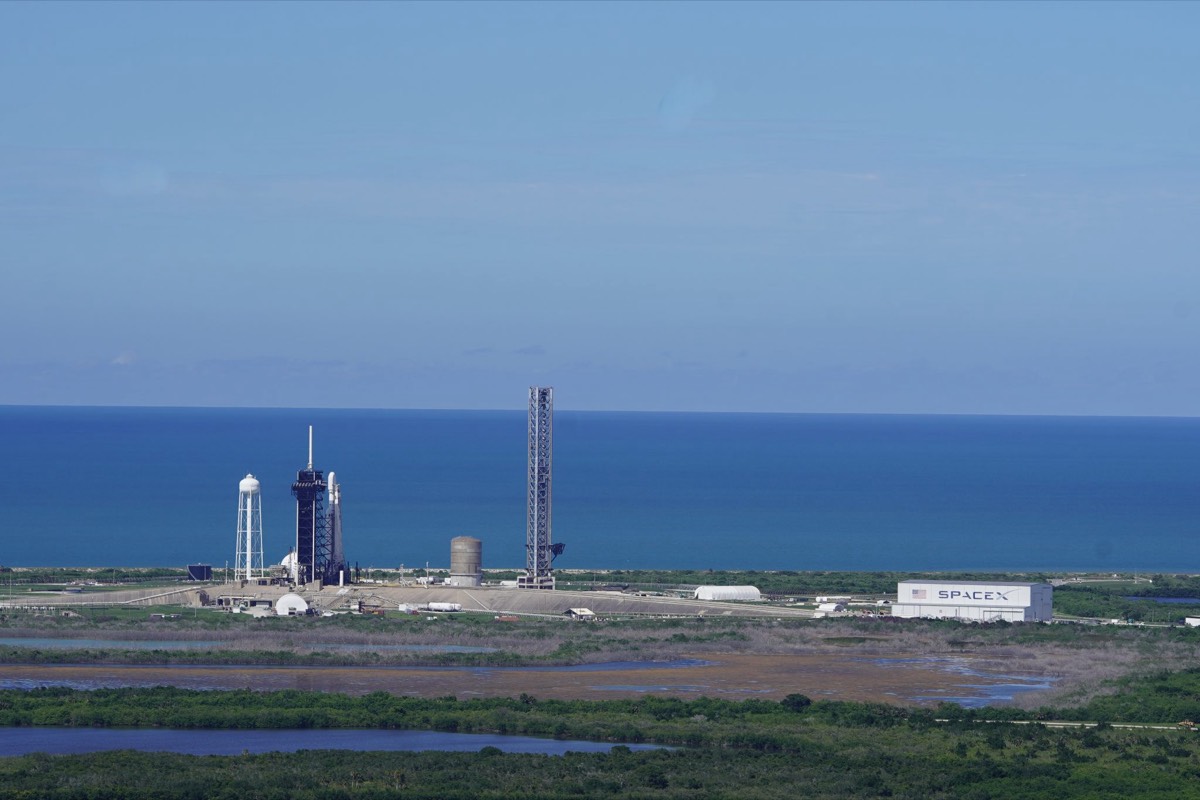
SpaceX announced on the evening of November 7 that Starship Flight 15 is targeting a launch window opening at 4:45 p.m. local time on November 13, running 75 minutes, pending regulatory approval. The point of this flight is not reaching orbit — Flight 14 already did that — but getting back: for the first time, both the ship and the Super Heavy booster will attempt to return to the launch site and be caught mid-air by the launch tower’s mechanical arms. Per the official mission page, the ship will spend just over 22 hours in orbit, circle Earth about 14 times at roughly 275 km, and deploy 26 Starlink V3 satellites.
Key points
- Launch window: 75 minutes opening at 4:45 p.m. CT on November 13, pending regulatory approval — 6:45 a.m. Beijing time on November 14.
- First dual catch: both the ship and the Super Heavy booster return to the launch site for tower catch; the V3 booster makes its first catch attempt. Success would be the first full recovery of an entire orbital launch system.
- Mission profile: about 14 Earth orbits at roughly 275 km over more than 22 hours, deploying 26 Starlink V3 satellites.
Background
Starship’s reuse ledger so far reads like this: three Super Heavy boosters have been caught by the tower’s chopstick arms (per SpaceX’s tally as relayed by IT之家), and two of those flew again — but no upper stage has ever been caught. Ships have always ended their flights by splashing down in the ocean or breaking up during reentry. The most recent outing, Flight 14 on September 28 (see Starship reaches orbit on Flight 14), reached orbit on a single engine after one vacuum Raptor failed, deployed all 26 Starlink V3 satellites successfully, and then ended early under a conservative return plan: about 3 hours in orbit, followed by a Pacific splashdown. Flight 15 stacks two firsts on top of that record: the first attempt to catch a ship, and the first catch attempt for a V3-configured booster.
On hardware, NASASpaceflight.com reports the flight pair is Booster 22 and Ship 42: B22 static-fired at Pad 2 on October 25, S42 fired at the Massey’s site October 26–27, and both rolled back to the high bays for final checkouts before flight. Launch is from Pad 2 — which would also make this the first tower catch conducted at that pad.
The facts
The Flight 15 parameters, cross-checked between SpaceX’s official materials and independent reporting:
| Item | Parameter | Source |
|---|---|---|
| Launch window | Nov 13, 4:45 p.m. local, 75 minutes | SpaceX announcement / IT之家 |
| Orbit and laps | ~275 km, about 14 Earth orbits | Official mission page / Starlust |
| Mission duration | Over 22 hours; ship catch ~22 hours after launch | Official mission page |
| Payload | 26 Starlink V3 satellites | Official mission page / Starlust |
| Booster catch | First V3 (Block 3) catch; no specific catch timing given officially | Official mission page |
| Regulatory status | Awaiting FAA; NOTAM backup windows through Nov 20 | NSF / Starlust |
The catch criteria are written down, which is what makes this trackable: flight controllers will only permit the ship to return to the launch site if its critical systems check out through three phases — the reentry maneuver, the final landing burn, and the approach to the tower. The booster, for its part, has to complete launch, ascent, stage separation and the boostback burn before it presents itself to the arms. The heatshield carries over Flight 14’s fixes: reinforced attachment for the tiles most prone to shedding during ascent, treatment of weak spots where plasma could get behind the tiles, and a majority switch to curved tiles that reduce seam heating. Contingencies are also on the page: the ship can fly a passively safe suborbital trajectory, or deorbit safely over several predetermined ocean areas — Starlust lists Indian Ocean zones, the Pacific near Hawaii and Chile, and the Gulf as marked backup splashdown areas.
One new wrinkle in the payload: per Starlust, three of the 26 Starlink V3 satellites carry camera suites pointed at the heatshield, to transmit imagery of reentry back to operators — the satellites themselves double as telemetry platforms. The rest raise their orbits on onboard thrusters and are expected to enter service within weeks.
What others say
Coverage has clustered around two questions: whether the regulator signs off, and how firm the mission plan is. Regulation is the bigger unknown. NASASpaceflight.com notes that Flight 14’s license covered that flight alone, and Flight 15 needs a license modification from the FAA — specifically permission to bring Ship 42 back over populated areas to the Starbase tower; as of that article’s publication on November 6, approval had not come through. Starlust checked the FAA NOTAM, which lists November 13–20 as backup windows, so the schedule has room to slip.
The mission profile also shifted once before the announcement: NSF’s pre-announcement reporting described a working plan of roughly 24 hours and 15–16 orbits, while the official numbers are 22 hours and 14 orbits — the official figures are the ones to trust, but the gap shows the plan was still being calibrated days before the announcement. Elon Musk confirmed the dual-catch plan on November 6, and SpaceX’s own X account kept its wording modest: “Starship is preparing for catch.”
Our take
What Flight 15 is really testing is whether recovery works for the whole stack, not just one stage. Three booster catches proved the tower can grab a Super Heavy; the ship, meanwhile, has always taken the splashdown-and-recover route. The failed vacuum Raptor on Flight 14 is a fair sample of why SpaceX keeps the ship away from the tower for now — during 22 hours in orbit the vehicle has to keep its engines, flight computers, navigation and attitude control healthy, and any miss on reentry, landing burn or approach sends it to an ocean contingency instead. The reuse economics fork at exactly this point: a caught booster is back in the hangar the same night; if the ship can come home to the tower too, the multi-day refurbishment cycle finally starts being tested against reality.
For the constellation watchers, 26 more Starlink V3 satellites make this the second batch of real units flown, after Flight 14, and the gap with Amazon’s Leo constellation keeps widening (see Amazon Leo accelerates toward a thousand satellites). Two caveats belong in the ledger: the FAA approval is not yet granted, so the window date can move; and the “26 satellites, three with cameras” detail comes from Starlust’s mission reading — the official page does not itemize it, so it is worth re-checking against the pre-launch mission update.