SuperSplat: An Open-Source Editor for 3D Gaussian Splats in the Browser
PlayCanvas’s open-source Gaussian Splat editor runs in the browser — inspect, edit, optimize and publish splat scenes; v3.7 adds WebMCP tools for AI agents.
Project facts
GitHub Ecosystem- License
- MIT
- Language
- TypeScript
- Stars
- 10,519
- Data checked
- 2026-11-02
Snapshot figures reflect the check date and may change over time.
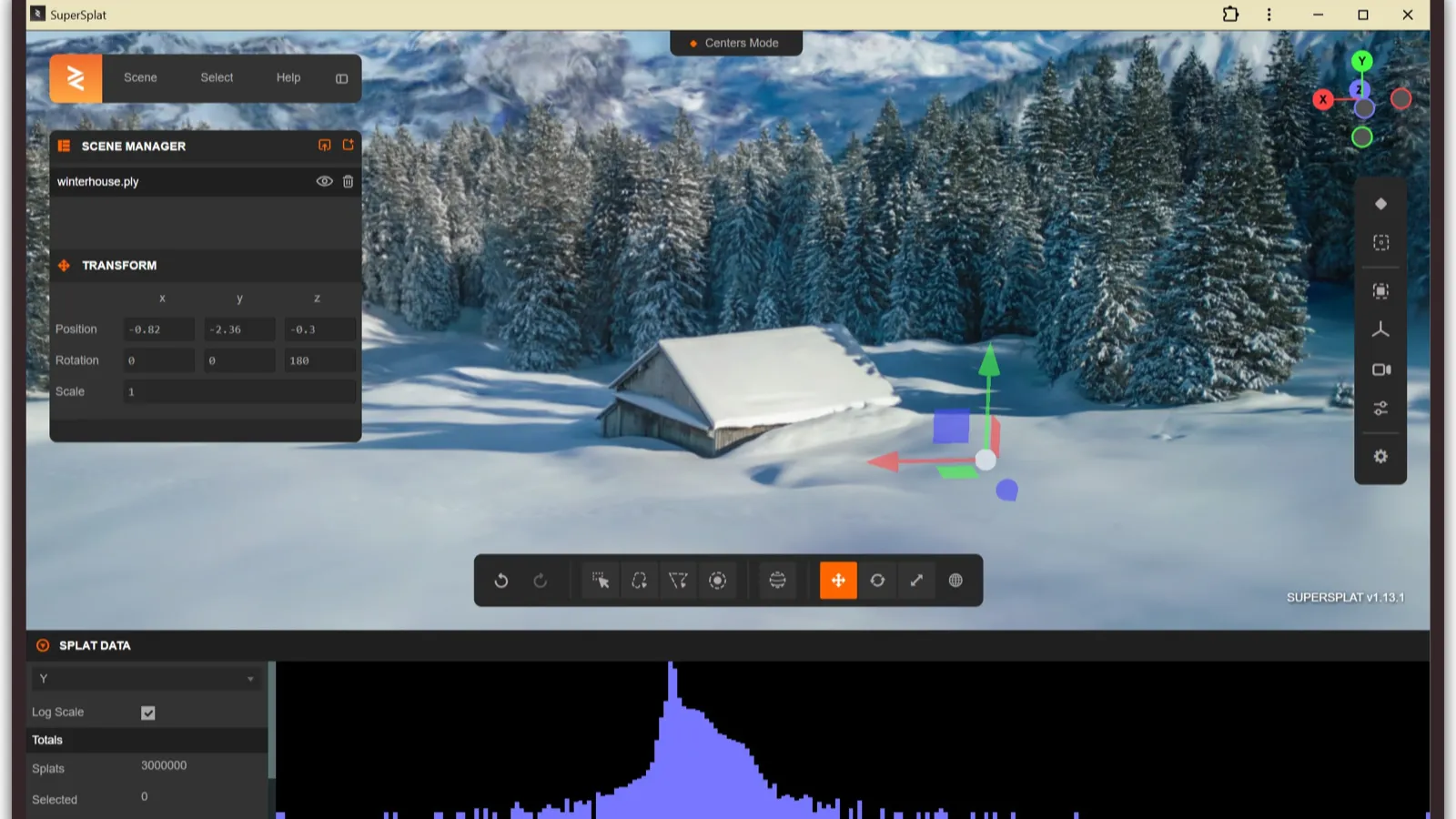
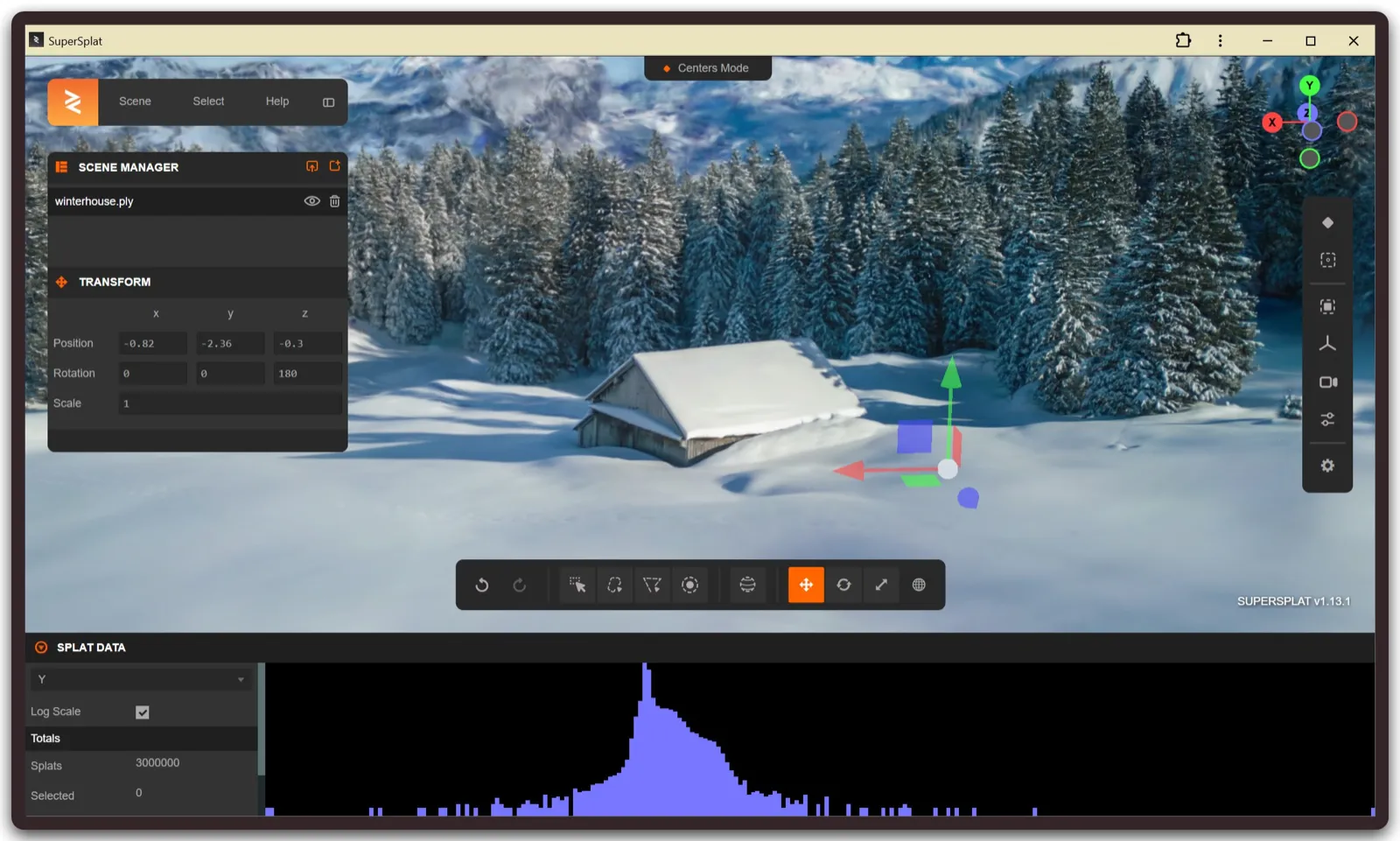
3D Gaussian Splatting turns real photographed scenes into freely navigable 3D — but raw splat captures carry stray floaters, background junk and file sizes bigger than the web wants. SuperSplat (from PlayCanvas, ★10,519, MIT, TypeScript) is the editor for that step: a pure browser app where you open superspl.at/editor and inspect, trim, optimize and publish splat scenes with nothing to install. Version 3.7.0, released October 26, added an interface with obvious appeal for the agent era — WebMCP: the editor exposes scene inspection, selection, camera control, timeline and keyframe authoring as native browser MCP tools that an AI agent can drive directly.
Core features
- End-to-end editing: import a splat file, then select, delete and merge to clean floating noise, crop the background, and adjust exposure and color, all rendered live.
- Optimize and publish: built-in compression and LOD handling shrink files, and one click publishes to a shareable URL — the output is directly embeddable as a web scene.
- WebMCP (new in v3.7): a browser-native MCP tool contract (see
docs/webmcp.mdin the repo) letting agents perform scene inspection, selection, editing, camera and keyframe work, and import/export. - Localized and self-hostable: the UI ships multiple languages under
static/locales, and Node 20+ runs a local dev server vianpm run develop. - Maturity: led by PlayCanvas, three years of continuous iteration since October 2023, with main pushed the same week as v3.7.0 (October 26, 2026).
Typical use cases
- Creators who captured a scene on a phone or drone and want a walkable 3D version: import, clean, publish — the output is just a link.
- Frontend developers embedding lightweight 3D on a page: optimized splat sizes stay manageable with no third-party runtime.
- Pipeline builders: hand the capture-to-export loop to an agent through WebMCP and batch it.
On the 3D pipeline, SuperSplat handles the post-capture half; for the capture half, pair it with 3D Model Anything, which rebuilds editable Three.js scenes from iPhone LiDAR scans — one reconstructs, the other cleans and publishes.
Quick start
Open superspl.at/editor in a browser and drop in a .splat or .ply file to start editing; publishing yields a share link. For local development:
git clone https://github.com/playcanvas/supersplat.git
cd supersplat && npm install && npm run develop
# open http://localhost:3000
Summary
Worth bookmarking for anyone working with captured 3D content or web 3D: it’s among the most complete open-source splat editors available in a browser, and WebMCP puts it ahead of the curve for agent workflows. Two caveats: browser caching can hide the latest build (the README specifically asks you to clear caches during development), and very large scenes hit browser memory limits. MIT, TypeScript, ★10,519 at v3.7.0 as of November 2, 2026.