Alibaba wins its first round against the Pentagon: federal judge blocks the lobbying guilt-by-association contract ban
On October 26, 2026, a federal judge barred the Pentagon from enforcing its ban on contracting with entities that lobby for Alibaba, until further order.
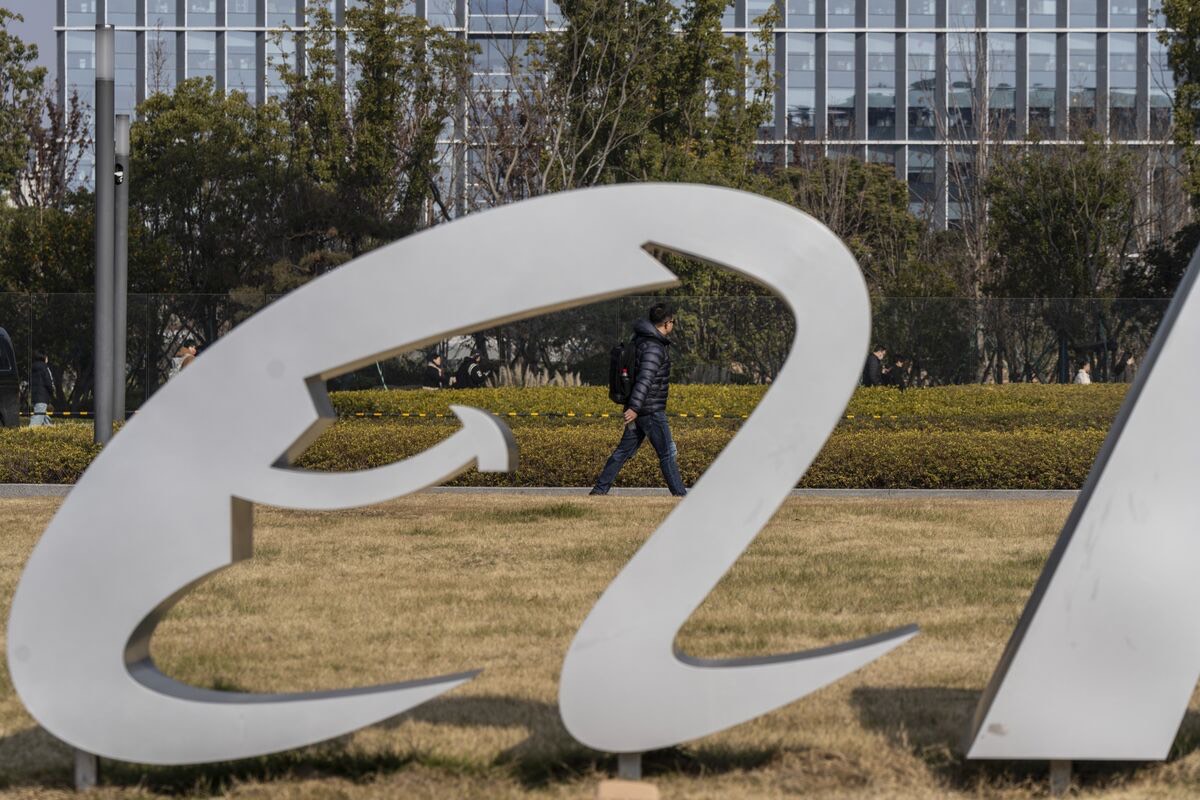
On October 26, 2026, Judge Eumi K. Lee of the Northern District of California granted Alibaba a preliminary injunction: until further order of the court, the Department of Defense may not enforce 10 U.S.C. § 4663, the statute that bars the Pentagon from contracting with any entity that keeps a lobbyist working for Alibaba. The 26-page order is freely available on RECAP. It is Alibaba’s first adjudicated win since it sued the Defense Department on June 23 over its “Chinese military company” designation — and the first time a court has heard the government justify a statute that, within about a month of taking effect, reduced Alibaba’s registered lobbyists in Washington to zero.
Key points
- Judge Lee found Alibaba likely to succeed on its as-applied First Amendment challenge: § 4663 restricts political speech based on the speaker’s identity, so strict scrutiny applies, and the government offered only a one-page congressional explanation with no record evidence behind it.
- The relief is narrow: Alibaba is treated as not a Chinese military company “for purposes of 10 U.S.C. § 4663 only.” Its request to be removed from the 1260H list was denied and awaits the administrative-law claims.
- Alibaba must post a $100 bond by October 30. The parties’ July stipulation — a temporary truce, not a ruling — was scheduled to expire the same day the injunction issued.
Background
Two statutes set the stage. Section 1260H of the 2021 defense authorization act requires the Defense Secretary to identify “Chinese military companies” (CMCs) each year and publish the list — what media shorthand calls the “1260H list.” Congress then added 10 U.S.C. § 4663 in December 2024, effective June 30, 2026: the Pentagon may not contract with any entity whose “covered lobbyist” also lobbies for a company on that list. Being listed leaves everyone outside the Defense Department free to keep doing business with a designated company — Alibaba said as much in its June 9 Hong Kong exchange filing — yet § 4663 extended the blast radius to the lobbying industry, and through it to every defense contractor.
The designation itself came in two steps. Per the order, the Department first listed Alibaba on February 13, 2026, posting the list on the Federal Register website, then took it down about an hour later. The list was updated on June 8 with Alibaba again included (Chinese coverage focused on that June update, which also carried Baidu and BYD). The stated basis: alleged indirect affiliation with SASAC and status as a “military-civil fusion contributor” through its relationship with MIIT. Alibaba had met with the Department on January 21 to dispute exactly that, without result.
Then the statute bit. Lobbyists — including some who had represented Alibaba for nearly a decade — withdrew their registrations under the Lobbying Disclosure Act; multiple firms told Alibaba the reason was § 4663, because keeping one Alibaba client would cost a firm every defense-contractor client. By June 30, the day the statute took effect, Alibaba had no registered lobbyists. It sued on June 23.
The ruling
The court took the First Amendment route. Judge Lee held that § 4663 substantially burdens Alibaba’s political speech: the statute regulates defense contractors’ contracts on its face, but its predictable effect lands on Alibaba, because a lobbying firm must choose between one Alibaba client and all its defense clients — and the rational choice is to drop Alibaba. She leaned on the Supreme Court’s 2024 NRA v. Vullo decision: the government may not do indirectly, through third parties, what it cannot do directly to disfavored speech. Because the restriction targets speakers by identity, strict scrutiny applies.
The government produced almost nothing at that step. Its sole exhibit was the joint explanatory statement accompanying the act, which directed the Comptroller General to study consulting firms — not lobbyists — and made no findings about lobbyist risk. At the hearing, the government could not even confirm whether the Comptroller General’s report had been submitted. “The empty invocation of national security,” Lee wrote, borrowing from a sister case decided the same day in her courthouse, “is not a blank check.” Even under intermediate scrutiny the government lost: it never explained why a disclosure requirement like Nebraska’s — lobbyists for listed entities file an acknowledgment — would not suffice.
Two limits matter. First, the court upheld only the as-applied challenge and rejected Alibaba’s facial challenge to the statute; whether § 4663 is unconstitutional as applied to other CMCs remains an open record. Second, removal from the 1260H list was denied outright: that remedy belongs to Alibaba’s APA claims, and the judge declined to vacate the designation without reviewing the administrative record. Alibaba is still a designated CMC; what the injunction removed is the statute’s contracting penalty.
Who is affected
For Chinese companies with a Washington presence and the firms that represent them, the change is immediately operational: defense contractors no longer have to walk away from Pentagon business because a lobbying shop also serves Alibaba, and lobbying firms can take a fresh look at the account. Alibaba testified that its lobbyists “remain unwilling to renew their work” given the short duration of the July stipulation; the injunction removes at least half of that uncertainty until further order.
For the broader list battle, this is not a turning point. Alibaba’s ultimate goal is delisting, and that front is untouched. Judicial attitudes across these cases are not uniform either — on September 25 the D.C. Circuit sided 2-1 with the Pentagon’s power to designate Anthropic a supply-chain risk — so courts remain cautious about national-security designations generally. What gives this ruling its weight is how little the government brought to defend this particular statute: no findings, no report, no considered alternatives. The Justice Department can appeal, and the case is far from final.
What to watch
The dates are set: the bond is due October 30, and the court has ordered immediate briefing on summary judgment, so the merits phase will move faster than the injunction did. Two things are worth tracking. Whether other designated companies — the June 8 list also carried Baidu and BYD — now bring the same First Amendment challenge with this order as a template. And whether the surviving facial challenge hardens on a fuller record; if § 4663 turns out to be unenforceable against most listed companies, the ruling’s reach grows well beyond Alibaba. AI companies’ lobbying spending has only been climbing (OpenAI, Anthropic and Nvidia each set quarterly lobbying records); this case shows the other side of the same coin — the right to lobby can be legislated away, and a court has now pushed back for the first time. Alibaba’s cloud and open-source work continues unaffected so far (Alibaba Cloud details Agent Sandbox); the designation and the lawsuit have not reached the product layer.