OpenAI, Anthropic and Nvidia each set quarterly lobbying records
LDA filings show Nvidia spent $2.15M, Anthropic $2.11M and OpenAI $1.53M on lobbying in Q3 2026, records for all three.
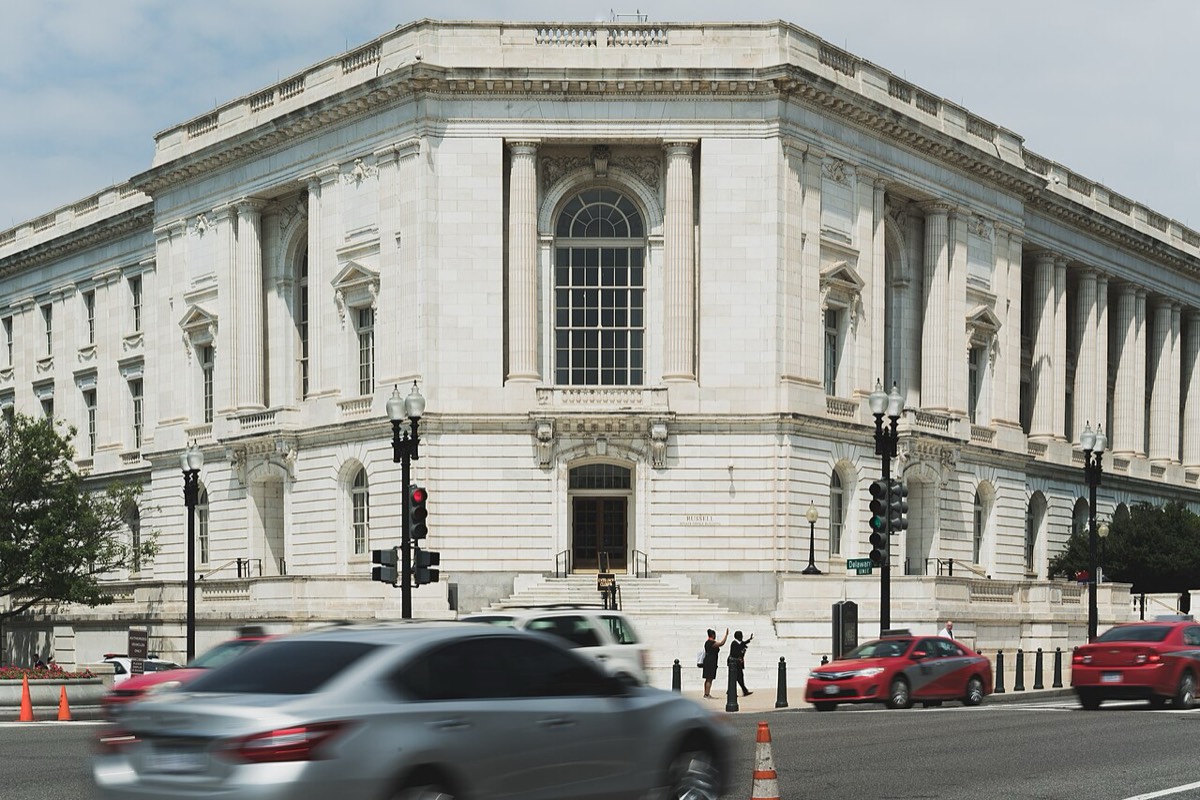
Under the Lobbying Disclosure Act, every registered lobbying entity files an LD-2 form each quarter listing what it spent, which issues it worked and which parts of government it met, and the House and Senate publish the lot on lda.gov. On October 20, 2026, the third-quarter forms went up: Nvidia reported $2.15 million, Anthropic $2.11 million and OpenAI OpCo $1.53 million. Stewart Barber, Anthony Cimino and Nicole Diaz signed the three forms, all on the same day, 20 days after the July–September quarter closed. Pulling each company’s full filing history from the LDA database, all three figures are their highest for any single quarter.
Key points
- Nvidia’s previous peak was not the $1.9 million it first reported: its Q3 2025 form was amended to $1.95 million in January 2026, and the new $2.15 million clears the corrected number.
- Anthropic’s form carries five issue codes (CPI, SCI, DEF, CSP, ENG) and names the export-control and distillation provisions of H.R.6875, the AI OVERWATCH Act, both chambers’ versions of the MATCH Act, the Chip Security Act (S.1705) and the Ratepayer Protection Act (H.R.9340 / S.5028).
- OpenAI filed only three codes (CPI, CPT, SCI), covering copyright, frontier-model cybersecurity evaluations and incident oversight, and “AI-security collaboration and information-sharing, including proposed antitrust protections.”
What each form says
Anthropic’s filing is the most specific of the three, and three of its five issue pages carry near-identical bill lists. The CPI, SCI and DEF pages run from H.R.5360, the AWARE Act, down to S.Amdt.6561 — 19 numbered bills and amendments, plus an unnumbered Artificial Intelligence National Security Safeguards Act, the BIS-2025-0001 AI Diffusion Rule docket and two executive orders, EO 14409 and EO 14434. Two entries speak directly to model training: the “export controls and distillation” provisions of H.R.6875, and the diffusion rule itself. The CSP page is the narrowest, listing only the Kids Online Safety Act (S.1748) and the GUARD Act (S.3062). The ENG page lists the House and Senate Ratepayer Protection Act plus one line about AI energy infrastructure. The agencies named are Congress and the White House Office and nothing else — no executive-branch department appears anywhere on the five pages: CPI, SCI and DEF list the House, the Senate and the White House Office; CSP lists the Senate alone; ENG lists both chambers. The CPI, SCI and DEF pages each list nine lobbyists, among them Holli Pandol (House Financial Services Committee staff, then the SEC) and Brianne Miller (Senate Energy and Natural Resources Committee until July 2020); the CSP and ENG pages list two apiece.
Only the trade page of Nvidia’s five-page filing names bills: the Chip Security Act (H.R.3447 / S.1705), the AI OVERWATCH Act (H.R.6875 / S.4456), the Remote Access Security Act (H.R.2683 / S.3519), the FY27 National Defense Authorization Act (H.R.8800 / S.4784), implementation of the integrated-circuit provisions of the Export Control Reform Act and amendments to the Export Administration Regulations. The other four pages — ENG, LBR, CPI and DEF — each carry a single sentence followed by the same parenthetical: “no specific legislation introduced or pending in 2026 Q3.” That is Nvidia’s own wording, and it means the company had no live bill to point to on energy, labor, intellectual property or defense that quarter. Beyond Congress, the form lists Commerce, the National Security Council, OSTP, the National Economic Council and Treasury; the defense page adds the Pentagon, the energy page the Department of Energy.
OpenAI’s form is the shortest at three pages. CPI opens with “artificial intelligence, cloud computing and infrastructure, cybersecurity, copyright,” then federal AI safety and oversight frameworks, naming the Thune-Klobuchar AI Research, Innovation, and Accountability Act discussion draft and the Secure Frontier AI Act. Below that: frontier-model cybersecurity evaluations, safeguards and incident oversight; foreign AI capabilities and national-security risks; and the antitrust line. CPT is one line — “artificial intelligence, copyright.” SCI repeats CPI and adds privacy and the Small Business Administration. The agencies listed are the House, the Senate, the White House, Commerce and State.
How the numbers compare
Set against the other forms published the same day, Meta still spends the most: Meta Platforms and subsidiaries reported $5.88 million, Amazon.com Services $4.49 million, Google Client Services $3.23 million, Apple $3.09 million and Microsoft $2.44 million, with LinkedIn another $220,000. The three AI and chip companies together come to $5.79 million — less than Meta alone. The Verge, reporting the story on October 22, described the group total as “nearly $6 million” and rounded the three to $2.2 million, $2.1 million and $1.5 million; the exact figures are above.
The more interesting shape is each company’s own curve, in millions of dollars:
| Filer | 2025 Q3 | 2026 Q1 | 2026 Q2 | 2026 Q3 |
|---|---|---|---|---|
| Anthropic | 1.01 | 1.56 | 1.97 | 2.11 |
| Nvidia | 1.95 (amended) | 1.29 | 1.25 | 2.15 |
| OpenAI | 0.92 | 1.02 | 1.20 | 1.53 |
Anthropic has risen for four straight quarters, from $840,000 in Q4 2025 to $2.11 million. Semafor’s line is that OpenAI nearly doubled and Anthropic nearly tripled their spending in the first half of the year; adding the two quarters on each side of that comparison, OpenAI goes from $1.18 million to $2.22 million and Anthropic from $1.27 million to $3.53 million, which bears the claim out. Nvidia’s curve is a different animal: $1.29 million and $1.25 million in the first two quarters of 2026, both above the year-earlier $940,000 and $620,000, but below the $1.95 million and $1.46 million of late 2025 — and then a jump to $2.15 million. Nvidia registered its own lobbying operation on March 31, 2025, and the first quarterly figures it filed under its own name covered Q1 2025, arriving as an amendment (1A) reporting $940,000; before that, outside firms including Tiber Creek Group and The Nickles Group registered on its behalf. Those forms report what the firms earned, not what Nvidia spent, so the two series cannot simply be added.
Issue One, in an October 21 analysis, converts the totals to a daily rate: about $23,000 a day for Anthropic and about $16,600 for OpenAI, which works out over 92 days. The same piece says Anthropic spent “over a million more” than the previous quarter, which depends on the comparison: against Q2 2026’s $1.97 million the gap is $140,000, and only against Q2 2025’s $910,000 does it clear a million. Trust the forms.
The counter-case
Issue One describes itself as a crosspartisan political reform group founded in 2013 to reduce the influence of money in politics, and it sets the spending beside the companies’ public statements. Its count: 11 major tech, social media and AI companies plus their trade groups spent more than $20 million on federal lobbying between July and September, about $223,000 a day. Separately, super PACs aligned with OpenAI and Anthropic have spent $56 million and counting on ads and voter outreach across this election cycle — a cycle-to-date figure, not a quarterly one. It offers two examples. OpenAI backed an Illinois bill that would shield AI developers from liability for catastrophic harms as long as they published a safety report and avoided acting “intentionally” or “recklessly.” A draft bill leaked to Politico shows Anthropic pushing a standard under which the government would have to show an imminent risk of killing or seriously injuring more than 50 people, or causing more than $1 billion in damage, before it could stop a model.
Direction needs stating plainly: LD-2 forms do not record a position. Semafor wrote as much on October 21 — the forms say which proposals a company discussed, not whether it argued for or against them. Crypto Briefing, citing Punchbowl News, reported that Nvidia, Anthropic, Google and Intel lobbied against a new round of chip export limits, aimed at the three proposals moving through the Senate’s defense bill. That is a reporter’s sourcing; the forms can neither confirm nor deny it. What the forms do show: Anthropic lists export controls and distillation as its own line item, and Nvidia’s trade page names the same cluster of bills. The agency lists do not match, though — Nvidia’s trade page names Commerce, the National Security Council, OSTP, the National Economic Council and Treasury, while Anthropic’s five pages list only the House, the Senate and the White House Office, with no mention of Commerce anywhere on the form.
What it means for builders
Distillation sits in Anthropic’s filing next to export controls, and that pairing matters more to anyone doing fine-tuning, synthetic data or evaluation replication than a tariff-style chip ban does. It governs how model outputs may be used, which in practice lands in API terms and acceptable-use policies rather than a customs list.
Data-center power costs are the other line that reaches an invoice. The Ratepayer Protection Act (H.R.9340 / S.5028) appears on Anthropic’s energy page; Nvidia’s energy page says only “artificial intelligence, quantum computing, and energy” and notes there was no specific legislation that quarter. One company put the bill in writing, the other only the direction — and that gap says something about how differently the two are placed. We covered the data-center lobbying alliance OpenAI, Blackstone and SoftBank formed on October 2: that one is about local permitting, this bill is about who pays for the electricity, and both end up in the price of inference.
Export control is moving on the enforcement and legislative tracks at once. The $300 million chip-smuggling case is the enforcement sample; the MATCH Act, Chip Security Act and AI OVERWATCH Act in these forms are the legislative one. Nvidia took a $4.5 billion charge in 2025 tied to export rules on its H20 chips, per Crypto Briefing, which is a reasonable explanation for why it now lists the full bill stack on its trade page.
The copyright box holds one line, “Artificial intelligence, copyright,” but it says something to teams building training data: OpenAI files copyright under its own issue code, meaning it is handled as a separate front in Congress rather than folded into AI safety.
What to watch
These three forms were signed on October 20; the next LD-2 batch is not due until January 2027. The near-term signal is the defense authorization bill: whether the three chip bills in the Senate version survive conference decides what accelerator specs Chinese customers can buy in 2027, and whether Nvidia has to raise its number again next quarter. Anthropic’s list also carries a less conspicuous entry, S.5105, the Collaboration on Adversarial Threats and Security Risks Act, which would let labs share information about security risks with an antitrust shield; Semafor reported on September 16 that senators wanted it folded into the must-pass defense bill. OpenAI’s “AI-security collaboration and information-sharing, including proposed antitrust protections” is the same proposal in vaguer words.
One limit on all of this: the numbers measure spending, not outcomes. Every form says which offices were visited. None says which clause changed.