FLUX 3 Image ships: native 4K, coordinate-grid layout, open weights within weeks
Black Forest Labs shipped FLUX 3: native 4K, coordinate-grid element layout, 10 positioned reference images and region editing; open weights within weeks.
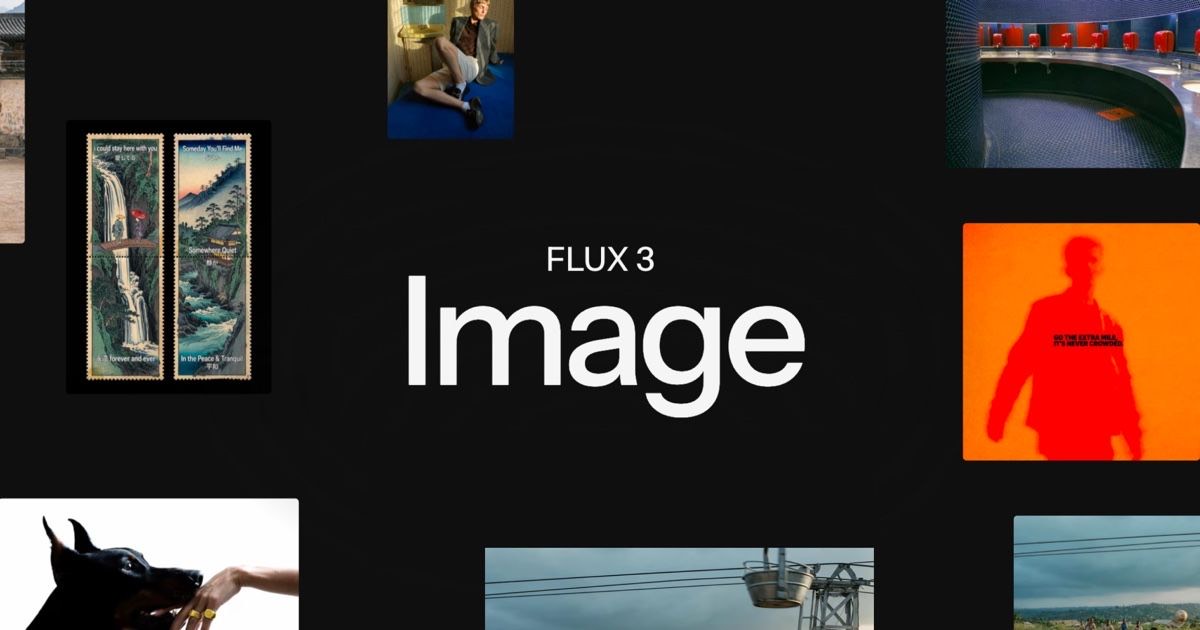
Black Forest Labs, the German company behind the FLUX line, shipped FLUX 3 Image on October 2. The keyword for this generation is control: image generation is moving from slot-machine pulls to layout.
The facts
- Native 4K: the official page lists up to 5456×3072 (about 16.8MP) with detail retention under upscaling.
- Coordinate-grid layout: a 0-1000 normalized coordinate system where every element carries an ID, a text description and a bounding box [y_min, x_min, y_max, x_max] — posters and UI layouts can be generated by name and position.
- Reference images: up to 10 per generation, each with a position you can specify.
- Region editing: multi-turn edits touch only the specified region, leaving other pixels untouched.
- Availability: paid service now (commercial license permits self-hosting); open weights “within weeks”; no API pricing published.
Where it sits against the field
FLUX 2 chased quality and text rendering; FLUX 3 pushes control granularity to the element level — the seam between design tools (the Figma class) and image models. Against Gemini-style conversational editing and Adobe’s selection-based flows, FLUX 3 chooses programs, not people, as the primary caller.
What it changes in design workflows
Coordinate grid plus element IDs means existing design tools can call generation as a layout engine: a template engine emits coordinates, the model fills content. Teams doing design automation, e-commerce detail pages or comic storyboarding should prepare a layout test set for when the open weights land.
Where it sits in this week’s model news
Generation models moved on two fronts this week: Microsoft took the streaming transcription boards, and OpenAI went on the offensive over distillation. FLUX 3 competing on control granularity rather than leaderboard scores is the clearest differentiation call of the three.
Editorial take
If region editing’s “leave the rest untouched” holds up outside the demos, it retires AI editing’s biggest engineering pain — fix one thing, wreck five others. No benchmarks or pricing yet; the 4K claim and LoRA-ecosystem compatibility wait for community re-tests within weeks.
The open-weights question
BFL built its position on open weights, and FLUX 3 splits the line: paid API now, weights “within weeks.” The holdback matters for two audiences. Fine-tuners — the LoRA ecosystem around FLUX is the largest in open image generation — will wait for weights before committing workflows. And enterprise buyers reading the region-editing demos want self-hosted verification before trusting “other pixels untouched” with brand assets. Weeks, not months, is the promise to hold them to.
The grid in practice
A template engine that emits bounding boxes can now commission exact compositions: product shots with the logo at fixed coordinates, comic panels with specified gutters, UI mockups with named elements. The 0-1000 normalization is resolution-independent, so the same layout script renders at any size — that is the API detail that turns a model into a layout engine, and it is why design-automation teams should care more about this release than about any quality benchmark. Whether the grid survives contact with real prompts — elements drifting, text artifacts inside boxes — is the test the open-weights release will settle.
Licensing and the community
BFL’s split release also manages a business tension: the paid API monetizes now while open weights rebuild the community moat that competitors like Ideogram, Recraft and the Gemini image line are attacking from the closed side. Commercial self-hosting under the paid license is already allowed, which softens the wait for enterprises; the LoRA ecosystem is the constituency that cannot. If the open release slips past “weeks,” expect the first ports of the coordinate-grid API to appear against FLUX 2 weights instead — the interface is model-agnostic even if the quality is not.
What to test first when weights land
Three things, in order: whether region editing composes across successive edits (the multi-turn claim), whether the bounding-box adherence degrades with element count (ten positioned elements is the stated max, but real layouts collide), and whether the LoRA ecosystem’s FLUX 2 adapters transfer or need retraining. Those three answers decide whether FLUX 3 becomes the default for structured generation or stays a niche tool for posters. The grid is the API; everything else is quality.