US midterms: voters reject AI data center measures, Abbott loses Texas
US voters rejected at least 38 of 40+ data center ballot measures on November 4: six cities banned them outright, and Texas Governor Abbott lost by 700k+ votes.
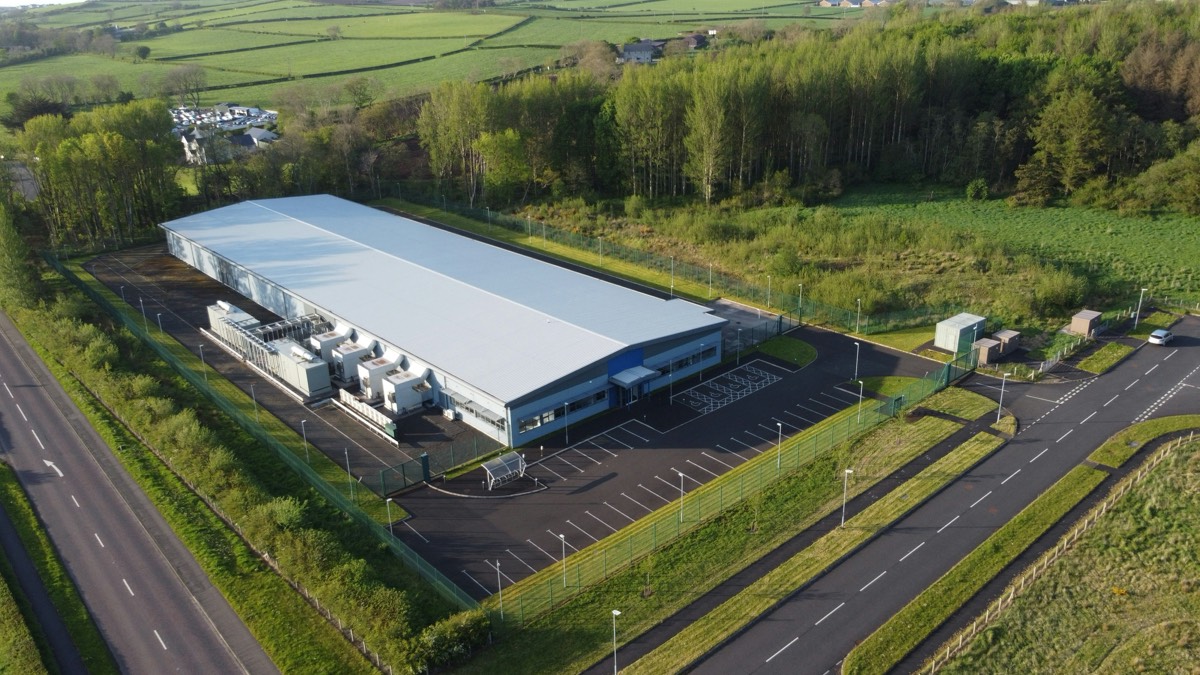
American voters delivered their first broad verdict on AI data centers this week. Through the November 4 count, at least 38 of the 40-plus data center measures on ballots across 13 states had failed, per 404 Media — six cities voted to ban data centers outright and twelve capped their power draw in megawatts. In Texas, Governor Greg Abbott, the industry’s loudest champion, lost his bid for a fourth term by more than 700,000 votes. We previewed this fight when data centers first became a midterm issue in late October; the results themselves are the new fact.
Key points
- 13 states put 40-plus data center measures on the ballot; at least 38 failed, per 404 Media’s November 4 count, with some precincts still tallying.
- Texas Governor Greg Abbott, whose campaign took over $9 million from data-center donors per the Texas Tribune, lost to Democrat Gina Hinojosa by more than 700,000 votes.
- Elon Musk put roughly half a billion dollars into the midterms and came up empty, posting after the results: “Data centers in space looking pretty appealing right now.”
Before the vote
The backlash did not start on Election Day. TechCrunch recorded a Brooklyn “Midterm Madness” forum on October 31 where the question “who supports AI data centers” drew boos — our earlier entry covered that moment. Data Center Watch estimated that projects worth about $198 billion were delayed or shelved in the first half of 2026 under community and political pressure, at least 20 gubernatorial candidates campaigned on moratoriums, and Amazon tried to buy peace with a $1 billion community fund. The returns say none of it moved voters.
The results in numbers
Three tallies, one direction. This entry leads with the primary report from 404 Media and uses the others as cross-checks:
| Tally | Scope | Result |
|---|---|---|
| 404 Media (November 4) | 40+ measures, 13 states | At least 38 rejected; 6 cities ban outright, 12 set megawatt caps |
| Ballotpedia (via CNBC) | 41 measures, 10 states | Restriction side won everywhere except Harwood, North Dakota |
| Two public trackers (via Tom’s Hardware) | ~40 localities/13 states; ~46 measures/10 states | 33 restricting measures passed, 6 leading; 11 of 13 pro-data-center measures defeated |
The counts disagree — 10 states or 13, 41 measures or about 45 — because some tally only referendums and charter amendments on the ballot while others include candidate pledges. Ohio had the most measures at 21, and the restriction camp’s only loss was Harwood, North Dakota, where voters rejected a charter amendment that would have added extra review for industrial projects, data centers included. A CNBC voter poll found 56% of voters called data centers a major factor in their vote.
Texas governor race
Texas was the fullest specimen of data center politics. Under Abbott the state grew past 300 working data centers with plans to double that; he called Texas “the epicenter of AI development” and said alongside Google CEO Sundar Pichai in 2025, “We must ensure that America remains at the forefront of the AI revolution.” Per the Texas Tribune, he took more than $9 million from data-center-related donors. His announced “pause” on new projects never stuck — 404 Media notes regulators kept approving permits. Democrat Gina Hinojosa unseated him by more than 700,000 votes. CNBC’s spending analysis widens the lens: crypto, AI and online-gambling interests poured over $377 million into the midterms, and 14 of the 20 largest donor groups backed Republicans.
Local races
The local results show opposition crossing party lines and city limits, per 404 Media’s ward-level record:
- Burgin, Kentucky: George Hensley, the only mayoral candidate printed on the ballot, had approved a hyperscale data center project; he lost to an anti-data-center write-in.
- Emporia, Kansas: voters passed a ban on high-impact data centers — at an earlier meeting on the topic, a teacher was arrested for clapping.
- Yukon, Oklahoma: the mayor who backed a hyperscale project lost his recall election.
- Kim Rooney won the mayor’s office in Asheville, North Carolina, and Amanda Rodrigues won in San Marcos, Texas, both running against data centers.
Each of these can be checked against the locality’s own returns.
What others say
Michael Whitesides, deputy communications director at the local-officials network Local Progress, read the returns bluntly: “These midterms sent a clear message — people don’t want to see data centers in their backyards.” Data centers “poison their air, and drive up their utility bills,” he added, warning that Big Tech will “buy and bully local officials” next. Representative Greg Casar of Texas, chair of the Congressional Progressive Caucus, told CNBC the new House Democratic majority should make “AI company CEOs” testify under oath, and called Republicans “bought and paid for by AI billionaires.” Musk, for his part, posted: “Data centers in space looking pretty appealing right now.” The joke has a straight-faced twin — Google’s Project Suncatcher was already planning to loft TPU satellites before the vote.
Our take
For anyone building on AI infrastructure, the vote redraws the siting map: the binding constraint is no longer “where’s the power” but “which community says yes,” and that variable now has ballots behind it. Industry figures compiled by Tom’s Hardware keep the effect in proportion — 300-plus local restrictions had delayed only three projects totaling about 2.3 GW, while 38 GW of new capacity is still expected online by 2027. Demand is deferred, not cancelled, and deferred compute eventually shows up in cloud prices and training schedules. OpenAI and Anthropic are reportedly scouting smaller 20-30 MW sites. Ohio is the sharpest test: OpenAI announced in August that it had secured 8 GW at the PORTS-Pike Technology Campus — what CNBC calls the world’s largest planned AI data center campus, phase one starting this year and capacity ramping from 2028 — and the state’s next governor, Amy Acton, campaigned on a “conditional moratorium” that would require data centers to cover 100% of utility costs and build with union labor only.
Two caveats. A ballot ban is not a project kill: enforcement runs through state regulators and courts, and Abbott’s “pause” dissolving into business-as-usual permitting is the cautionary tale. And every number here is a media tally of tracker data while counting continues — expect corrections.
What to watch
Four dated checkpoints. First, the new House majority’s early AI hearings — Casar has already promised CEO testimony. Second, whether Acton signs her conditional moratorium after taking office in January; execution rules for Ohio’s 21 measures will follow. Third, the stricter New York siting bill due on the governor’s desk by year-end, which other states will copy one way or the other. Fourth, Data Center Watch’s Q3 report, expected around January, to test whether the $198 billion delay figure is still accelerating. About five measures had no results posted yet — final numbers belong to the state election offices.