Google puts its first TPU in orbit
A Planet-built prototype rides Transporter-18 to orbit; the Joule paper says scale needs 370,000 tons of Starship payload, about 1,800 launches.
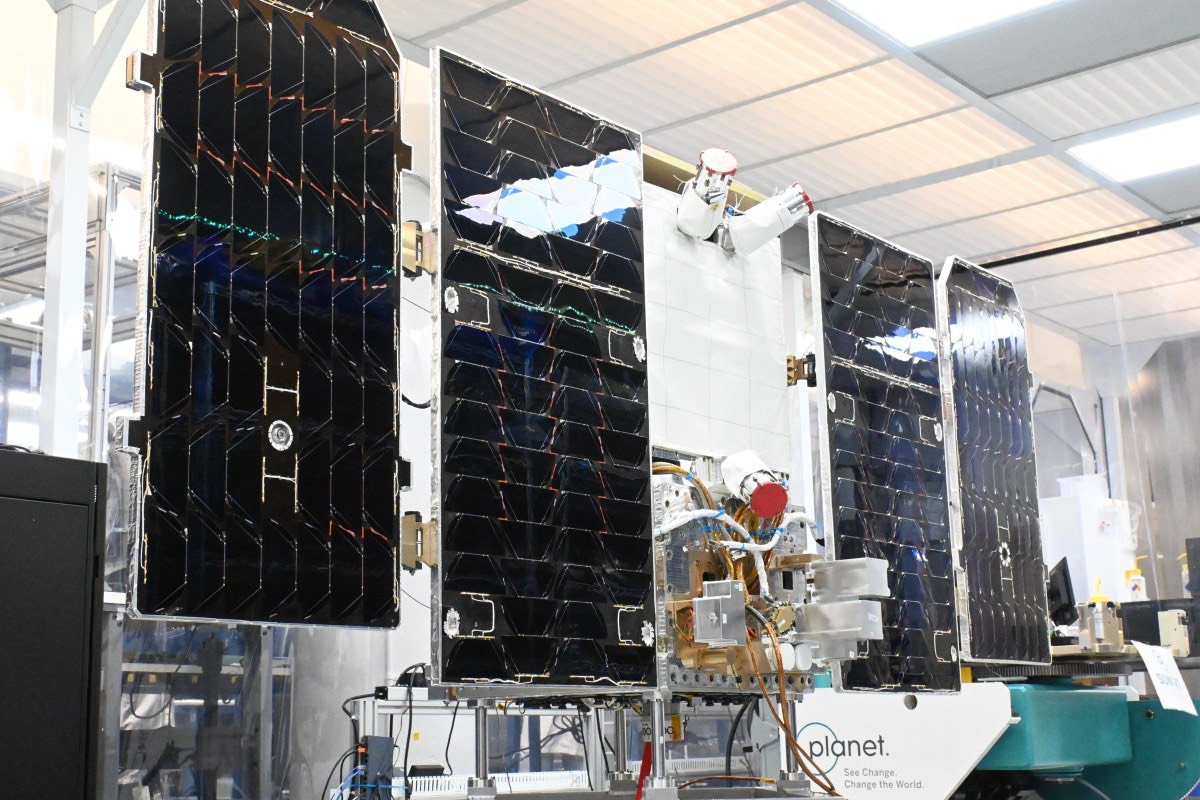
TechCrunch reported on October 1 that Google sent its first TPU-carrying prototype satellite into orbit the same day, flying on SpaceX’s Transporter-18 rideshare mission out of Vandenberg on a Falcon 9 — the first time the company has put one of its most advanced chips in space. The satellite was built by Planet Labs on its standard bus, and its mission is singular: prove a TPU works in orbit, delivering a kilowatt of continuous power, cooling the chip, and running models that detect faults. To stay inside the power and thermal envelope, the TPU fires in 15-minute bursts.
Roadmap: one satellite to a formation
Google’s target architecture is an orbital data center made of 81 satellites flying in close formation, processing in parallel. The next step lands in 2027: two purpose-built compute satellites, developed with Planet, will attempt to work together over a laser communications link — the hardest part of the formation design. Project lead Travis Beals stressed that inter-chip bandwidth and latency decide multi-rack workloads, and that Google is designing for workloads five years out. The cadence is notably restrained: MVP validates only that a single chip survives orbit, the two-satellite laser demo waits until 2027, and the 81-satellite formation has no launch date at all — both the roadmap and the Joule math position Google at the start of a decade-long curve rather than in a race for next year’s compute shortfall.
The math: an 1,800-launch bar
Alongside the launch, the peer-reviewed version of Google’s orbital data center white paper appeared in the journal Joule, and it puts a number on the scaling problem for the first time: assuming launch prices follow SpaceX’s roughly 20%-per-year learning curve to about $200 per kilogram by 2035, meaningful scale requires Starship to deliver 370,000 tons of payload over ten years — about 1,800 launches, or 180 per year, at 200 metric tons per flight. Starship has never flown more than five times in a year. Musk has talked about hourly flight rates by 2029; that claim is both the premise of the math and its biggest question mark.
Radiation: inference ok, training hard
Google conceded that its first round of particle-accelerator radiation testing gave the chips more shielding than they would see in orbit; when the tests were redone realistically, error rates rose. Beals’s framing: for typical inference operations the error rate is “like one in a million,” tolerable over a satellite’s five-year life, but “problematic” for mega-scale training runs with thousands of chips running for months. Read plainly, orbital compute’s first product is inference, not training.
The race is not Google alone
Others have already started: Starcloud put an H100-carrying satellite (Starcloud-1) in orbit in November 2025, roughly 100 times the compute of any prior space chip; Blue Origin’s Project Sunrise envisions a 51,600-satellite constellation; and Musk has called Starship the only path to deploying a terawatt of AI compute per year in solar-powered satellites. The Suncatcher prototype itself — codename MVP — is refrigerator-sized and carries four Trillium TPUs, roughly one ground server’s worth of compute. The numbers are small; the point is validating the chain.
The ground was getting hard anyway
Every terrestrial path to more data centers now runs through a cost line item — the OpenAI- and Blackstone-backed lobbying alliance, Amazon’s $1 billion community fund — all of it the price of building on Earth. Suncatcher is the other road: skip the land hearings and the grid interconnects entirely. The 1,800-launch math says that road only opens on a ten-year horizon, which makes the current program a hedge in orbit: fly the research now, wait for the launch-cost curve to catch up. For the chip industry, TPUs in vacuum are themselves the signal — the next market for dedicated compute may be off-planet.