NVIDIA’s October DLSS 5 update doubles model speed; NBA 2K27 gets it October 16
NVIDIA’s October 13 DLSS 5 update runs twice as fast as September’s model, cuts its parameters to about 118 million, and debuts in NBA 2K27 on October 16.
NVIDIA DLSS 5 is a neural-rendering system for games: it uses scene data supplied by the game engine to generate lighting and material detail. On October 13, 2026, NVIDIA announced an October model update that it says runs twice as fast as September’s version and is 24% smaller, at about 118 million parameters. The first scheduled game is NBA 2K27, due to add it on October 16. That does not make DLSS 5 a universal switch for every game; players need a supported title, the right hardware, and an implementation from the game developer.
Key points
- NVIDIA says the model runs 2x faster than September’s version and uses 20% less VRAM at 4K. These are vendor-reported figures, not an independent benchmark.
- The model is 24% smaller at roughly 118 million parameters. NVIDIA also says GPU overhead is cut in half at similar visual fidelity.
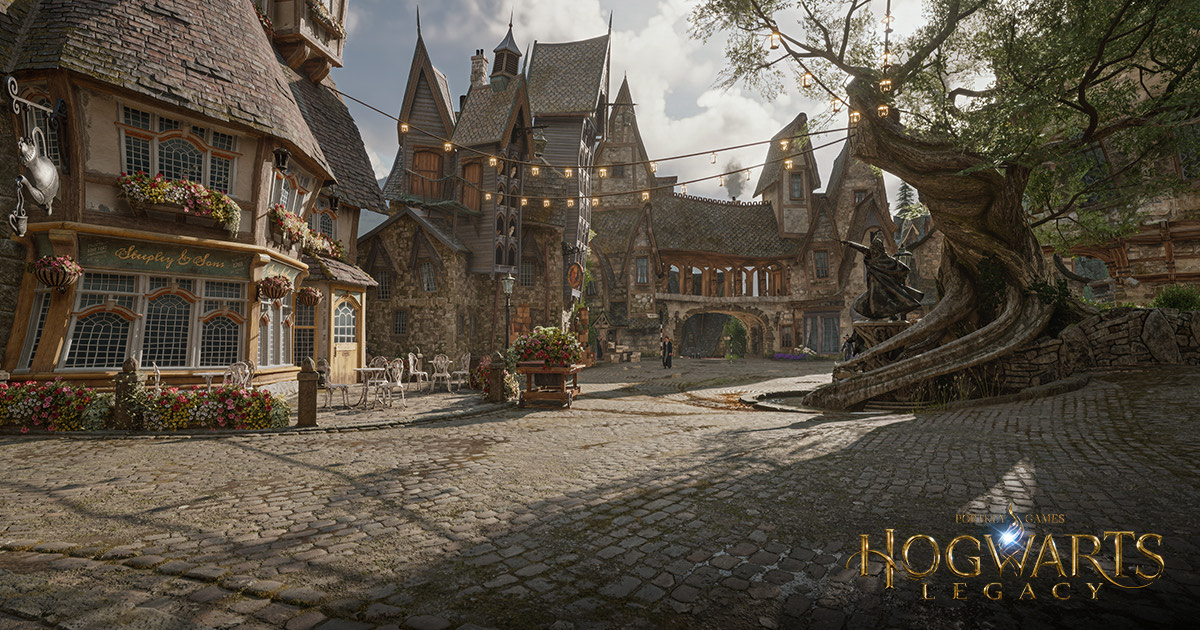
- NVIDIA’s schedule lists NBA 2K27 and RTX Spark laptops for October 16, an RTX Remix update for October 23, then Hogwarts Legacy and Where Winds Meet in November.
Background
DLSS 5 has drawn attention because NVIDIA describes it as neural rendering within a game’s image-generation pipeline, not simply a resolution-upscaling toggle. The company says the game supplies scene geometry, materials, and lighting information; the model uses that context to generate lighting and material detail. That engine-level dependency matters to players: a new graphics card alone cannot add the complete feature to any older game. Developers have to integrate it, and the visual result depends on each game’s implementation.
The October update follows the model’s March announcement and September iteration. NVIDIA says model execution speed has increased 10x since March. That is a claim about the model, not a tenfold increase in a game’s frame rate. The October version is twice as fast as September’s, but faster model execution does not by itself prove better image quality or guarantee the same frame-rate gain across games and hardware.
Frontier Now previously covered the price and positioning of NVIDIA’s desktop AI system, DGX Spark. It serves a different purpose: DGX Spark is local AI-compute hardware, while DLSS 5 is a rendering technology for games. RTX Spark laptops appear on this update’s compatibility schedule; they should not be confused with the separate DGX Spark system.
Performance and memory
The main change is a claimed reduction in the cost of running DLSS 5’s model. NVIDIA’s October 13 post says the new model is twice as fast as September’s, 24% smaller at about 118 million parameters, and uses 20% less VRAM at 4K. It also says GPU overhead is halved while visual fidelity remains comparable. Tom’s Hardware reported those figures, but did not publish its own frame-rate or memory measurements. They should be read as NVIDIA’s measurements and claims, not third-party test results.
| Measure | NVIDIA’s October update claim | Scope |
|---|---|---|
| Model speed | 2x faster than September | Model execution, not a 2x frame-rate guarantee |
| Model size | 24% smaller, about 118 million parameters | Compared with September’s model |
| 4K VRAM | 20% lower use | Vendor-reported figure |
| GPU overhead | Cut in half | NVIDIA says visual fidelity is comparable |
| NBA 2K27 frame rate | Up to 1.4x | Official claim for a specific game, not a universal result |
The “2x” headline is easy to misread: it refers to the model’s speed, not a promise that a player’s average frames per second will double. NVIDIA separately says NBA 2K27 can reach up to 1.4x the frame rate, but its announcement does not give a reproducible test configuration, baseline frame rate, or scene. A player cannot use that number to predict how many frames their own GPU will gain.
Rollout schedule
NVIDIA’s official schedule has several milestones. NBA 2K27 is due to use the faster DLSS 5 model on October 16, alongside support for RTX Spark laptops. An RTX Remix update is scheduled for October 23 and includes Frame Generation Preset C. NVIDIA says Preset C can be up to 35% faster on an RTX 5060, with minor image-quality trade-offs; the beta feature requires the NVIDIA app beta.
Hogwarts Legacy is scheduled for November 5. NVIDIA lists Where Winds Meet for late November. Tom’s Hardware’s report focused on NBA 2K27 and Hogwarts Legacy and did not include the October 23 RTX Remix date; Leikeji did mention the Remix update. NVIDIA’s announcement is the primary source for the full schedule, so an omission in another story should not be read as a cancellation.
These are planned support dates, not a guarantee that every region, platform, and game build will receive an update at the same time. To check whether a game is ready, look at its patch notes and its graphics options in the NVIDIA app. Until the relevant game patch is available, the absence of a DLSS 5 option is expected; installing a driver alone does not make every game compatible. Once NBA 2K27’s update arrives, the quick check is to launch the game and look for DLSS 5 in its graphics settings.
What testing shows
Tom’s Hardware’s coverage of the performance figures summarizes NVIDIA’s claims; it does not include an independent retest. Leikeji adds that DLSS 5 can run on a single RTX 50-series card, whereas the earlier demonstration required two RTX 5090s. That detail is not the focus of NVIDIA’s October post, which emphasizes model efficiency and the game rollout. The distinction should not be stretched into a claim that every RTX model or every game is supported.
A community experiment also needs context. Tom’s Hardware reported that a modder applied an early DLSS 5 build to 1996’s Quake, running in DOSBox, by applying the effect through ReShade in four passes. The image became noticeably dark. This was post-processing on an emulated game, not a native engine integration. It shows that this particular setup produced a poor result; it does not establish how DLSS 5 will look in supported games, nor does it measure frame rate or power use.
As of publication, the cited coverage contains no third-party, same-hardware comparison of September’s and October’s models. Lower parameter count and VRAM use are worth watching, but real gains depend on the game patch, GPU, resolution, and developer tuning. Since the system relies on scene information from the game engine, bringing it to older titles also requires work by developers or modders.
Our take
The update is most immediately relevant to players planning to play NBA 2K27 on supported RTX 50-series hardware: if the schedule holds, October 16 is the first concrete date to check the game. A smaller model and lower memory use may make integration easier for developers, but stable performance and a look that fits each game still depend on the implementation.
For someone shopping for a GPU, “twice as fast” is not a reason on its own to upgrade. That multiplier describes model execution, not overall frame rate. The RTX 5060’s 35% figure belongs to a separate Frame Generation mode, Preset C, and should not be added to DLSS 5’s model-speed claim. NVIDIA’s “up to 1.4x” NBA 2K27 frame-rate figure lacks the test details needed to predict an individual result. The practical move is to wait for the update to the game you actually play, then check the setting and measure performance before buying hardware for it.
The evidence still needed is a controlled third-party comparison: the same game, GPU, scene, and settings with the September and October models, reporting frame times, peak VRAM, and image quality. NVIDIA has supplied model-level metrics and a rollout calendar. Independent tests will answer the player-facing questions: whether saved memory can go toward higher-resolution assets, how much model speed translates into actual frame rate, and whether “comparable visual fidelity” holds across different game art styles.