NVIDIA’s DGX Spark 64GB ships at $4,999 — and the 128GB model now costs $6,950
The DGX Spark 64GB goes on sale October 23 at $4,999 (GB10, 1 PFLOP FP4, ~56GB usable); the 128GB model repriced to $6,950 — the memory tax made explicit.
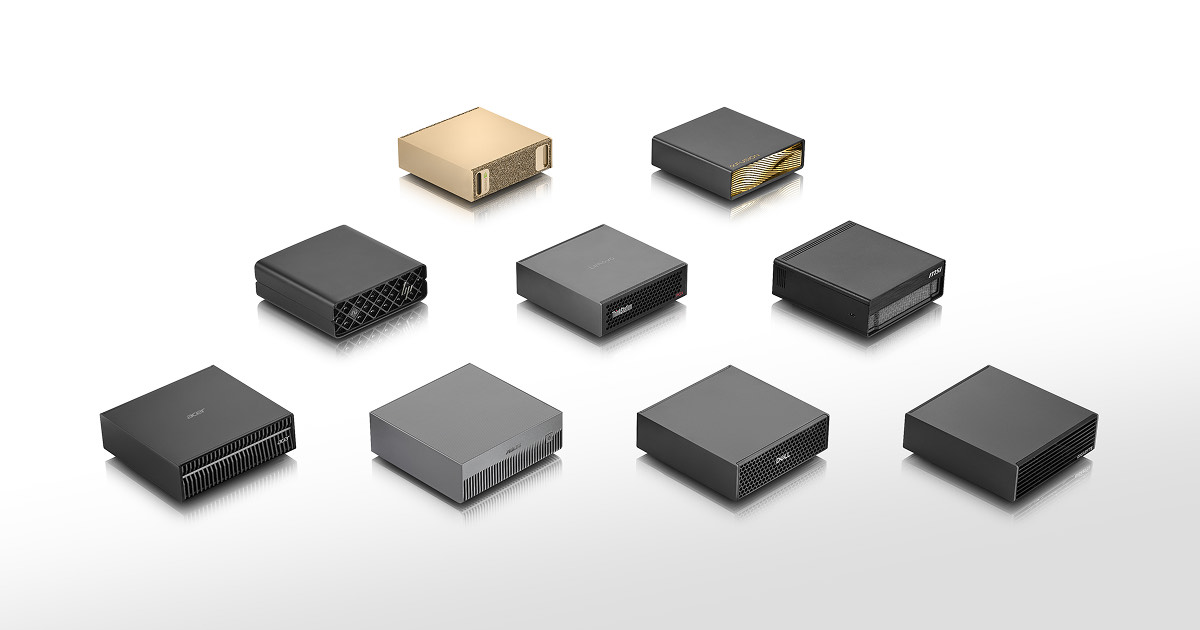
NVIDIA’s desktop AI workstation, the DGX Spark, has its 64GB version dated for October 23 at $4,999 — while the 128GB model has repriced to $6,950. The “memory tax” just appeared on a desktop AI hardware price tag in plain numbers.
The facts
- Silicon: GB10 Grace Blackwell — a 20-core Arm CPU (10× Cortex-X925 + 10× A725) with a Blackwell GPU, up to 1 PFLOP of FP4.
- Memory: 64GB LPDDR5x unified, with roughly 56GB usable for weights and KV cache; the 128GB tier now costs $6,950.
- Storage and interconnect: 1TB/4TB NVMe; ConnectX-7 networking supports up to four-unit clustering with the Sync toolkit.
- Software: runs vLLM/llama.cpp (up to 1.9× on agent workloads, per NVIDIA) with the Qwen, Gemma, DeepSeek and Mistral ecosystems.
- OEMs: Acer, Dell, ASUS, Gigabyte, MSI and H3C versions ship alongside.
- Sourcing note: MyDrivers aggregates NVIDIA’s official details; a few model names look garbled in translation.
The memory economics in the pricing
$4,999 for 64GB against $6,950 for 128GB — nearly $2,000 for the extra memory, well past component cost. That is the memory shortage through 2028 showing up at retail. For individual developers, the honest spec is “56GB usable” — exactly enough for quantized 70B-class models, which is the product’s real pitch.
Against cloud inference
$4,999 owned versus renting an H100 by the hour: Spark’s target scenario is “resident small models, data stays local” — local agents, private inference, edge deployment. It does not compete with the cloud on throughput; it competes on data sovereignty and zero marginal call cost.
Editorial take
Launching with a price increase on the higher tier is the new normal: memory now leads hardware pricing. NVIDIA pulling the DGX brand down to a toaster-shaped desktop reveals the strategy — a private inference node on every developer’s desk, with four-unit clustering aiming at small inference fleets rather than a single-machine toy.
The clustering story is the real product
Four Spark units over ConnectX-7 with the Sync toolkit is not a toy topology — it is a 4×64GB (or 4×128GB) unified inference cluster for about $20K-28K, which lands between a Mac Studio cluster and a single cloud instance amortized over a year. NVIDIA is explicitly selling “your own small fleet” to teams whose agents need resident models without per-token billing; the 1.9× agent-workload claim in vLLM targets exactly that benchmark. Watch the clustering software’s maturity more than the hardware specs.
The OEM lineup’s meaning
Eight toaster designs from Acer to H3C say this is a category, not an NVIDIA-only SKU — the same play as the original netbook wave. OEM competition will compress margins on the base 64GB config while NVIDIA keeps the halo 128GB priced high, which is precisely where memory scarcity lets them hold the line.
For teams comparing against Mac Studio: Spark’s ConnectX-7 clustering and CUDA software are the differentiators — unified memory on Mac is bigger but there is no multi-node story. The choice is ecosystem before price. The toaster form factor is doing more marketing work than any benchmark.
Preorders opened with the 128GB price already bumped — the market got the memory-cost memo before launch day.
The practical buyer profile: researchers who need a dedicated 70B-class inference box behind a firewall, robotics teams pairing GB10 with Jetson fleets, and edge deployments where cloud round-trips break the latency budget. Everyone else should price cloud first — the Spark’s value collapses if your models change weekly. The 4-unit cluster ceiling also answers the multi-GPU training question: Spark is inference-first, by design. Availability on October 23 is global per NVIDIA, but regional memory allocation may stagger the 128GB tier. The 1 PFLOP FP4 figure is the marketing number; usable inference throughput depends heavily on the model’s architecture. NVIDIA’s own store lists the 64GB FE alongside OEM versions, an unusual direct-retail move for DGX.