OpenAI posts 19 robotics job listings spanning controls, actuators and manufacturing
OpenAI's careers page lists 19 robotics roles, from inference and controls to motors and manufacturing; Altman says the brain comes first, demo due 2027.
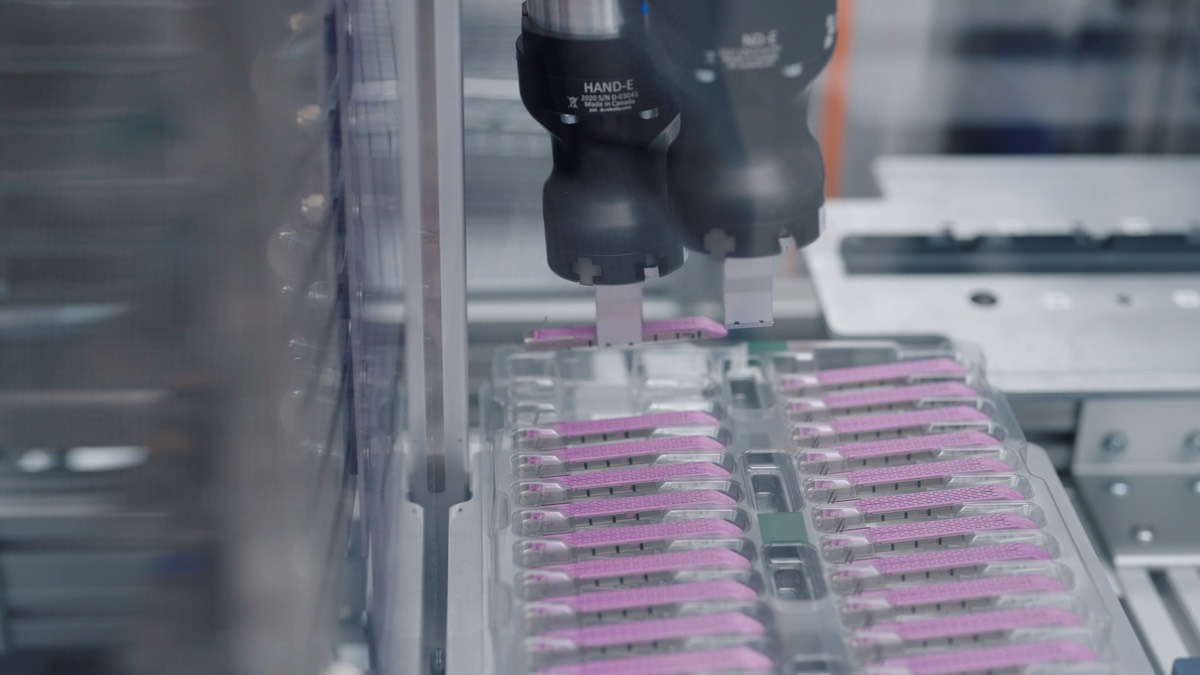
OpenAI’s careers page currently lists 19 robotics positions. The listings live on OpenAI’s Ashby hiring board, whose public API returned 814 open roles when we pulled it on October 19, 2026; 18 of the 19 sit in the Robotics team under Research, and one is a workplace-safety role carrying the Robotics title. The directions run from GPU inference and control systems to motor design, manufacturing and procurement. The team describes its mission in the job copy itself: “unlocking general-purpose robotics and pushing towards AGI-level intelligence in dynamic, real-world settings.” Over the same week, Sam Altman got more direct than usual: OpenAI will build robots, it “will definitely do a humanoid,” the hard part is “the brain that makes the robot work” rather than the exterior, and the goal is “a cool demo in 2027.”
Key points
- As of October 19, 2026, OpenAI’s Ashby board lists 19 robotics-related roles — 18 in the Research/Robotics team, all based in San Francisco (several postings state four days a week in office, a couple state three). The oldest posting went up April 21, 2025; the newest, a procurement coordinator, on October 13, 2026. This is a running hiring program, not a one-day splash.
- The spread reads as full-stack intent: GPU inference optimization, a robotics data-collection lab, control and state estimation, motor stator and rotor design, dynamometer test infrastructure, manufacturing processes, supply-chain buying — plus a lead robotics safety engineer posted October 6.
- Altman’s remarks this week, as relayed by multiple outlets: yes to robots, yes to humanoid, a “cool demo” targeted for 2027. The original settings were a September Sources podcast appearance and remarks to Fortune; what we read are aggregate reports by Livemint and tbreak.
Background
OpenAI and robotics have met before, with a breakup in between. In February 2024, Figure announced a $675 million round at a $2.6 billion valuation alongside a partnership with OpenAI, which also holds stakes in other robot makers such as Norway’s 1X. In late 2024, OpenAI was reported to be weighing its own robots, and in late January 2025 it filed trademark paperwork at the USPTO mentioning “user-programmable humanoid robots.” On February 4, 2025, Figure ended the partnership to build its models in house; CEO Brett Adcock’s stated reason: “We can’t outsource AI for the same reason we can’t outsource our hardware.” OpenAI’s older hardware credentials usually come down to Dactyl, a robot hand trained in simulation that learned to solve a Rubik’s Cube. The Figure history traces to TechCrunch and Maginative, both February 4, 2025; tbreak’s piece runs through Dactyl. The current wave of reports, which started October 17 on Engadget’s timeline, stitches the two halves together: the confirmed humanoid program and the hiring list are one story.
We have touched this line from other angles: AMD announced on September 28 it would acquire Fei-Fei Li’s spatial-intelligence company World Labs for about $8.2 billion (see our earlier report), showing the “AI plus the physical world” table is getting crowded; Boston Dynamics replaced its CEO on October 7 with Alexa chief scientist Rohit Prasad (see our earlier report), part of a pattern of software-minded leadership taking over robot companies. OpenAI’s job list adds the third piece: a model company hiring to build the hardware itself.
The listings
All 19 roles are individually checkable through the Ashby public API (our pull: October 19, 2026), sorted here by first publication date:
| Role | Team | First posted |
|---|---|---|
| Inference Engineer, Robotics | Robotics | 2025-04-21 |
| Software Engineer, ML Systems & Training Architecture | Robotics | 2026-05-22 |
| Electrical Engineer, Robotics | Robotics | 2026-05-28 |
| Robotics Software Engineer | Robotics | 2026-06-05 |
| Prototyping Lab Technician, Robotics | Robotics | 2026-06-24 |
| Field Engineer | Robotics | 2026-08-04 |
| Software Engineer, Distributed Data Systems | Robotics | 2026-08-05 |
| Technical Commodity Manager | Robotics | 2026-08-10 |
| Technical Program Manager, Actuators | Robotics | 2026-08-20 |
| PCB Layout Engineer, Robotics | Robotics | 2026-09-01 |
| Control Systems Software Engineer, Robotics | Robotics | 2026-09-08 |
| Senior Manager, EHS | Workplace | 2026-09-10 |
| Mechanical Design Engineer, Motor Design & Prototyping | Robotics | 2026-09-10 |
| Mechanical Engineer, Dynamometer and Actuator Testing | Robotics | 2026-09-10 |
| Manufacturing Engineer, Motors & Actuators | Robotics | 2026-09-15 |
| Engineering Technician, Actuators | Robotics | 2026-09-30 |
| Lead Safety Engineer, Robotics | Robotics | 2026-10-06 |
| Technical Program Manager, Robotics Infrastructure | Robotics | 2026-10-07 |
| Procurement Coordinator | Robotics | 2026-10-13 |
The shape of the list says more than the count. The roles posted in September and October cluster around the “actually build it” end of motors and actuators: stator and rotor mechanical design, stator winding processes, tooling and fixtures, a dynamometer and actuator testing rig, prototype manufacturing, plus a procurement coordinator — the classic configuration of a team moving from design toward repeatable low-volume builds. The data side is scaling too: the distributed data systems posting calls for robotics training pipelines at “exabyte scale,” while the robotics software engineer role is asked to “help develop and grow our data collection labs,” owning the integration lifecycle end to end. That role also wants five-plus years of production systems and Rust or C++ — an engineering seat, not a research slot.
What others say
Altman’s remarks are the quote of the week, but the relay chain matters. To Fortune, he said “I think we’ll have a cool demo in 2027” and appended the cold water: “I don’t think there will be robots walking the streets for a few years longer” — both lines as relayed by Livemint’s October 18 piece (by Swati Gandhi). On the Sources podcast in early September, as reported by Forbes on September 3 and carried by tbreak, he said more: asked whether OpenAI would really build a robot, he answered “We will”; it “will definitely do a humanoid” and other form factors too, because “the world is very much designed for people”; looks are “less important than really figuring out…the brain that makes the robot work.” Neither original interview could we read firsthand; the quotes above are relayed.
Engadget kicked off this wave on October 17 (picked up by UA.NEWS and others, under a headline noting the body isn’t the real challenge) and counted 27 robotics-related openings on the page; Huxiu’s September 20 analysis also cited 27 roles. Our same-day pull of the Ashby API says 19. The gap may come from counting any posting that mentions “robot” — the EHS role, platform engineers — or from listings pulled since; neither side published its criteria, so if you cite a number, cite it against the itemized list above. On the Chinese side, Sina Finance summarized the program on October 18–19 as putting the “AI brain” at the core, and 36Kr ran a newsflash on October 19 titled “OpenAI hires aggressively to boost robotics R&D” (via The Paper); we could not open either full text and record them here as titles and dates only. On pay: Business Insider reported in September that robotics engineers there can earn up to $500,000 a year (as carried by Digital Today’s Chinese edition on September 21).
Our take
For anyone building in embodied AI, the list is a supply-side signal: OpenAI is turning “robotics” from a research topic into a full engineering organization with manufacturing, supply chain and safety compliance attached — and the inference engineer posting from April 2025 shows the line has been running for a year and a half. For other model labs, it reopens the old question of whether to touch hardware: when the company behind ChatGPT hires winding-process engineers, the software/hardware division of labor is up for renegotiation.
Keep the usual skepticism: the 2027 demo is a target, not a promise — Altman himself added that robots won’t be walking the streets for years; the 19 postings are a snapshot that can change any day; the salary figure traces to unnamed sources via a media relay. For teams planning to put products on general-purpose robots before 2027, the one checkable move is watching this list: when titles like “production engineer” or “field deployment” appear, the roadmap has actually landed.