Raspberry Pi 5 16GB hits $385, triple its launch price
The Raspberry Pi 5 16GB now costs $385, up $80, more than triple its $120 launch price; Raspberry Pi blames a lack of alternative 16GB DRAM supply.
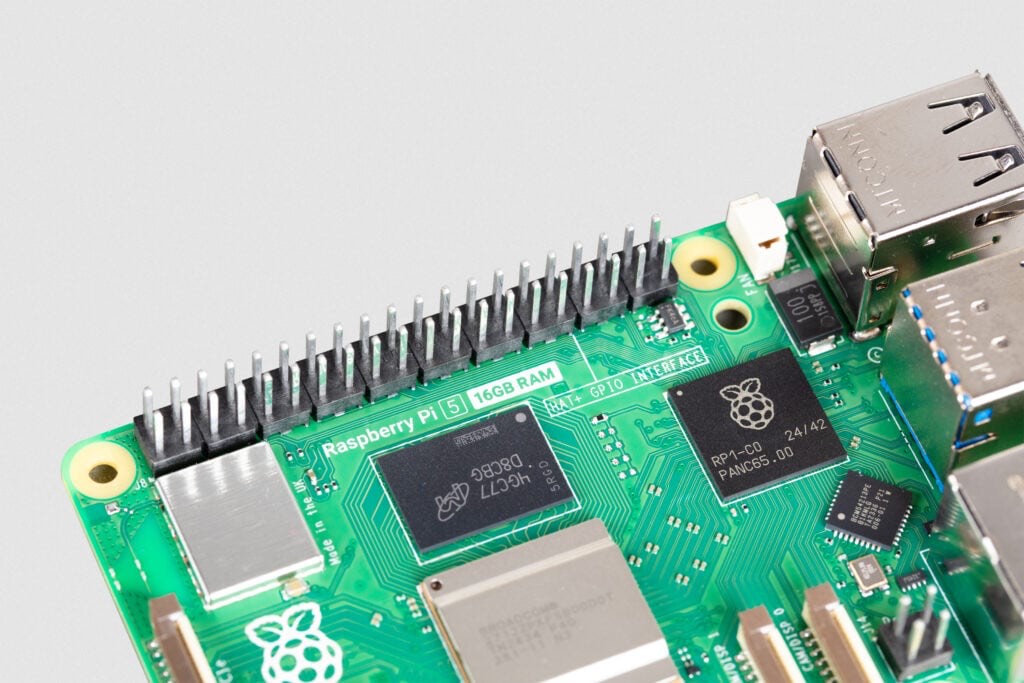
The 16GB Raspberry Pi 5 now costs $385, up $80 in the latest increase and more than triple the $120 it launched at in January 2025. CEO {{PERSON_yqdsfcba}} confirmed the rise in a November 2 post on the official raspberrypi.com blog, attributing it to “a lack of alternative supply for 16GB DRAM, compounded by other ongoing component shortages.” TechRadar’s November 7 report confirmed the new price is live on official channels. The memory supercycle that has repriced PCs, phones and servers has now reached the board a generation of developers learned on.
Key points
- The Pi 5 16GB has taken four increases since December 2025: $145, $205, $305 and now $385 — 3.2 times its launch price.
- Raspberry Pi says it is qualifying additional memory suppliers; per TechRadar’s roundup, new 16GB supply is expected only from 2028.
- The 16GB Compute Module 5 rose $40 to $425 in the same round; the Pi 500+ (16GB) held at $485.
Background
This is the fourth increase for the 16GB board in under a year, and it did not come out of nowhere. The board launched at $120 in January 2025, went to $145 in December 2025 and $205 in February 2026 — when Tom’s Hardware noted it already sat 70% above launch — then to $305 in April 2026. That April, Raspberry Pi also introduced a 3GB Pi 4 to give buyers an off-ramp, after LPDDR4 prices had risen roughly sevenfold over the prior year. October’s round hit the 2GB boards (+$12.50 each), which Tom’s Hardware counted as the third hike of 2026. We have been tracking this line: Micron’s CEO expects the shortage to run through 2028, with 75% of 2027 output already booked, and Q3 PC shipments cratered 20.1% partly on memory costs. The Pi is where that chain reaches individual developers.
The numbers
The full price trajectory of the 16GB Raspberry Pi 5, cross-checked against the official blog and two outlets (as of 2026-11-08):
| Date | Price | Change | Note |
|---|---|---|---|
| 2025-01 | $120 | — | 16GB launch |
| 2025-12 | $145 | +$25 | first increase |
| 2026-02 | $205 | +$60 | 70% above launch |
| 2026-04 | $305 | +$100 | 3GB Pi 4 introduced the same month |
| 2026-11 | $385 | +$80 | this round, effective immediately |
Current prices elsewhere in the lineup (the 8GB figure from TechRadar’s November 7 report; the 1GB pair from Tom’s Hardware’s October price list; the CM5 pair from Tom’s Hardware, November 2): the 8GB Pi 5 is $175, which means the extra 8GB in the 16GB model costs $210 — more than a whole 8GB board. The 2GB Pi 5 is $77.50, the 1GB Pi 5 still $45, the 1GB Pi 4 still $35, and the 16GB Compute Module 5 has gone from a $135 launch price to $425. Three more facts frame the round: Raspberry Pi says direct Pi 5 sales grew 47% over the half despite the increases, so demand has not folded; firmware locks each board to its factory RAM capacity (the company citing reseller scams), which closes the buy-cheap-and-upgrade-later path; and the company calls the rises temporary, promising to roll prices back when memory costs fall.
Official line
{{PERSON_yqdsfcba}}‘s blog post blames “steep rises in the cost of memory over the past two years” and notes that “other businesses in the sector have had to do likewise.” His advice to buyers: don’t pay for more memory than you need — pick lower-density or older boards that match the real workload, make memory optimizations in your software, and buy only from approved resellers, because some sellers are inflating prices or misrepresenting what they sell. In September’s trading update he framed the cycle as “a large, but ultimately typical, instance of a phenomenon that periodically affects the industry.” The company also says it has been qualifying additional memory suppliers through 2026, and business customers can email industry@raspberrypi.com to discuss memory optimisation.
What others say
Tom’s Hardware mapped where makers are headed: Pico and ESP32 microcontroller boards for small projects, entry-level x86 mini PCs for heavier ones — one forum user put it as “Used mini pcs is where it’s at.” The outlet’s read is that Raspberry Pi is now squeezed from both sides, below by microcontrollers that cost a few dollars and above by mini PCs with more memory, stronger CPUs and mainstream OS support; the gap between a $67.50 2GB board and a $385 16GB board makes that plain. The Register zeroed in on cadence instead: this round landed barely a month after the last one. Industry forecasts leave little room for the “temporary” framing to pay out soon — TechRadar rounds up SK Hynix warning shortages could persist through 2030, Micron saying 2028 or beyond, and TrendForce expecting capacity to keep favoring server DRAM through the quarter.
Our take
This round turns 16GB from the default choice into a line item that needs its own justification. At $385, the board sits in used-mini-PC and entry-x86 territory, so self-hosting, edge-inference and lab buyers should compare whole systems again before reordering out of habit. Two honest catches: “temporary” is the company’s word, but on Micron’s and SK Hynix’s timeline you should not budget a rollback before 2028; and the firmware lock, however defensible as an anti-scam measure, closed the last DIY path to more memory. The open question is whether 8GB and 4GB models follow — only the 16GB line is named so far. Until there is a signal, right-size the memory and stick to approved resellers; that is the whole playbook for now.