Apollo and Goldman price a $44 billion GPU financing for SpaceX
Apollo and Goldman priced about $44 billion of notes on November 20 to buy Nvidia Vera Rubin racks and lease them to SpaceX, with rent due from H1 2027.
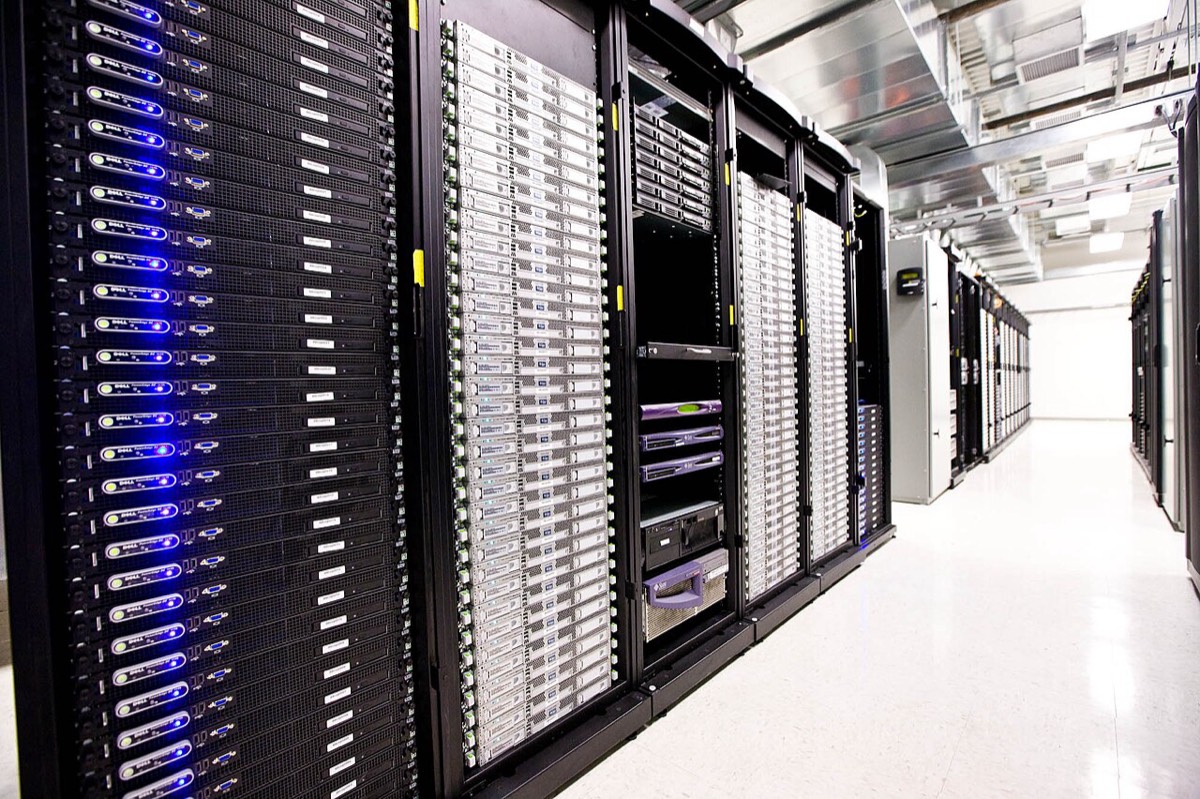
Apollo Global Management and Goldman Sachs priced roughly $44 billion of senior and subordinated notes on November 20 for a SpaceX GPU financing. The money is not handed to SpaceX as cash: a trust buys Nvidia’s next-generation Vera Rubin racks and leases them back to the rocket and AI company. Rent starts after the equipment is delivered in the first half of 2027, and SpaceX (Nasdaq: SPCX) never owns the hardware.
Key points
- The public tranches total about $32.1 billion. Per Reuters, citing a source familiar with the sale, $25.17 billion of A3 notes due April 2033 priced at 8.259%, about $4.4 billion of A2 notes due April 2031 at 7.66%, and $2.564 billion of class B subordinated notes due April 2033 at 8.36%.
- KBRA is the only rating on the record. On November 16 it assigned a preliminary A- to about $27.2 billion of A-2 and A-3 notes and $2.4 billion of class B notes, outlook stable, and listed “rapidly depreciating” GPUs as a risk. Apollo’s pricing release names no rating agency.
- The lease runs about five years, paid quarterly, amortizing on schedule. KBRA calls it triple-net and hell-or-high-water: SpaceX owes rent even if the equipment breaks or cannot be used. Fitch keeps the lease out of its primary leverage metrics but calculates a lease-adjusted leverage figure alongside them.
Background
SpaceX disclosed a binding commitment on October 26 to lease about $40 billion of GPUs and related equipment from an entity managed by Apollo, as Fitch recounted it. A day earlier, Musk said on X that the financing was “closed” and predicted that more than 200 neoclouds would see “guppy-level death and consolidation” (see SpaceX’s $40 billion GPU debt). No issuer statement existed at that point, and the Financial Times and Bloomberg described different structures: one said roughly $10 billion of bank loans plus $30 billion of investment-grade bonds, the other an off-balance-sheet SPV. The November 20 pricing release is the first to put a dollar figure and a rent start date on paper.
Fitch’s October 29 note explains why the deal is built this way. SpaceX’s BBB+ rating stays unchanged on the premise that the lease does not count toward its primary leverage metrics. The same note gives the scale behind the borrowing: nameplate compute of 1.7 gigawatts at September 30, up from 0.6 gigawatts a year earlier, $89.9 billion of cash and short-term securities, and $38.0 billion of total debt. SpaceX listed in June, per IFR, and the move from private negotiations to the public bond market is the expected next step.
The facts
Apollo’s release is brief: about $44 billion of senior and subordinated notes, oversubscribed and upsized, funding GPUs and related equipment for SpaceX, with rent starting on delivery. The tranches Reuters could itemize are the three sold publicly:
| Tranche | Size | Maturity | Yield | KBRA preliminary |
|---|---|---|---|---|
| A3 senior secured | $25.17B | April 2033 | 8.259% | A- |
| A2 senior secured | ~$4.4B | April 2031 | 7.66% | A- |
| B subordinated secured | $2.564B | April 2033 | 8.36% | A- |
| Three public tranches | ~$32.1B | — | — | — |
The three add up to about $32.1 billion, well short of the $44 billion headline. IFR lists the other debt pieces: a senior secured loan initially sized at $8.236 billion, which may shrink now that the bonds were upsized, and up to $2.4 billion of privately placed class C, D and E notes, which together cover most of the gap. SpaceX separately pays $7.1 billion of rent upfront, and IFR puts the equipment order at about $47 billion. The release does not break any of this out, so $44 billion is the amount priced, not a complete list of the money involved.
The roles are in the release. Apollo Global Securities and Goldman Sachs were co-global coordinators, and Goldman was sole structuring agent. Apollo- and Goldman-managed funds and affiliates committed the financing, with anchor commitments from funds and accounts managed by BlackRock and Goldman Sachs Asset Management and from capital accounts advised by KKR. Apollo’s advisers were Morgan Stanley, Citi and PJT Partners, with Latham & Watkins as its counsel; Paul, Weiss advised investors.
On the asset itself, the release says only “next generation NVIDIA Vera Rubin chips.” KBRA’s notice is more specific: Vera Rubin NVL72 GPU equipment. Neither gives a rack count, and no public document says how many NVL72 systems a $47 billion order buys.
Where “off-balance-sheet” ends
Saturn Funding Trust is the issuer. KBRA describes it as a newly formed, bankruptcy-remote special purpose entity indirectly wholly owned by WHCO Intermediate Holdings LP, a third-party asset-backed lender with no equity link to SpaceX. IFR reports that the SPV is owned by Apollo and that a separate Apollo vehicle takes ownership of the equipment if SpaceX defaults; the SPV buys the hardware and leases it to SpaceX.
Off-balance-sheet, precisely, describes accounting and rating treatment: the debt sits on the trust’s balance sheet, and SpaceX carries a lease obligation. That is not the same as the risk going away. KBRA anchors the rating to the “corporate anchor,” meaning SpaceX’s own credit, and the lease obligations are absolute and unconditional, so SpaceX cannot stop paying because the equipment is damaged, idle or hit by force majeure. Fitch draws a finer line: the lease stays out of primary leverage, but lease-adjusted leverage is calculated as a supplemental measure and rent amortization and interest reduce its EBITDA. The agencies differ on where to put the number, not on who pays.
One more detail matters: the collateral is the hardware, and the source of repayment is SpaceX’s rent, not a pool of diversified receivables. That is why the portfolio managers IFR spoke to would not treat it as an ordinary ABS.
What others say
The two portfolio managers quoted by IFR were blunter than the release. One, thinking as a yield buyer, called the 8%-plus yield attractive. The other described the deal as “really SpaceX-secured equipment, dressed as an ABS” and passed, citing uncertainty over whether SpaceX might merge with Tesla and where these bonds would sit in the capital structure.
The two documents also disagree about “largest.” Apollo’s release calls it “the largest GPU financing executed to date”; IFR calls it the second-largest chip financing so far, behind Anthropic. The gap is a counting question. Anthropic raised $35 billion in June and $63 billion in October to buy chips from Broadcom and Alphabet, and those deals leaned on Broadcom guarantees rather than the credit of Anthropic, which was then unlisted and unrated. Count only GPU leases backed by the lessee’s own credit and Apollo’s claim holds; count chip financing as a category and second is the accurate number. This piece trusts IFR here, because it dates and describes both Anthropic deals.
That is also the useful comparison with earlier xAI and Oracle chip financings: the asset class is the same accelerator rack, the credit behind it is not. Anthropic’s deals pushed risk onto a supplier’s guarantee; this one pushes it back onto SpaceX’s balance sheet, one trust removed. The terms are not directly comparable. What is comparable is who ultimately pays.
The market did not cooperate. IFR reports the bonds launched before the open on Thursday, hours after Anthropic priced its record IPO, and that AI stocks and bonds sold off through the day, taking the Nasdaq to a seven-month low. The A3 tranche priced at 345 basis points over Treasuries.
Our take
For anyone buying compute, the first consequence is price. An 8.259% yield becomes a 2027 rent benchmark: equipment delivered in the first half of 2027, a five-year lease paid quarterly, and, per IFR, all three tranches scheduled to be repaid more than a year before their legal maturities. Teams negotiating multi-year GPU capacity in 2027 will run into that cost line in quotes.
The second consequence is that “off-balance-sheet” is doing too much work in the coverage. SpaceX’s obligation is hell-or-high-water; it pays whether or not the racks work. The agencies only disagree about which metric absorbs it. Reading “excluded from leverage” as risk transferred mistakes an accounting choice for an economic fact. If you want to judge the deal’s effect on SpaceX, use Fitch’s supplemental lease-adjusted number, not the wording of the release.
Three things remain open. No rack count was disclosed, so neither the release nor the rating notice says how many NVL72 systems $47 billion buys or at what unit price, which is exactly what determines collateral value and how much weight KBRA’s “uncertain realizable value” caveat deserves. The final size can still move, since the loan shrinks as the bonds grow. And Musk described the money in October as “primarily callable debt,” while what priced in November is a five-year, scheduled-amortization lease; those are different repayment profiles, and no party has explained which one reflected the negotiated terms. For contrast, Anthropic’s IPO filing put roughly $895 billion of compute purchase and lease commitments into a disclosure document; one company lays the promise out, the other moves the debt into a trust, and the difference will show up in 2027 filings.