FCC conditionally approves SpaceX plan for a million Starmind satellites
The FCC gave SpaceX conditional approval on November 25 to orbit up to 1 million Starmind satellites for AI data centers, but not its debris plan above 600 km.
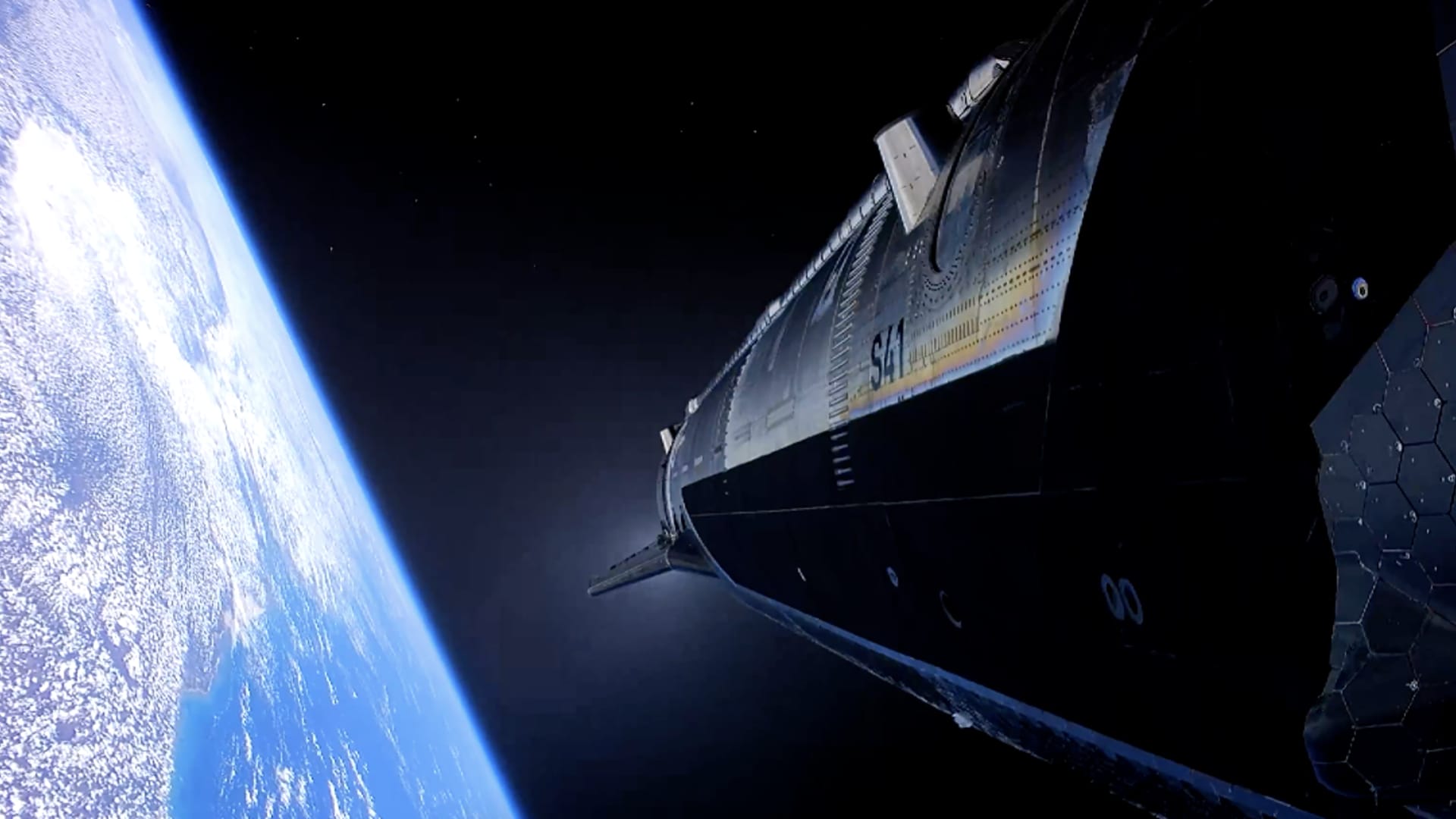
The Federal Communications Commission gave SpaceX conditional approval on November 25 to deploy up to 1 million satellites named Starmind, meant to run AI workloads in orbit. The authorization, document DA-26-1273A1, covers a constellation at altitudes between 500 and 1,002 kilometers. It settles who may transmit and where the satellites may sit; it says nothing about whether heat can be removed or where the chips will come from.
Key points
- One million satellites is a ceiling. SpaceX has seven years to put its first operational satellite in orbit and fourteen to complete the constellation. The FCC dismissed objections about astronomy and light pollution as outside its authority.
- Inter-satellite links are primarily laser, including links to Starlink, with radiofrequency as a backup for contact and control from Earth. SpaceX’s debris plan for altitudes above 600 kilometers was not approved; the company is seeking a waiver of the current rule that satellites ending missions below 2,000 kilometers reenter within five years, and has discussed moving retired satellites to other orbits or around the sun.
- Amazon’s Kuiper, Viasat and the American Astronomical Society filed against the application. Amazon called it a “lofty ambition rather than a real plan” in a March filing and said deployment at SpaceX’s pace could take “centuries.”
Background
Starmind did not appear from nowhere. Space.com reported on June 25 that Musk had confirmed the name on June 23, and a Starmind page has since gone up on spacex.com alongside Starlink. What SpaceX filed for is a satellite constellation license, not a data center lease; computing is one of the payloads those satellites would carry.
Others in the same lane started earlier. Google’s Project Suncatcher sent a single TPU-bearing prototype to orbit on October 1, and that test was deliberately small: one prototype aimed at inference, not training. Blue Origin applied in March for up to 51,600 satellites under Project Sunrise. SpaceX is asking for roughly twenty times Blue Origin’s number while also building ground data centers — its offers to buy 418 homes near the Colossus site in Southaven, Mississippi, on condition that owners drop a noise lawsuit, have already drawn local opposition. The two paths are running in parallel, which suggests the company is not betting everything on orbit.
The facts
The authorization is short. What actually constrains SpaceX is a handful of deadlines and one plan that was left out.
| Item | Figure or status | Source |
|---|---|---|
| Satellite ceiling | 1 million | DA-26-1273A1 |
| Operating altitude | 500–1,002 km | DA-26-1273A1 |
| First operational satellite | Within 7 years | DA-26-1273A1 |
| Full deployment | Within 14 years | DA-26-1273A1 |
| Debris plan above 600 km | Not approved | DA-26-1273A1 |
| Current deorbit rule | Reenter within 5 years below 2,000 km | FCC rules |
| Inter-satellite links | Laser primary, radiofrequency backup | DA-26-1273A1 |
The word “approved” is easy to misread. The FCC granted radio spectrum and orbital positions. The conditions state that the debris mitigation plan for satellites above 600 kilometers is still under review, which means that even if SpaceX starts launching immediately, it holds a complete license only for the lower band. The waiver the company wants is the more sensitive item: current rules require low-Earth-orbit satellites to reenter within five years of ending their mission, while SpaceX has discussed relocating retired satellites to other Earth orbits or into solar orbit. That amounts to redefining “deorbit” as “leave this orbit.”
Heat is the constraint no license can remove. Andrew Cavalier, a principal analyst at ABI Research, worked through the numbers in IEEE Spectrum. A single 700 W Nvidia H100 held at 60 °C needs about 1.4 square meters of radiator; after five years in low Earth orbit, with coating degradation, the same chip needs about 2.0 square meters, a 40 percent increase. At 20 °C it needs just under 3 square meters; at 85 °C, about 1 square meter. A 32-GPU rack drawing roughly 40 kW once CPUs, memory and networking are counted needs an 80 square meter radiator, about the area of a small sports court. A 100 MW facility would need at least 2,500 of them.
His boundary conditions are just as concrete. Solar input in space is 1,361 W per square meter, but usable array output is about 400 W per square meter and heat rejection about 450 W per square meter, so generation and cooling consume comparable area: 1 MW of solar power implies roughly 1 MW of waste heat to radiate. Radiators and solar arrays can be 65 to 70 percent of a satellite’s mass. Under his rough model, annual orbital GPU launch and operating cost lands at least ten times terrestrial, even with optimistic assumptions such as $44 per kilogram to orbit and $0.20 per kWh.
What others say
FCC Chairman Brendan Carr framed the vote broadly: the action “opens a bold new frontier for the computing infrastructure needed to power America’s leadership and growth.” Carr said Starmind and its competitors would “extend America’s lead in Super Intelligence.” Elon Musk replied on X: “Much appreciated. This will be a great asset to America and the world.” SpaceX did not respond to CNBC’s request for comment.
Opponents focus on debris and the sky. Beyond the “centuries” line, Amazon wrote that the proposal “risks real harm.” Viasat and the American Astronomical Society raised orbital congestion, radiofrequency interference and threats to scientific research. The FCC pushed the last category aside as beyond its remit, which drew criticism from environmental and astronomy groups. Earthjustice’s Jan Hasselman objected to approval during a holiday week without environmental review; astrophysicist Adam Becker warned it could “further pollute the night sky” and risk a “cascading chain reaction of space junk collisions.”
The technical skepticism is colder. Andrew Cavalier concludes that the workloads that genuinely need low-orbit compute are the ones where the data cannot come down and must be processed immediately: Earth-observation preprocessing, missile tracking, collision avoidance. General model training and inference, in his account, remain hard to justify in orbit today. He calls the cooling cost a “physics tax” and argues the industry’s outcome depends on thermal architecture, radiation tolerance, serviceability, reusable launch and vertical integration rather than on how many GPUs anyone can buy.
On Hacker News, where the story drew 127 comments, the argument followed the same engineering logic: a million satellites at 1,000 kilometers make collision avoidance itself a real-time compute problem, and compute needs power, power needs area, and area needs launches. One reading of the authorization is that SpaceX has reserved spectrum first and will solve the rest later. Another is that the FCC licensed communications and never claimed to license a business model.
Our take
The weight of this decision is not in the number one million. It is that orbital data centers moved from proposal to licensed category, and that the binding constraint is now visible to everyone.
Three things are worth holding onto. First, permission is not feasibility: one million is a ceiling, not a production plan, and the seven- and fourteen-year marks are use-it-or-lose-it clocks rather than a roadmap. Second, the constraint is thermal, not silicon or launch. Radiator area scales with the fourth power of temperature and offers no economy of scale, which makes the cost curve of orbital compute structurally different from the ground. Third, leaving the debris plan above 600 kilometers unapproved keeps the most valuable band in limbo: higher orbits cover more ground, add latency and make deorbit harder, and the FCC did not make that trade-off for SpaceX.
For readers, the practical reading is narrow. If your work depends on large-scale inference, do not put orbit into your architecture assumptions for the next three years. If you are on the financing side, this changes the narrative rather than the cash flow. The number to watch is the launch date of the first operational satellite, not the ceiling in the document.
What to watch
The seven-year clock puts the first operational satellite before 2033 and full deployment before 2040, a span longer than most careers in this industry. Three nearer checkpoints will tell whether this is real: when SpaceX files its debris plan above 600 kilometers, whether Google’s Suncatcher results can be reproduced at larger scale, and whether the FCC accepts moving retired satellites into solar orbit. If the third is refused, the altitude distribution of the whole constellation has to be redrawn.