US Commerce signs four chip R&D letters of intent worth up to $389M, $175M of it for Helion
Commerce signed chip R&D letters of intent with Helion and three others on Oct 22, up to $389M total, taking non-voting minority equity in each.
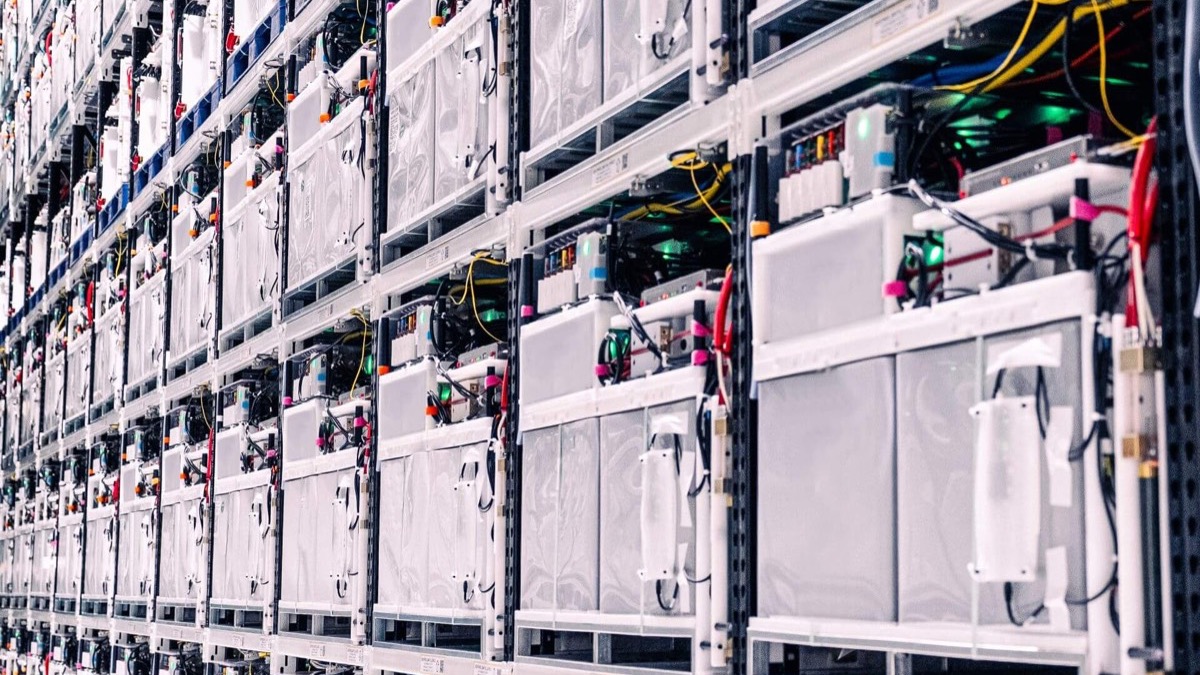
The US Commerce Department said on October 22 that it had signed four letters of intent to fund semiconductor R&D under the CHIPS and Science Act, with a combined ceiling of $389 million and up to $175 million of that going to the fusion company Helion. Commerce attached a condition in the same announcement: it takes a “minority, non-controlling and non-voting equity stake” in each of the four companies. Two of the four are fusion firms (Helion and Commonwealth Fusion Systems); the others are a vertical gallium-nitride power device maker and a high-purity quartz supplier. The figures are ceilings, not cash already paid out.
Key points
- Four letters of intent, $389 million at most. Helion gets up to $175 million, Commonwealth Fusion Systems up to $85 million, Vertical Semiconductor up to $73 million and Sibelco up to $56 million. These are the figures in Commerce’s October 22 announcement, and they sum to $389 million.
- An LOI is not a grant. The announcement says the companies “have entered into letters of intent” and that R&D happens “under the final awards.” Sibelco’s release spells out the remaining steps: due diligence, further negotiations and the US government’s internal approval process.
- Washington wants shares. Each company gives up a minority, non-controlling, non-voting stake. Helion’s wording is the most precise: once a definitive award agreement is signed, Commerce would receive a $175 million non-voting interest priced off the company’s most recent Series G preferred stock valuation, as payment for entering into the award.
Background
CHIPS money sits in two pots. According to chips.gov, the CHIPS Research and Development Office runs an $11 billion program, while the CHIPS Program Office holds $39 billion in factory incentives. This announcement points research money at power electronics, the layer that moves electricity from the grid into a building and then into a chip. Commerce argues that better power conversion improves efficiency, grid stability and thermal losses at once, and that building these capabilities at home will reduce reliance on overseas manufacturing.
Helion’s machine is a pulsed design, as TechCrunch describes it. Fuel is injected into both ends of an hourglass-shaped chamber, the plasmas are accelerated into each other with magnetic fields, and further compression raises the temperature; magnets and capacitors then recover energy from the reaction. That cycle requires semiconductors to switch and recover large amounts of energy repeatedly and quickly. Helion’s release says devices that meet its requirements are “currently only available from overseas manufacturers,” and that domestic production should bring higher efficiency, longer operating life and better cooling.
Two other threads run through the letters. One is power as the binding constraint on AI build-outs: Vertical Semiconductor CEO Cynthia Liao says in her company’s release that “Power is the most significant bottleneck in the build-out of AI infrastructure,” and the most specific milestone in its $73 million is a demonstration of a 2.5 MW AI rack. The other is compute buyers moving upstream into generation: Google signed a 20-year nuclear agreement with Constellation on October 6 (our October 6 entry), and Meta’s Prometheus cluster is planned at gigawatt scale. The same funding list now covers chipmakers, cloud providers and fusion startups.
The facts
Commerce’s announcement describes the four awards more consistently than the companies’ own releases, so the table follows the announcement, with company details in the last column.
| Company | Ceiling | R&D scope | Company additions |
|---|---|---|---|
| Helion | $175 million | High-voltage power semiconductors and advanced power modules for high-peak-current pulsed applications; controlling and harvesting energy from its magnets | $50 million in private money alongside, $225 million total; $100M+ in Everett, Washington, with 100+ jobs |
| Commonwealth Fusion Systems | $85 million | Semiconductors for radio-frequency plasma heating, power electronics, embedded fusion-diagnostics electronics, radiation-hardened electronics | More than $4 billion raised since 2018 |
| Vertical Semiconductor | $73 million | Vertical GaN power semiconductors for compact power delivery in advanced computing; a 2.5 MW AI rack demonstration | MIT spinout; claims 30% lower energy loss and half the footprint for that rack |
| Sibelco | $56 million | Next-generation purification and finishing of ultra-high-purity quartz for crucibles, process glassware and other chip-chain hardware | Announced in Spruce Pine, North Carolina; four R&D lines including leaching and hot chlorination |
Helion splits its $175 million three ways. More than $100 million goes to Everett, Washington, for semiconductor and advanced-packaging R&D, bringing over 100 jobs and power-module manufacturing capability. About $80 million goes to Burlington, Vermont, for tooling, design and process work with what the release calls “an industry partner” — no name given. The remainder funds packaging and manufacturing-automation work.
Those subtotals do not add up cleanly, and the release does not claim they should. “More than $100 million” plus “approximately $80 million” already lands around $180 million, above the $175 million ceiling, before the remainder for the third bucket. Both parts are hedged figures that may overlap or may be rounded descriptions of the same allocation. Quote them with their qualifiers attached.
One more inconsistency a reader can check: Helion’s release links its Series G announcement as “$500 million,” while the linked release’s own headline says $465 million. The gap is $35 million, and it matters because that same Series G valuation is the reference price for Commerce’s $175 million non-voting interest.
What others say
The official line comes from two Commerce officials. Secretary Howard Lutnick’s sentence appears in the department’s announcement and in all four company releases, in nearly identical wording: “These investments expand domestic research, secure critical supply chains, and create high-paying American jobs.” Bill Frauenhofer, executive director of semiconductor investment and innovation at Commerce, framed the technical goal: domestic R&D to convert and deliver power for the grid, advanced data centers, defense systems and fusion.
The independent check comes from Reuters. Its story, carried by New Orleans CityBusiness, confirms the four amounts and the equity condition, uses “signed letters of intent” in line with Commerce, and carries short comments from Lutnick, Helion’s David Kirtley, CFS’s Bob Mumgaard and Sibelco’s Hilmar Rode. Of the reports checked for this entry, it is the one that verifies both the money and the legal form.
TechCrunch supplies the sharpest technical detail and the most attribution problems. Tim De Chant writes that Helion “has been awarded $175 million” and calls it a “three-year award”; neither the Commerce announcement nor Helion’s release mentions a three-year term, and both describe an LOI with an “up to” amount. The same piece gives the current state of the devices, which lose about 5% to 10% of the electricity passing through them, and a conditional quote from CEO David Kirtley: “If we can cut that loss in half, that’s actually twice the power output of the fusion system.” Helion’s release contains neither the 5%–10% figure nor the doubling claim. TechCrunch also names GlobalFoundries as the Vermont partner, where Helion says only “an industry partner,” and reports a separate federal award of more than $80 million to GlobalFoundries for gallium-nitride manufacturing; that award does not appear in the October 2026 public record reviewed here.
Criticism of Helion’s physics predates the award. In a May 19 Scientific American feature, co-founder John Slough argues that high-speed collision and compression drive instabilities severe enough to cause a “catastrophic” loss of flux before fusion does useful work. The same feature notes that FRC plasmas are hard to stabilize as they absorb more energy; Troy Carter of Oak Ridge National Laboratory tells the magazine that an FRC reactor “has very few external magnets” and that the magnets it needs are “much less complex, much lower field and less costly,” and he points at disclosure: “They don’t publish, and that’s a stance they take.” Karl Lackner’s group at the Max Planck Institute for Plasma Physics published formal comments in the Journal of Fusion Energy in February, arguing that ordinary collisional power transfer makes the required ion-electron separation “much more demanding” than Helion’s analysis suggests. A separate open-access paper in the same journal on March 25 (Nicolas, Goupil, Herbert and Ball) concludes that an adiabatically compressed D-³He FRC needs confinement times above 10 ms at peak fields below 25 T, and that most magnetic energy goes into vacuum field rather than plasma heating.
On timing, TechCrunch says Orion must deliver power to Microsoft in 2028. Helion’s own Orion page, checked on October 23, now says the plant will see “initial operations beginning in 2028” and does not define the term. Axios Seattle reported on September 28 (quoted at length by Watts Up With That on October 1; the Axios page itself returns 403) that public affairs director Jackie Siebens told a conference: “We will not, in no universe, have 50 megawatts hit full operation in 2028,” with full power arriving in 2029 or 2030; she said the Microsoft contract requires Orion to be connected to the grid and begin operations by the end of 2028. Scientific American puts 50 MW to Microsoft data centers in 2029.
Our take
The policy mechanism is the story here, more than any performance promise. Commerce attached an equity condition to research money, and two of the four recipients are fusion companies — a pairing the department’s own release treats as part of its energy-supply-chain pitch. Set it next to Intel: Washington paid $8.9 billion for roughly 9.9% of Intel in August 2025 as passive ownership with no board seat (we broke down those terms). This round is far smaller, and it buys a non-voting claim rather than a governance role, but the logic matches — the money comes back as a claim on the company.
For readers, the letters are a map of where federal R&D money lands in the next two or three years: pulsed-power devices, RF heating, vertical GaN, ultra-high-purity quartz. Anyone working on data-center power should note the 2.5 MW rack target: devices, packaging and materials each get a line in these four letters. Anyone following fusion should note two details beyond the dollars: the Vermont partner is unnamed, and Sibelco states plainly that its proposal still faces due diligence and internal government approval.
Three caveats limit what this means today. These are ceilings, not cash, and none of the four companies gave a date for signing a definitive agreement. Helion’s money will not reach Orion: Kirtley told TechCrunch that federal contract negotiations take months, so the R&D helps later machines. The 5%–10% loss figure and the halving claim rest on a single source and a conditional sentence. And “no US manufacturer does this” is Kirtley’s characterization; no third-party list was found to check it against.
What to watch
- Conversion of the four LOIs into definitive agreements: no public timetable, and Sibelco names due diligence plus internal government approval as the remaining gates.
- Orion in 2028: Helion commits only to “initial operations,” and full 50 MW output is dated to 2029 or 2030 in different reports.
- Vertical Semiconductor’s 2.5 MW rack demonstration: listed as a milestone for its award, with no date attached.