Playbooks#Agents#Prompts#Game VFX#Mobile games
A highlight-reel spec, not a wish list: why this Opus 5.5 game-VFX prompt works
Guizang published the full prompt behind his Opus 5.5 loot-box settlement animation, and it reads like an engineering spec: real 3D geometry, outlines drawn from normal and depth maps, a five-stage performance timeline, and a screenshot checklist before delivery.
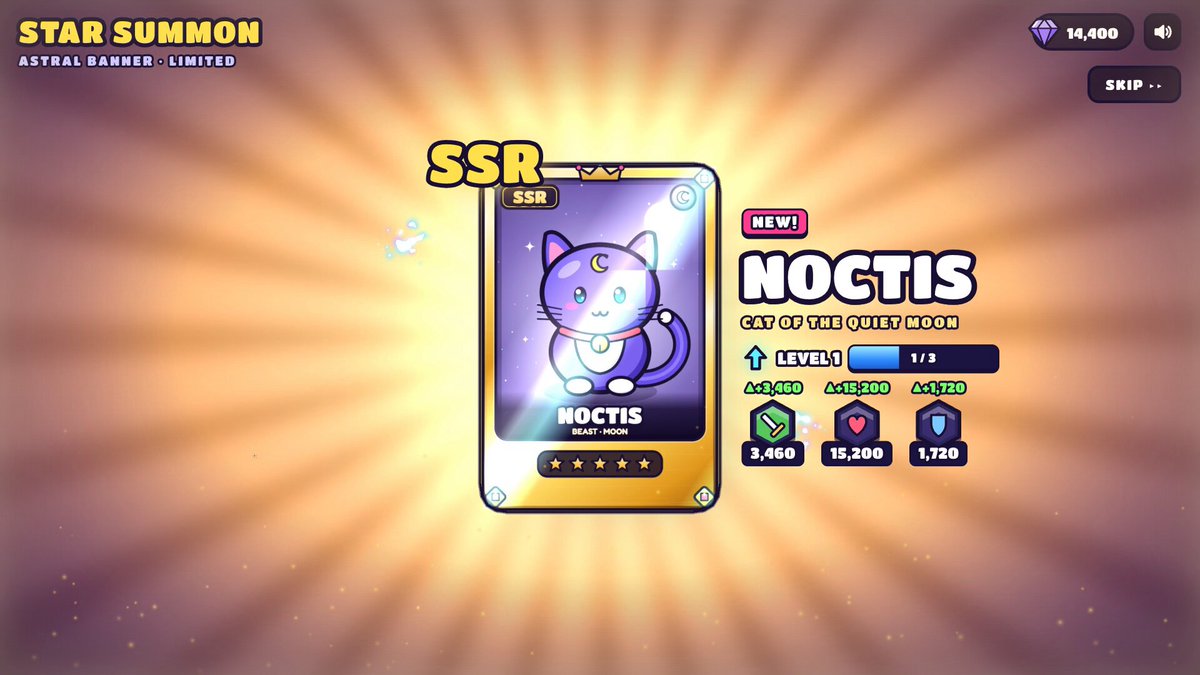
Ask an AI for a “loot box opening animation” and you’ll likely get a floating SVG chest with an expanding black halo — serviceable, and nowhere near what a mobile game actually ships. Guizang (@op7418), a Chinese AI-design blogger with a front-end background, used Opus 5.5 on September 26, 2026, to produce a game settlement animation that looked like a commercial payoff screen. His replies filled up with prompt requests, so the next day he published the full 4,700-character prompt along with a new gacha-animation demo. The cover above is a frame from it.
The prompt works because it constrains implementation, not adjectives. Nearly every line maps to a concrete piece of code, leaving the model no room to slide back into its defaults:
- Real 3D geometry: the centerpiece must be modeled in Three.js with thickness and bevels; details like plank gaps are built from actual geometry. Flat SVG textures are banned outright.
- Outlines in post: edges come from a rendered normal map plus depth map, drawn by shader — thick on the outer silhouette, thin at part seams. The prompt explicitly blocks the classic shortcut, an enlarged black backface outline, because it breaks at corners and varies in width.
- Five mandatory stages: idle, level-up, charge, burst, reveal-and-settle — none may be skipped. Even confetti is rationed to the climax.
- Anti-blowout and anti-glitch rules: flash intensity caps at 0.8; at the highest-rarity reveal, other 3D objects hide so the post-process outlines can’t draw their silhouettes over the curtain.
- No audio files: every sound is synthesized live with Web Audio, initialized on first click, with a mute toggle in the corner.
- Self-check before delivery: the model must screenshot the charge, burst, reveal and settle moments and inspect each for occlusion, blowout, glitched outlines and unreadable small text, then report each stage’s duration.
To use it: open the original tweet, copy the prompt, swap the [subject] placeholder for loot box, rank-up or boss drop, and hand it to Opus 5.5. You get a single-file HTML page that plays on click.
Two caveats. Holding 4,700 characters of constraints is a long-horizon execution test: Opus 5.5 keeps them all, weaker models drop some — the outline rule first. And the output is a few thousand lines of Three.js in one file, so retiming the performance means reading its GSAP timeline. The prompt demands 60 fps, but that is an instruction to the model, not a promise about your machine.