Design#Coding agent#Image generation#Image editing
photo-relic-editorial: makes Codex turn a real photo into a paper-memory poster
A Codex skill from wnby that keeps the real photo on top and paints a quiet, paper-textured relic below, for series covers and art posters. MIT licensed.
Skill details
npx skills add wnby/photo-relic-editorial --skill photo-relic-editorial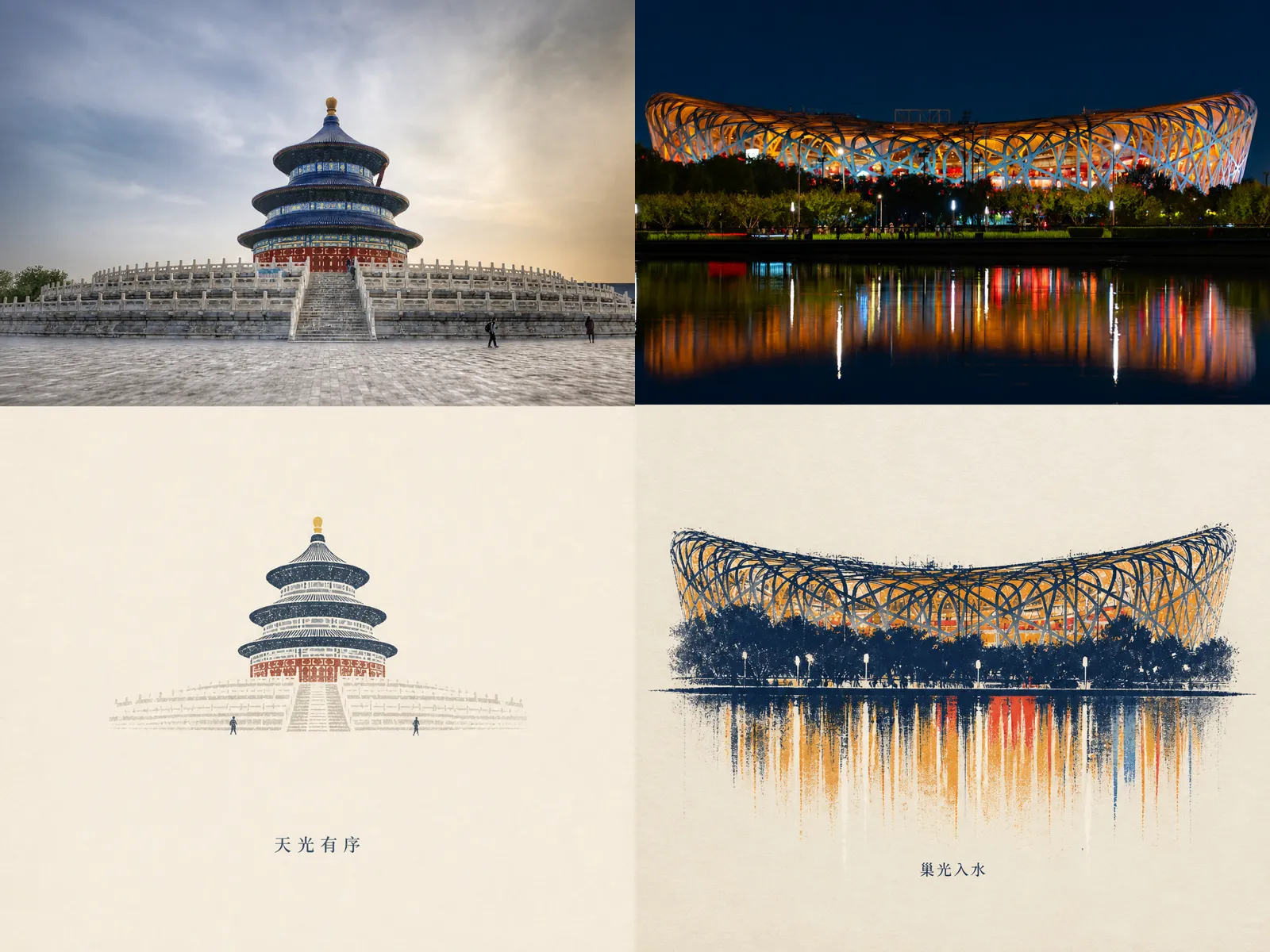
Ask a model to turn a photo into art and you usually get one of two results: the photo pasted onto a poster, or an illustration where nothing recognisable survives. photo-relic-editorial aims for the space between them. The real photograph stays in the top half of a vertical image, and the bottom half becomes a paper-textured “photo relic”: a few marks that still let you identify the place. The repository holds no scripts. It is a SKILL.md with reference material and example images.
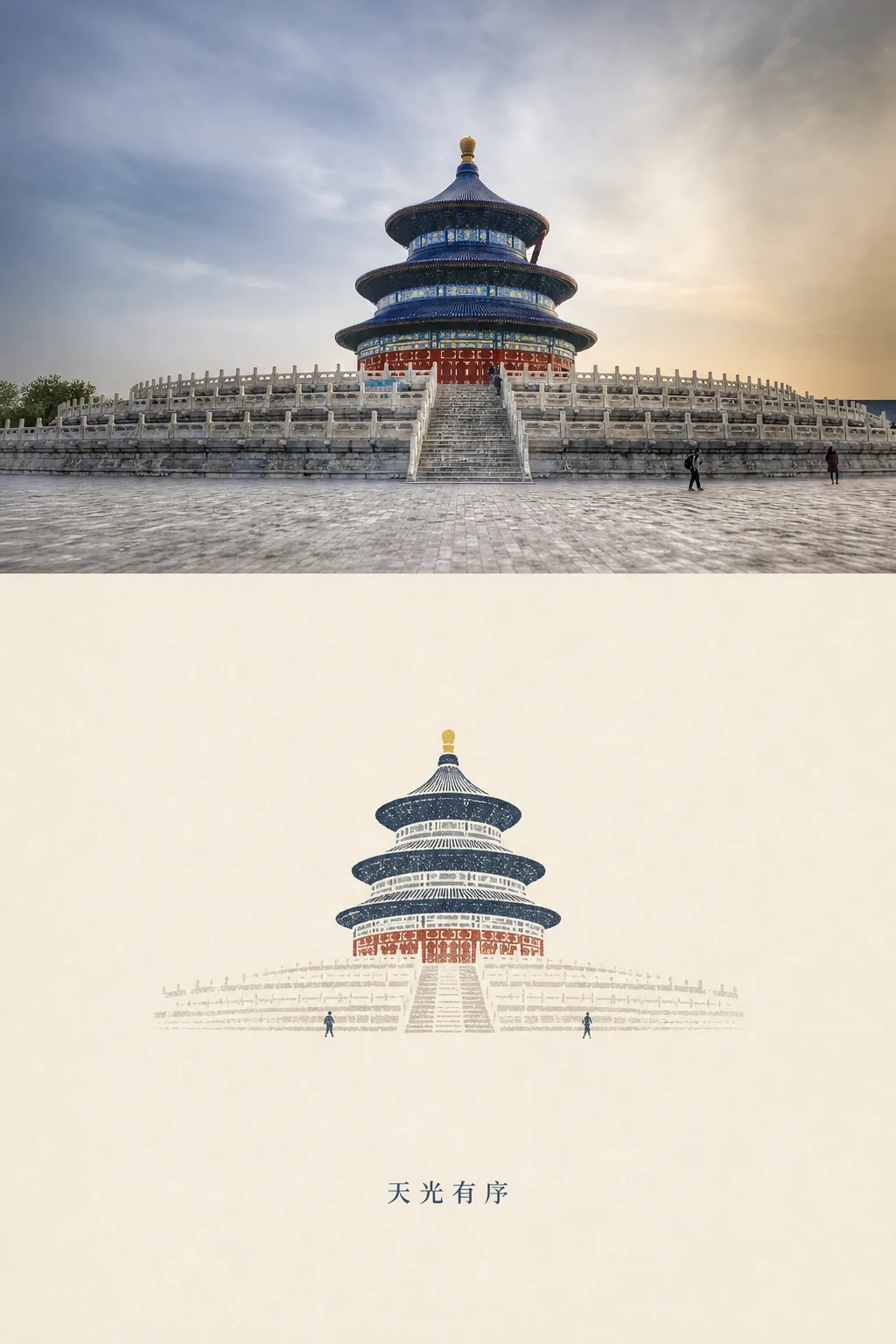
The README is specific about the intent: it is not a generic illustration filter, and it does not simplify the subject until the shape disappears. It extracts structure, light, colour, visual weight and mood from the source photo, then compresses them into a modern printmaking language with quiet Eastern restraint.
How it works
The first step is reading the photo. The skill asks for three to five cues taken from the source image: the subject’s identity, one emotional idea in a few words, the dominant colours with at most one accent, the direction of the strongest light, and structural lines such as roofs, arches, paths or water.
The second step is choosing a recipe. The layout rhythm, the grammar of the relic, the weight of the marks, how the title is set and an optional motion seed for a later social-video cut all get decided before any image is made.
The third step calls the host’s image generation or editing tool with the original photo as a reference and asks for a vertical composition, photo above and relic below.
What it constrains
- The photo stays real: the top half is the original photograph, not a redrawn version.
- The relic is a memory, not an illustration: no literal redraw and no vague haze, only a few marks strong enough to carry the subject.
- Colour stays restrained: one dominant colour family plus, at most, one accent taken from the source.
- Titles can be short: the README’s example asks for a four-character Chinese title, and the series feel comes from a repeated layout rather than new tricks each time.
Who it’s for
It suits people with their own photographs who want one consistent style across a series of covers or posts. Two catches. The relic half is generated, so whether the subject stays recognisable depends on the model in your environment, and the skill cannot guarantee it. And although the licence is MIT, the README asks you to use only original photos, photos you are licensed to use, or images you have permission to transform. The example posters are there to show the style.
To call it, attach a photo, name $photo-relic-editorial in the request, and describe the layout you want. The README’s Chinese series example asks for a series in the manner of its “Paper Beijing” set, with a short four-character Chinese title.
For a skill with a different method, see huashu-art-motion, which has the agent draw with code rather than with an image model. For a sparser paper look, see gc-minimal-zine-poster-v0-3.