Agent frameworks#Extraction#Agent memory
auto-ontology: NVIDIA's open semantic layer that keeps enterprise agents honest
NVIDIA's framework builds ontologies from enterprise metadata, grounds agents in trusted metrics via MCP, and validates NL-to-SQL with provenance. Apache-2.0.
Project facts
GitHub Ecosystem- License
- Apache-2.0
- Language
- Python
- Stars
- 4,789
- Data checked
- 2026-11-04
Snapshot figures reflect the check date and may change over time.
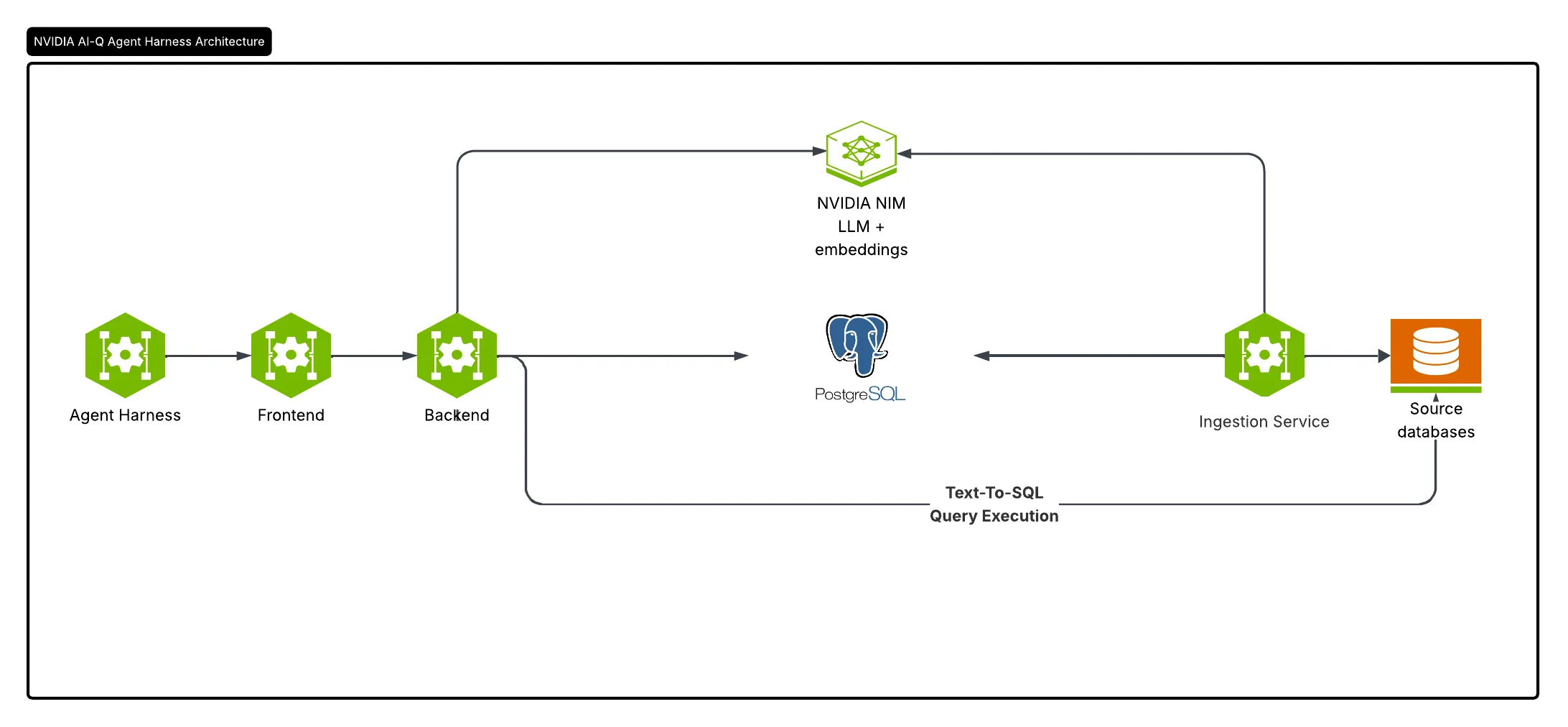
Agents can retrieve documents and query databases, but reliability gates agentic analytics: a revenue metric answered faster is worth nothing if the number is wrong. NVIDIA’s open-source auto-ontology (Apache-2.0, Python, 4,789 stars as of November 4, 2026, and top of GitHub Trending per the Chinese write-up that surfaced it) builds that foundation: it generates ontologies from enterprise metadata, reconciles metric and entity definitions across systems, constructs an AI-ready knowledge graph, and exposes the trusted semantic layer to any agent harness through MCP, CLI and API — where the data lives, what it means, whether to use it, how, and where it came from are all answerable with provenance.
Core features
- Discover: generate enterprise ontologies from metadata; connect existing ontologies and semantic models; produce AI-ready knowledge graphs.
- Ground: give agents trusted business meaning for metrics, entities and relationships, with inconsistent definitions reconciled across systems.
- Validate: check generated queries against certified definitions and lineage; every answer carries its provenance.
- NL querying as a service: natural-language questions are translated to SQL and executed against connected databases, powered by NVIDIA NIM.
- Engineering depth: semantic catalog stored in Postgres, authentication and RBAC via Better Auth, a web UI for chat, analysis and the data catalog, deployed with Helm on Kubernetes or Docker Compose locally.
Typical use cases
- Enterprise analytics agents: answer “what was net retention for EMEA last quarter” with lineage attached to every number.
- Cross-system definition reconciliation: three systems, three definitions of “active user” — the ontology layer unifies them before automation starts.
- Adding a semantic layer to homegrown agents: shops that already own semantic models (say, a dbt metrics layer) can use auto-ontology as the completion and exposure layer.
Quick start
git clone https://github.com/NVIDIA/auto-ontology.git
Docker Compose brings up the full local stack; Helm charts cover Kubernetes. A separate ontology-sql-eval repository lets you re-run the BIRD text-to-SQL benchmark yourself.
Summary
auto-ontology fits enterprises with a real data warehouse and agents that touch business metrics; personal projects and pure document-QA scenes won’t need it — the value lives entirely in the phrase “enterprise metadata”. Facts and limits: Apache-2.0, Python; NL-to-SQL runs on NVIDIA NIM, so it assumes you are already in that ecosystem; the repo explicitly does not accept external contributions, so customization means a fork. It aims at the other end of the chain from agent-autoloop on this site — autoloop solves how agents keep working; auto-ontology decides what they work from. Without a trusted semantic layer, diligence just means being wrong faster.