Anduril and Qualcomm launch BlueChip: an American-assembled rugged Arm laptop, with the "made in America" claim already contested
Anduril and Qualcomm launched the rugged BlueChip laptop on October 27, with Snapdragon X chips slated for TSMC Arizona and a contested made-in-America claim.
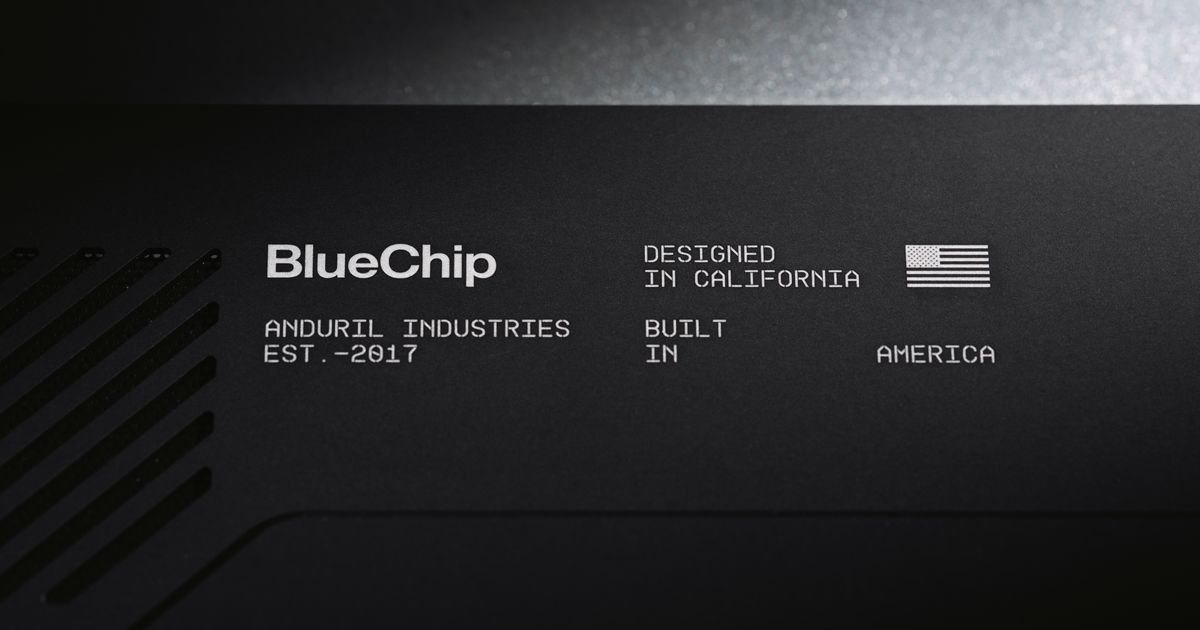
Defense-tech company Anduril and Qualcomm jointly announced BlueChip on October 27, a rugged Arm laptop line aimed at military and government buyers: the first model runs a Snapdragon X processor that Qualcomm CEO Cristiano Amon says is slated for production at TSMC’s Arizona fab, with final assembly at Anduril’s Arsenal-1 plant in Ohio. On launch day, the two outlets that covered the announcement — TechCrunch and The Verge — came back with two answers that do not add up on just how “American-made” the machine is.
Key points
- The first model is a rugged laptop with a carrying handle that runs Windows or two undisclosed versions of Linux; the military is the first-priority customer and consumers rank last (The Verge).
- The project is self-funded by Anduril and Qualcomm with no government subsidies; assembly happens at Arsenal-1 in Ohio, and the press release’s own wording is that early units are “designed and assembled in the United States” (The Verge).
- The share of US-made components has two versions: TechCrunch reports about 90% from the US or allied countries, a ~20% price premium and 2027 preorders; asked directly by The Verge, Palmer Luckey said “TBD… Those questions are not settled,” and that story carries no price or preorder information.
Background
Anduril is the defense-tech company Palmer Luckey founded in 2017 around drones and autonomous systems — the product shot Anduril released for BlueChip is engraved “ANDURIL INDUSTRIES EST.-2017” — and a consumer-shaped computer is a brand-new category for it. We covered the Pentagon’s Project Meridian on October 1, where Luckey was one of the lead researchers; laptops are a different business. For Qualcomm, BlueChip is a compliance-driven market for Snapdragon X: citing a report from market-research firm Next Move Strategy Consulting, TechCrunch notes that rugged computers are already an existing market worth roughly $5 billion, with procurement rules pushing the military and government toward American-made machines. The chip’s stated origin lands in Arizona — TSMC, which operates that fab, just posted a record third quarter and raised its full-year guidance on October 15 (our coverage).
The facts
As of October 28, everything public about BlueChip comes from launch-day statements; there is no third-party review or full spec sheet. The table below gives each claim with its source, and conflicts are left unmerged:
| Item | Claim | Source |
|---|---|---|
| Form factor | Rugged Arm laptop, first model with a carrying handle; heavy, limited battery life, not consumer-oriented | The Verge / TechCrunch |
| Chip | Snapdragon X Series, same architecture as laptops including the Microsoft Surface | TechCrunch (citing Amon) |
| Chip origin | Slated for production at TSMC Arizona; investment size undisclosed | The Verge (citing Amon) |
| Assembly | Anduril’s Arsenal-1 in Ohio; press release wording: “designed and assembled in the United States” | The Verge |
| OS | Windows or two undisclosed Linux versions; Anduril says it is working on compatibility with government Linux distributions and legacy agency software | The Verge / TechCrunch |
| First customers | Military first, then first responders, public safety and law enforcement; consumers last | The Verge / TechCrunch |
| Funding | Self-funded by Anduril and Qualcomm, no government subsidies | The Verge (citing Luckey) |
| Component origin share | “About 90% from the US or allied countries” (per TechCrunch) alongside “TBD, not settled” (Luckey to The Verge) | Conflict |
| Price | No official price; TechCrunch relays Luckey’s estimate of roughly 20% above comparable high-end PCs, conceding a Dell would be cheaper for average consumers | TechCrunch only |
| Preorders | TechCrunch says preorders open in 2027; The Verge only says early 2027 availability, with no preorder mention | Single source |
| Display | The panel is currently made only in China; Luckey says he found a US supplier for the cover glass | TechCrunch |
| Federal procurement | The Verge judges the first laptop will likely fall below the 65% domestic-content threshold under federal procurement rules | The Verge |
| Market size | Citing market-research firm Next Move Strategy Consulting, TechCrunch puts rugged computers at roughly $5 billion | TechCrunch (narration) |
What needs unpacking is that “American-made” means three different things in this story: the press release promises only that design and assembly are in the US; the 90% figure TechCrunch relays is about component origin; and the federal procurement threshold is 65% domestic content, which The Verge judges the first units will miss. Only the first definition appears in the press release itself (as relayed by The Verge); the other two remain verbal claims.
What others say
Luckey sells the machine as the “anti-surveillance computer”: TechCrunch quotes him saying buyers fully control it and can know and audit every hardware and software component — supply-chain transparency pitched as a laptop feature. He also sketched a roadmap toward fully domestic sourcing covering displays, metals and magnetics. Yet the same Luckey told The Verge, plainly: “I think most likely the thing that we ship is not going to be 100-percent American.” Components planned as American-made from the start are only the display cover glass, the frame around the display, and parts of the ribbon component.
Amon’s comments center on the chip side: Snapdragon X shares its architecture with laptops including the Surface, and Qualcomm intends to manufacture BlueChip processors at TSMC Arizona; asked how much Qualcomm is investing in that production, communications rep Yelena Tebcherani offered only “We don’t have any more details to share at the moment” (per The Verge).
The media split is the story: on the same day, from the same announcement, TechCrunch wrote “about 90% of its components will be made in the U.S. or in allied countries,” while The Verge put the question to Luckey directly and got “TBD… Those questions are not settled.” DefenseScoop, Quartz, WSJ and Bloomberg among others filed their own stories the same day (verified at headline level by this site). One more detail: The Verge ran a correction — Luckey is Anduril’s founder, not its CEO.
Our take
What makes this launch worth tracking is not the first batch of machines — heavy, short on battery, and per TechCrunch’s relay about 20% pricier than comparable high-end PCs, aimed at buyers that compliance rules push toward them — but what remains of the “American-made” label once you pull at it layer by layer: design and assembly in the US, checkable; component share, unsettled by the founder’s own admission; the federal 65% threshold, judged out of reach by one outlet. Teams building hardware supply chains or selling into the US government market can treat this launch as a free demonstration: the substance of a marketing claim is measured with definitions, not adjectives.
For Anduril and Qualcomm, the real verdict arrives when the first units ship in 2027: the bill of materials will either land near TechCrunch’s 90% or vindicate Luckey’s “TBD.” Until then, every number in this story sits behind “slated” and “about” — price, full specs and production cadence are all blanks.