FCC uses its component-level rule for the first time to block two devices with a HiSilicon chip
FCC blocked a dashcam and a wireless video transmitter with a HiSilicon chip on Oct 22, its first use of the component rule in force since Oct 13.
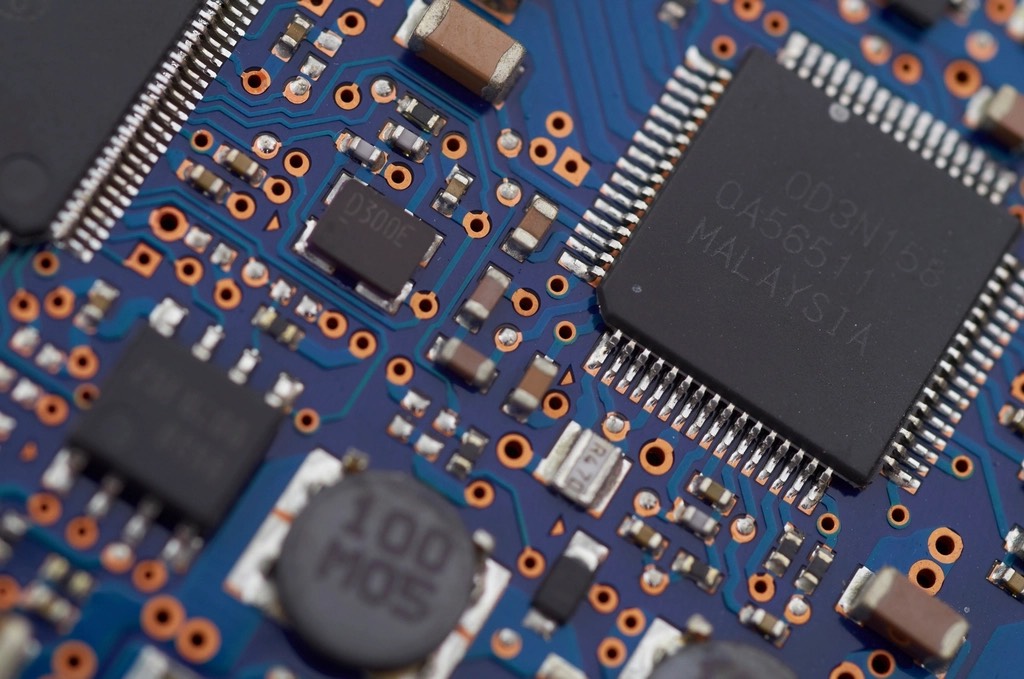
The Federal Communications Commission said in a press release on October 22 that its Office of Engineering and Technology had stopped a dashboard camera and a wireless video transmitter from being marketed or sold in the United States, because both models contained a chip made by HiSilicon, a Huawei subsidiary named on the agency’s Covered List. The FCC called it the first enforcement action under component-level rules that took effect October 13. The release names a device class and a chipmaker, and nothing else: no manufacturer, brand or model number for the devices. Reuters’s story that day also stops at the device category.
Key points
- Two video devices were blocked: a dashboard camera and a wireless video transmitter. The FCC did not name their makers, brands or models, and did not say which day the Office of Engineering and Technology acted — the release only says “this week.”
- The authority is 47 CFR § 2.903(b)(2), added by the Third Report and Order (FCC 26-50), adopted July 22 and released July 23; the component ban took effect October 13. A device is barred if it carries a logic-bearing hardware component from a Covered List entity, and that entity would itself be barred from making the whole device. The release keeps the chip’s part number out of the body text and hyperlinks the word “advertises” to the Hi3516CV610 data sheet.
- The ban does not reach backwards. Paragraph 38 says equipment authorized before the effective date may keep being marketed, imported and used under its existing authorization.
The loophole it closes
An FCC equipment authorization is the entry ticket to the US market: most electronics need one before they can be imported, marketed or sold. Per paragraph 5 of the order, the 2022 First Report and Order banned authorizations only for equipment the Covered List entities produced themselves — telecom and video surveillance gear from Huawei and ZTE, plus Hikvision, Dahua and Hytera equipment in certain uses, with subsidiaries and affiliates counted in. The Second Report and Order in October 2025 extended the ban to modular transmitters that are themselves covered equipment (paragraph 7). Before that, a covered supplier’s part inside someone else’s device — other than a covered modular transmitter — did not affect the host device’s authorization.
The Third Report and Order closes that gap. The new rule text states the test: if the covered entity itself had produced the entire device, and that device would be prohibited, then any device incorporating a logic-bearing hardware component made by that entity is prohibited too. Paragraph 16 puts the finding plainly — a device carrying such a component poses essentially the same unacceptable risk as one produced by the listed entity.
“Logic-bearing” is defined in the rule text: any device, module, sub-assembly, integrated circuit or other physical component that generates and uses timing signals above 9,000 pulses (cycles) per second and uses digital techniques. That is broader than “chip” and narrower than “any part.” Paragraph 37 adds a limit that is easy to miss: the prohibition covers only components from entities listed by identity. Companies caught by the production-location additions — makers of drones, drone critical components or routers produced in a foreign country — are not restricted on that basis unless they are separately named.
The facts
The FCC’s description of the chip runs to two clauses, both quoted from HiSilicon’s own marketing: it is “designed for the surveillance market” and has “[b]uilt in detection algorithms for human faces.” The body text never prints a part number; the word “advertises” in that sentence carries a hyperlink to the Hi3516CV610 data sheet. It is the only link annotation anywhere in the PDF and the only hyperlink in the DOCX, and the anchor text is that single word, so the agency named a part number without printing one. In the release, Chairman Brendan Carr’s statement calls the blocked equipment “potential spyware” and describes what OET stopped as the approvals it needed for marketing and sale in the US.
| Date | What happened | Source |
|---|---|---|
| 2022 | First Report and Order: no authorization for finished equipment from Covered List entities | FCC 26-50, para. 5 |
| October 2025 | Second Report and Order: ban extends to covered modular transmitters | FCC 26-50, para. 7 |
| 2026-07-22 | Third Report and Order adopted; released 07-23 | FCC 26-50, first page |
| 2026-09-11 | Published in the Federal Register as 91 FR 57798 | FR Doc 2026-18535 |
| 2026-10-13 | Rule takes effect | 91 FR 57798, DATES |
| 2026-10-22 | FCC announces first enforcement | DOC-426130A1 |
The order draws the retroactivity line more precisely than the press release does. Paragraph 38 makes the ban effective 30 days after Federal Register publication and calls it prospective: previously authorized equipment is unaffected and “may continue to be marketed, imported, and used pursuant to its existing authorization.” The Federal Register set that date at October 13. Paragraph 39 adds a narrow exemption for applications filed before the effective date and still pending on it; those are decided under the old rules, though an amendment after the effective date that adds, swaps or changes a logic-bearing component is treated as a new filing.
The other half of the order lands next year. Online marketplaces must show a device’s FCC ID at the point of sale: 180 days after Federal Register publication for platforms that sell devices themselves or have physical access to or take title to them, 270 days for platforms that only host third-party listings (paragraph 76). On cost, the FCC estimates one-time implementation across the order at no more than $300 million and recurring annual costs under $40 million (paragraph 106), and says most compliance cost under the order comes from redesigns or part substitutions at the narrow set of firms still sourcing from Covered List entities (paragraph 107).
The chip-name dispute
The FCC writes HiSilicon. Reuters, in a story by David Shepardson timestamped 17:47 UTC on October 22, also writes HiSilicon, also stops at the device category, and reports that Huawei did not respond to a request for comment and HiSilicon could not be reached. Light Reading reposted the release as a press release under the headline “FCC blocks two devices powered by Huawei silicon subsidiary.” Epoch Times, writing in Chinese on October 23, calls it 海思半導體 (HiSilicon) and cites rule number 26-50 and the October 13 effective date.
The Verge reported it differently. Sean Hollister’s story calls the part a “HiVision Hi3516CV610 UHD Smart Vision SoC,” uses HiVision three times in the body, describes HiVision as a subsidiary of Huawei, and never prints HiSilicon once. Its source for the part number is the link inside the FCC release itself. As of our check on October 23 the page carried no correction; the prefix is the part that is wrong.
HiSilicon’s own site does list an Hi3516CV610. The machine-vision product page describes it as a 6MP30/4KP20 fusion vision computing chip with 1 TOPS of built-in compute, aimed at consumer drones, handheld gimbals and dashcams. A second page for security IPC cameras calls it an IPC SoC for the base security market and lists face, human, vehicle, parcel and pet detection algorithms. Neither page contains the string “HiVision,” and the English versions of both URLs return 404.
Wikipedia’s Mate 20 entry dates HiVision to Huawei’s 2018 EMUI 9 launch as a camera object-recognition feature. The part number holds up; the prefix does not. The link points at the Hi3516CV610 data sheet, the FCC never wrote HiVision, and Reuters did not mention a part number at all. The agency pinned its finding to that part number through the link; the manufacturers, brands and models of the two devices remain unpublished.
What others say
Industry groups fought the move down to components while the rule was being written. TechInformed reported on July 8 that CTIA warned component checks would create “a bevy of new practical hurdles” and urged the FCC not to require companies to build and maintain parts lists. CTA said mandatory third-party certification for products that now use supplier self-declaration would “drastically increase costs and delays without commensurate security benefit.”
Those comments are in the final order’s record, and the Commission rejected them. Paragraph 28 quotes CTIA and CTA objecting that “logic-bearing hardware” is too vague; paragraph 32 answers the argument that logic with no role in routing user traffic should be out of scope, noting that compromised logic can lie dormant for years or disrupt communications through power spikes and high-energy pulses; paragraph 33 declines to limit the rule to a short list of component types.
The FCC’s own cost figures lean optimistic. The July proposal-stage further notice asked whether an SBOM for existing software would cost under $5,000 per program, put an HBOM at up to $10,000 per hardware item, and estimated that about 50% of equipment seeking authorization already meets the requirements it was floating (paragraph 143). Those are questions posed for comment, not obligations in the final order.
Checking your own BOM
For teams building cameras, dashcams or wireless video links, this rule lands on the bill of materials rather than the brand page.
- Write out the Covered List entities plus their subsidiaries and affiliates, then check every component maker in the BOM against that list. The FCC release places HiSilicon in exactly that position: Huawei subsidiary, covered entity.
- Sort the logic-bearing parts using the 9,000-pulses-per-second line. Anything with digital processing — a main controller, an SoC, a codec chip — qualifies; passive parts do not.
- Ask suppliers for each component’s producer and place of production. The HBOM the Commission is still taking comment on (paragraph 142) would require the producer, the production location, and the share of component value per location.
- Already-authorized models can stay on sale, but the rule catches changes: paragraph 78 keeps equipment that would become prohibited under § 2.903 off the permissive-change path, and prohibited equipment cannot receive a new grant.
Our take
The practical change for hardware teams is that compliance checks move from company name to part number.
Checking whether your brand is on the list used to be enough. Now the question is who made each chip and which entity stands behind it. For consumer video gear sold in the US, a HiSilicon part in the BOM decides whether the device can get certified at all; cost accounting comes second. It runs opposite to the chip smuggling case we covered this month: that one governs chips heading into China, this one governs devices carrying listed chips heading into the US market. BOMs already carry cost work — we wrote about how memory prices reshaped the bill of materials for flagship phones — and the same spreadsheet now doubles as a compliance file.
Leave room for the evidence. The FCC pointed at a part number and stopped there: no manufacturers, brands or models for the two devices, and no banned-part-number table. The sample size for enforcement is one. Reading the release as “these chips are now rejected” overreaches; reading it as “any HiSilicon chip is unusable” overreaches in the other direction, since the rule turns on the identity of the entity and the authorization step, and whether a given part falls inside the definition still depends on what it does and what it goes into.
Three things worth watching: whether the Office of Engineering and Technology publishes more of these actions; whether marketplaces, once the FCC ID display duty bites in the first half of 2027, start demanding component-origin paperwork from suppliers on their own; and whether the SBOM and HBOM questions in the Third Further Notice turn component disclosure from a proposal into an obligation.