South Korea's October exports hit $115.28B, up 93.7% — the fastest growth since 1974, with semiconductors at nearly half the total
Per Korea's trade ministry, Nov 1: October exports jumped 93.7% to $115.28B, the fastest since 1974; chips alone brought in $56.44B, nearly half.
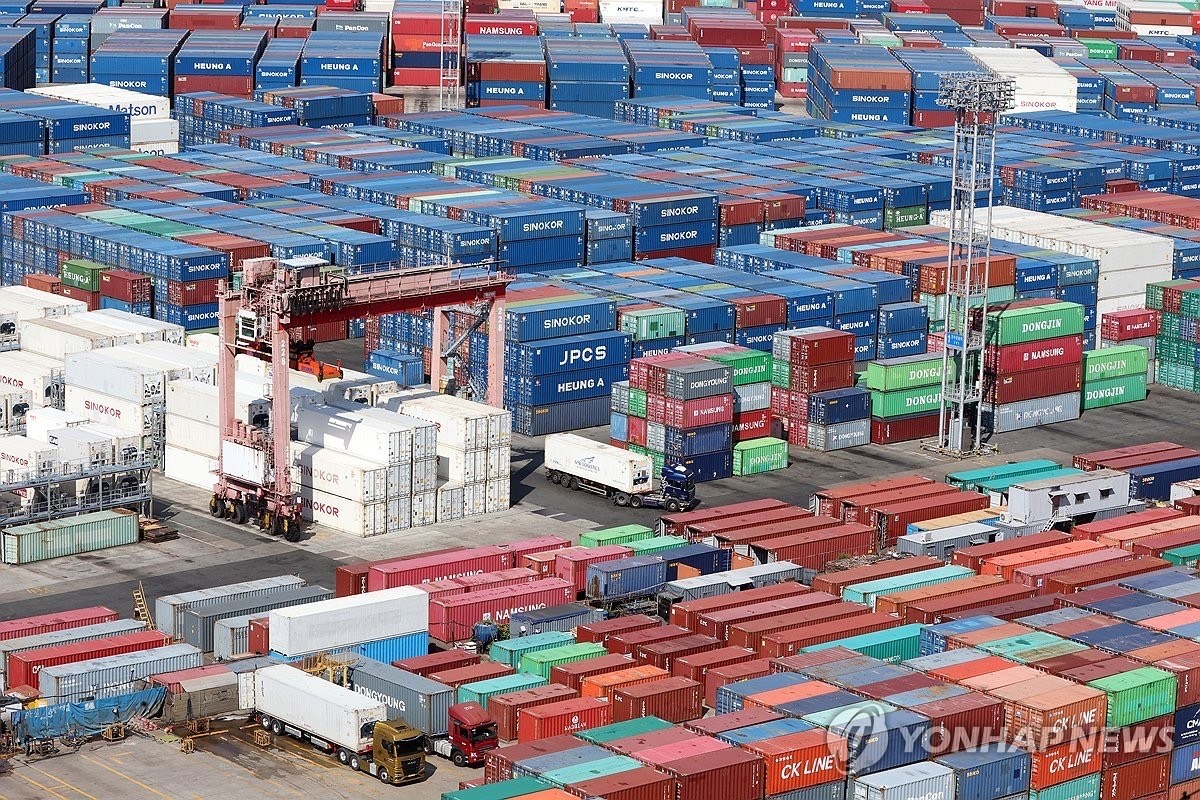
South Korea’s Ministry of Trade, Industry and Energy reported on November 1 that October exports reached $115.28 billion, up 93.7% year on year — per Reuters, the sharpest monthly jump since January 1974, and slightly above the 93.2% median forecast in a Reuters poll of economists. For the country long called the world’s trade bellwether, a single month of exports nearly doubled what it booked a year earlier, and one product line did most of it: semiconductors brought in $56.44 billion (up 259.4%), close to half of everything South Korea sold abroad. Imports rose 36% to $72.78 billion, leaving a monthly trade surplus of $42.5 billion.
Key points
- Exports nearly doubled at the fastest rate in over fifty years. October exports of $115.28 billion (up 93.7%) follow September’s 83.7% gain; the January–October total of about $930 billion is the first time the ten-month figure has passed $900 billion.
- Chips are almost half the export bill. Semiconductor exports of $56.44 billion (up 259.4%) plus computers (up 496.6% on AI server demand) carried the month; shipments to the US rose 185.8% and to China 133.6%.
- The government expects $1 trillion within November. Trade minister Kim Jung-kwan told Reuters it is “becoming certain” annual exports of $1 trillion “will be reached within November,” which would make South Korea the fourth country ever to cross the mark, after the US, China and Germany.
Background
The data landed on cue. A week earlier, on October 26, Reuters reported that South Korea’s third-quarter GDP grew faster than expected on semiconductor exports and equipment investment, with Samsung Electronics and SK Hynix both posting surging quarterly profits — the export record extends that run rather than interrupting it.
It also closes the loop on the story this site has been following all month. Upstream, a memory shortage is expected to run through 2028, and Samsung has sold out its 2027 HBM capacity in advance. On the funding side, Meta’s equity raise of up to $95 billion and SpaceX’s $40 billion of GPU-backed debt exist to feed AI infrastructure buildouts. When that spending turns into orders for servers and memory, it ends up as a line in Korea’s customs tally — this month, a record one.
The facts
Per the ministry’s November 1 release and same-day reporting by Yonhap and Reuters, October’s main export lines:
| Item | Value | YoY |
|---|---|---|
| Total exports | $115.28B | +93.7% |
| Semiconductors | $56.44B | +259.4% |
| Computers | — | +496.6% |
| Petroleum products | $6.92B | +80% |
| Automobiles | $6.55B | +18.1% |
| Petrochemicals | $4.0B | +27.5% |
| Cosmetics | $1.44B | +57.5% |
| Total imports | $72.78B | +36% |
| Trade surplus | $42.5B | Sept’s record was $49.97B |
By destination: China took $26.98 billion of goods (up 133.6%), the fifth straight month above $20 billion; the US took $24.9 billion (up 185.8%), which Yonhap attributes to chips, computers and electrical equipment for AI infrastructure; Southeast Asia $21.33 billion (up 128%); the EU $8.1 billion (up 56.4%). Imports grew at their fastest rate since January 2022 — Reuters credits higher crude prices plus demand for semiconductor manufacturing equipment and cars. The AI trade is on the import side too: buying chipmaking equipment is buying future export capacity.
The official wording shifted in a telling way within a single day. Yonhap’s copy of the release has annual exports reaching $1 trillion “as early as November”; Reuters quotes the minister directly: “With exports continuing solid growth of more than $110 billion in October, it is becoming certain that annual exports of $1 trillion will be reached within November.” One day apart, “could” became “certain.”
What others say
Two cooler readings of the number are worth keeping next to it. The first is calendar arithmetic: Reuters notes this year’s Chuseok holiday fell in September while last year’s fell in October, so October 2026 carried more working days than October 2025, flattering the year-on-year comparison. Some of the 93.7% is borrowed from the calendar. Even after discounting it, back-to-back gains of 83.7% and 93.7% remain unprecedented in recent decades — but the single month should not be taken at face value.
The second is structural. Per an Observer (Guancha) piece carried by The Paper’s platform on November 1, former Bank of Korea governor 李昌镛 warns that the boom partly rests on China being locked out of advanced lithography equipment amid US–China tensions; if ties ease, or China develops such equipment domestically, “whether Korean chipmakers’ high profitability can be sustained would need reassessment.” The same piece cites Korea’s Financial Supervisory Service: foreign investors net sold 19.116 trillion won of KOSPI and KOSDAQ stocks in September (European funds 10.3 trillion, the Americas 4.9 trillion, Asia 1.7 trillion), citing doubts about AI profitability. Money is chasing the earnings and hedging the turn at the same time.
Even the minister hedged in his own release: “The global trade environment remains uncertain,” with rising protectionism, supply-chain shifts and Middle East tensions weighing on small and mid-sized exporters. Bulls and bears are quoting the same document.
Our take
Drop this record into the question every hardware buyer is asking — why is memory expensive again — and it is the hardest number yet: AI infrastructure spending has stopped being a balance-sheet story on US hyperscalers and grown large enough to push a mid-sized developed economy’s monthly exports up by more than nine-tenths, with one category at nearly half the total. The last time Korea’s trade data moved like this was the 1974 oil-shock era, and that surge was written by memory chips. For procurement and supply-chain planning, the reading is direct: no near-term relief on memory prices, and the earlier you lock 2027 contract terms, the better your position.
The fragility is just as direct. Semiconductors at nearly half of exports mean the country’s trade account now hangs on a single variable — AI capex. Last week the Bank of Korea ran that exact stress test (see BOK: an AI spending slowdown could cut chip exports by up to $100 billion), with a worst case of $50–100 billion off next year’s exports. The calendar effect will wash out and November’s base turns sharply higher, so a slowing growth rate next month would not by itself signal a downturn; the leading indicator to watch is cloud vendors’ capex guidance, not the customs table. If $1 trillion lands, it will be a milestone — and the closest this curve has stood to its turning point.
What to watch
Three checkpoints can test the curve: the first-ten-days-of-November export figures due mid-month (the first clean read after the working-day effect fades); Samsung Electronics’ and SK Hynix’s next quarterly reports, for inventory and contract-price trends; and quarterly capex guidance from the big four North American cloud vendors — that money is where the whole chain starts.